Avoid these mistakes when growing lucky bamboo at home so the leaves stay emerald green
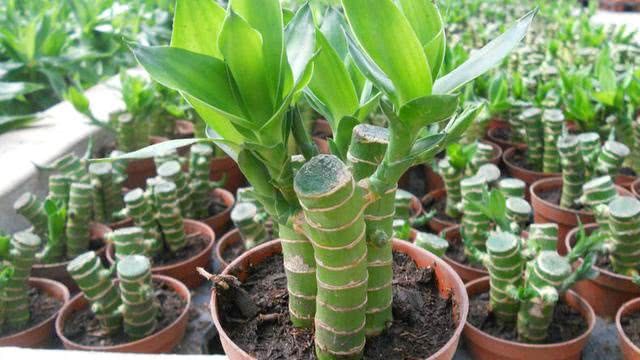
Lucky bamboo is a very common foliage plant. Its ability to adapt to the environment is quite strong. It can be grown in pots or in water. It tolerates shade and likes warm, humid conditions with scattered sunlight, growing in a well-ventilated environment. Potted lucky bamboo and water-grown lucky bamboo have the same habits. Both tolerate shade and like warm, humid, scattered sunlight and a well-ventilated indoor spot in any position.
For the soil of potted lucky bamboo, you can use black, fertile, loose, well-draining, slightly acidic humus soil dug from mountains, woods, ditches and ponds. When potting, add some organic fertilizer and river sand.
Fertilizing: lucky bamboo does not like strong fertilizer. The fertilizer added at potting basically meets its nutrient needs for several years. During the vigorous growth period, appropriately add some nitrogen fertilizer, or you can apply some organic fertilizer. Ensure the nutrient supply for stems and leaves. In winter, no fertilizer is needed at all.
Watering: lucky bamboo likes warm, humid conditions. During the growing period, be sure to keep the potting soil moist, never dry. Especially in hot, dry weather, often spray water on the leaves to clean them and increase air humidity. When the weather is dry in autumn and winter, the potting soil should not be too wet. It is enough to water once the soil looks dry.
Temperature: the suitable temperature for lucky bamboo growth. In winter, indoors in the north, and in spring and summer, it is quite suitable for growth. But be sure to note that the temperature cannot be too high or too low, otherwise it will affect growth or freeze it to death.
For hydroponic lucky bamboo, use a glass container filled halfway with clean well water, mineral water, or stored tap water. Cut off the leaves at the base of one or several lucky bamboo stalks, and make the cut smooth. Place them in the container with water. Change the water frequently. When placing indoors, pay attention to a well-ventilated environment with sufficient light. You can also cut the leaves off several lucky bamboo stalks and make them into one or several bundles, trimmed even at the top and bottom, or arranged in several layers in a water-filled decorative flower pot. But be sure to check often for side shoots and remove them promptly to ensure the growth of the buds and leaves at the top. At the same time, also note that the leaf buds cannot be too dense or too long, as this affects the appearance.
As for propagation methods, lucky bamboo also has two types: pot cultivation and water cultivation. For pot cultivation, in spring each year, take lucky bamboo branches and cut off the lower leaves, let the cut dry, and insert them directly into the potting soil. Just keep the potting soil moist. After about one month, they will take root and sprout. For water cultivation, take a stem branch with a tip, cut off two-thirds of the leaves of the whole branch, and insert it into a water-filled container. The temperature should be between 20°C and 30°C, and it will take root and sprout in half a month.
Lucky bamboo stems are upright and erect, and the stems and leaves are slender. Normal growth has limited branches and leaves, so do not prune too much. If you need to shape it, prune according to your preference to ensure it looks attractive.