Zen-style floral art may seem understated, yet its beauty is ethereal and classical
When it comes to the "Zen" lifestyle, one immediately thinks of Chinese-style interiors that are calm and free from worldly strife. A home full of classical charm is simply perfect for cultivating the mind and character.
The beauty of the temperament of Chinese-style interiors is delightful to the eye, and it is inseparable from just the right floral accents. Flower arranging, ranked alongside the other arts as one of the four arts of life by literati and scholars, is an indispensable part of creating a classical Chinese artistic mood. In modern new Chinese-style design, the arrangement of soft furnishing floral art also greatly tests a designer's aesthetic ability and professional skill.
Today, the editor brings you Chinese-style floral art carefully arranged by our designers, where every small scene is freely expressive in its own way, making one feel as if stepping into an ethereal and poetic classical residence...
A single vase of flowers, with a far-reaching artistic mood
Entryway
The ancients expressed their feelings through flowers and trees, and every flower and every leaf contained profound meaning. In modern homes, simulated flowers are often used instead of fresh flowers, making the scene more lasting. The floral art on the side cabinets in entryways and corridors is mostly at eye level, mainly displaying the front.
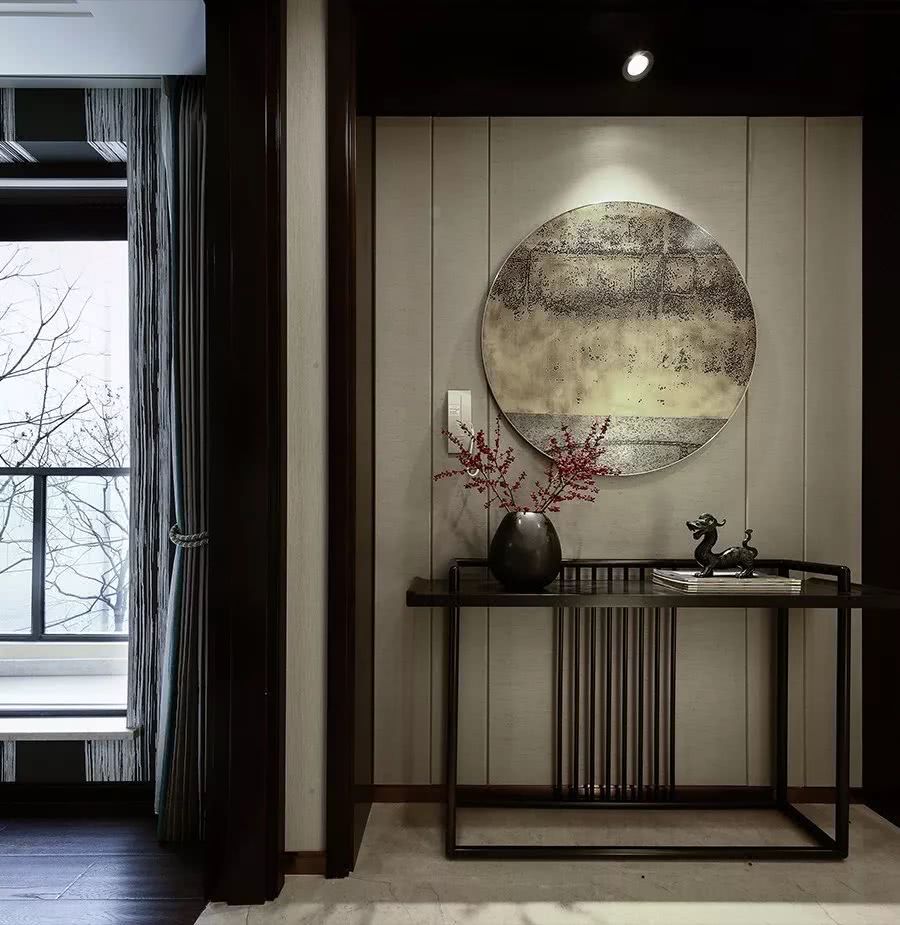
On the display table in the entryway, round shapes, dragons, books, and flower vessels blend classic Chinese elements. With wine-red floral branches, the symmetrical arrangement allows one to see it at a glance, dazzling yet serene, bringing beautiful nature indoors.
In the entrance foyer, in a modern-leaning Chinese-style space, the designer chose bright colors, using two vases at different heights, with yellow winter jasmine to express a stylish, light, and lively yet elegant style.
As a storage side cabinet, it is also where decorative items and flower vessels are placed. A pot of white clivia, quietly graceful and small yet charming, sets off the space's natural and plain temperament.
In ancient times, plum blossoms were a symbol of the national spirit, pure and resilient. A single white plum branch rises straight and leans slightly; the tall vase visually extends the line of sight, and with few ornaments, it creates an artistic mood of blank space.
Living room
The coffee table position is the center of the living room space, and the floral art volume cannot be too large, lest it affect the line of sight. The floral materials chosen are mostly rhythmic, structural branch-type materials. Compared with the splendid floral art of other styles, Chinese-style floral art generally chooses a single flower variety, or a combination of two groups, simple yet not simplistic.
Many new Chinese-style designs incorporate more modern elements, with colors no longer bland, adding some metallic luster for a greater sense of luxury. The eye-catching blue sofa paired with green potted plants appears more natural and fresh.
Looking closely at the small scene on the coffee table, a few pomegranate fruits placed in a rough earthenware flower vessel lend a touch of rustic countryside leisure.
The tones of white and brown are plain and steady, and the red berries coordinate with the two brownish-red colors, brightening the colors of the living room area.
Chinese-style floral art dislikes complexity. A few magnolia flowers cut from the branch hang naturally, white and pure as ice and jade, with a faint fresh fragrance around the nose, making the whole space appear elegant, bright, and cozy.
Dining room
Chinese-style floral decoration is not so particular about magnificent forms and ostentation, but focuses on the expression of flower quality, flower virtue, and moral and human-relations edification. On the dining table, embellishing with a floral decoration makes the dining space warmer and more refined.
In Chinese-style floral composition, line beauty is emphasized. Arranging with branches such as wintersweet not only highlights a clear, sparse, and natural style, but also shines with the metal elements in the dining room, overflowing with luxury.
In Chinese-style floral art, many yellow, orange, and vermilion colors contain classical charm. A vase overflowing with passionate winter jasmine accents an unrestrained modern Chinese-style atmosphere.
Grayish-white silver willow is a common flower arrangement; placed in a glass vase it is simple and grand, while placed in a gold-and-silver narrow-mouthed flower vessel, classical charm arises spontaneously.
Study and tea room
In many homes, the study and tea room share one space. The study and tea room originally have a more classical temperament, so branch-type Oriental flower arrangements are used to embody the harmony, quietness, clarity, and tranquility of the tea room.
In Chinese-style floral decoration, gold and silver flower vessels are often chosen, without excessive carving or depiction, simple yet possessing the rustic, classical elegance of ancient times.
Just as the saying goes, "When all things are observed in stillness, each finds its own contentment; the fine joys of the four seasons are shared with others," withered lotus seed pods are also a kind of beauty, setting off the clear and crisp beauty favored by the ancients.
The slanted parallel arrangement is one of the common types of traditional Chinese flower arranging. Against a black, white, and gray ink-wash background, a few yellow wintersweet branches emerging proudly through the snow appear even more striking.
Ancient literati and scholars regarded asparagus fern as the "elegant bamboo," symbolizing eternity and purity. Placing asparagus fern indoors carries the meaning of making many friends, reflecting the host's relatively high cultural cultivation.
A large landscape painting paired with floral art of green leaves and red fruits; the combination of three-dimensional and flat elements increases visual liveliness. Every charm is just like the rhythmic beauty in Eastern painting, meeting modern aesthetic needs while also possessing Eastern beauty.
Bedroom
In the bedroom, bedside tables, TV cabinets, small coffee tables, and so on can all hold flower vessels, combined with picture frames, photo frames, table lamps, and other ornaments as an elegant accent in the bedroom.
The bedroom is a minimalist Chinese-style space dominated by white lines. A painted porcelain vase holds a few thick floral branches, with yellow petals unfolding, as graceful and enduring as a grand mansion.
The bedside table space is not large; placing a small vase of yellow-orange berries makes the light and graceful Chinese-style bedroom appear more lively and gentle.
As an accent color, luxurious cinnabar red can be said to represent peace and nobility. In the cool and quiet bedroom, berries inserted in bronze vessels echo the throw blanket on the bed, bringing out the antique, scholarly charm of an old mansion.
On the coffee table in the leisure corner by the bedroom window, a vase of yellow flowers makes every detail more prominent and distinctive, not only leaving a lingering classical charm but also making one feel happy and comfortable.
Gold is also a color of wealth, with an appropriate low-key quality without losing noble air. Paired with the neutral colors in the space, it gives a feeling of elegance, warmth, and natural refinement.
The aesthetic connotation of new Chinese-style floral art has both classical beauty and modern brightness. Just the right floral decoration can make a Chinese-style space more Eastern in charm, allowing one to enjoy that calm, light, and peaceful "Zen" life.