Uncle's simple tricks for growing a money tree - every pot bursts with growth
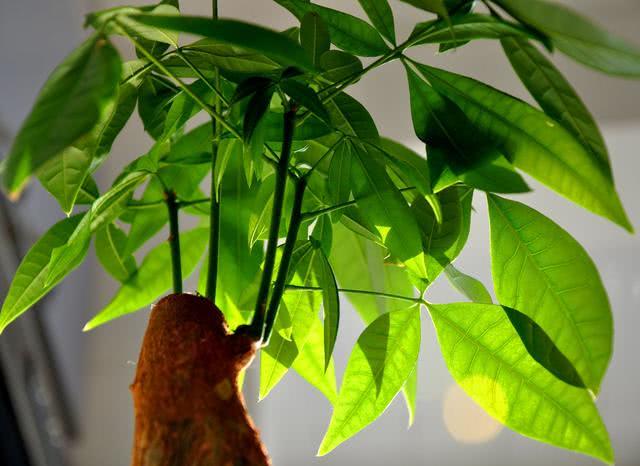
The money tree (Pachira aquatica) is a common ornamental green-leaf potted plant found in today's homes, offices and business clubhouses. The money tree has a fairly strong ability to adapt to its environment. But when it comes to cultivation, problems of one kind or another tend to arise, and these are very much worth the attention of those of us who love growing plants.
Environment: The money tree is characterized by loving sun, tolerating drought, and fearing direct sunlight and low temperatures. So when growing a money tree, we should place it in a suitable spot according to the season. Potted money trees should be kept indoors in a spot with scattered sunlight in spring, summer and autumn. Avoid direct harsh sunlight, which can scorch the leaf surface. In winter, place it in a spot facing the sun. As for temperature, in the north, indoor heating in winter can reach above 18 degrees, and in summer the indoor and outdoor temperatures are not too high either, so overall the temperature difference is not great, making it fairly suitable for the money tree's growth. Temperatures that are too high or too low are both bad for the money tree's growth.
Soil: For the soil to grow a money tree, we can take humus soil from a pine forest. This soil is characterized by being black in color, loose in texture, soft and crumbly, fertile without compacting, and well-draining with an acidic composition. When potting, add organic fertilizer and a little clean fine sand. Some plant lovers prefer a ready-made special soil mix, and that works too. This just depends on personal habits when growing plants. I don't approve of using alkaline soil that compacts easily and has poor drainage and ventilation for growing plants.
Watering: The money tree likes moisture and tolerates drought. The principle of watering is to water thoroughly once the soil looks dry, but the pot and soil must drain well and must not let water accumulate in the pot and form waterlogged soil that causes root rot. Also, depending on the season, in summer when temperatures are high and sunlight is plentiful, the money tree grows fast and has a high demand for water, so you can water a bit more. In winter, when northern rooms are warm and dry, you can water according to conditions in the pot. In other seasons, water less. Use clean, unpolluted water. During the money tree's growing period, when watering you can add some pre-soaked soybean cake water to increase nutrients. This promotes the growth of branches and leaves.
The money tree shares with other flowers and plants common pests and diseases such as leaf spot disease, blight, yellowing leaves, red spider mites, scale insects and so on. We need to find out the cause and use targeted treatment. Also do a good job of ventilation and check the watering situation. Promptly spray the plant's branches, leaves and roots with treatment to eliminate the disease.
Pruning and shaping: The money tree grows and develops fairly quickly. The plant shape changes greatly, and overly dense branches and leaves affect ventilation and photosynthesis, easily causing the lower leaves to turn yellow and drop. At this point we need to prune the whole plant. The pruning time is during April and May, when the temperature and sunlight suit the sprouting of branches and leaves. For a large money tree, remove long branches and diseased, weak or pest-infested branches, and overly dense branches and leaves. Keep healthy branches and leaves so that nutrient supply is sufficient. For a small money tree, cut off the side buds and keep the main branch. As for the shape, you can prune it according to your own preferences and the size of the plant into a pot with a distinctive ornamental shape. You can also use external force to reshape the plant.