Put sand on top of succulent pots: it prevents mosquitoes and insects and stops root rot
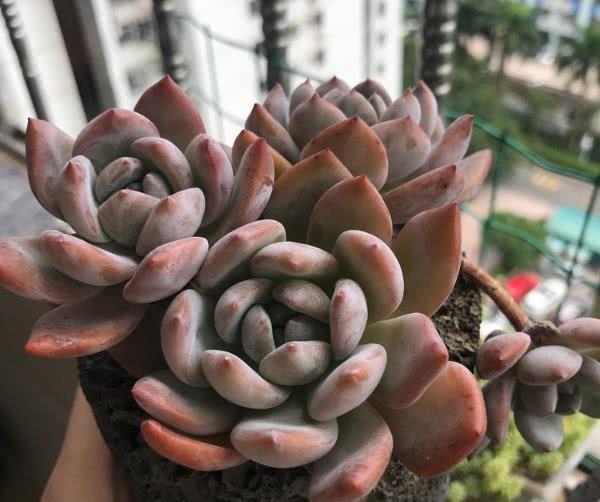
Everyone knows sand can be used for cuttings, mixing into soil, and lining the bottom of pots, but did you know it can also be spread on the pot surface? Using sand as a top dressing not only lets water and air through and prevents root rot, but also keeps mosquitoes and insects away, and best of all, it looks super beautiful when used to grow succulents! For the top-dressing sand, do not use the very fine kind; instead pick coarse sand the size of a soybean grain. Pick out the coarse sand of the right size, rinse it 2-3 times with clean water until the water poured off is no longer cloudy. Spread the rinsed coarse sand in the sun to dry, then spread it on the pot surface, and it will let water and air through. Note: do not make it too thick, 0.5-0.3 cm is enough; too thick and water drainage will be poor.
Spreading a layer of coarse sand on the surface of the potting soil can block the damp soil, prevent mosquitoes and insects from laying eggs in the soil, and completely avoid mosquito and insect disturbance to succulents. You can also use small expanded clay pebbles as a top dressing. Advantages: because they are fired at high temperature, they are light in weight, large in particle size, and have gaps. Good drainage and excellent air permeability. They prevent root rot in succulents from overwatering and effectively increase the gaps in the soil. Use: they can be used as a bottom layer, a top dressing, or even mixed into the soil for succulents. Expanded clay pebbles are already famous for growing flowers; many people know to use them at the bottom of pots to prevent root rot, but they do not know that spreading them on the pot surface also has many benefits. They not only prevent root rot and insects, but also increase humidity and air permeability, making flower roots thick and white! They are especially suitable for large potted plants and succulents.
How do you use expanded clay pebbles as a top dressing for succulents? Rinse the purchased expanded clay pebbles several times, let them dry, and buy the kind with large particles and light texture. Spread the expanded clay pebbles on the surface of the potting soil; a thin layer is basically enough. Do not make it too thick or too much. Expanded clay pebbles are loose in texture and have many gaps, so they can absorb excess water in the pot, prevent root rot, and raise humidity. In addition, the expanded clay pebbles cover the surface soil, isolating mosquitoes and insects so they cannot lay eggs in the soil, thus also achieving an insect-prevention effect.
A flower friend's experience shared: when I first started growing them, I also did not like using top dressing for succulents. Slowly I found that after there were more succulents, without top dressing, perlite and peat particles often appeared on the ground, which was very hard to clean up, so I began to experiment with which top dressing worked well. I have used volcanic rock, kanuma, akadama, maifan stone, and even large-grained sand and gravel from roadside construction sites. The conclusion is that kanuma works best. Volcanic rock is too dark in color; when the sun is strong, it absorbs heat and has burned leaves, and if it is not polished well, its edges can also damage the leaves at the bottom. Although akadama is not as dark as volcanic rock, its color is close to peat, so it easily looks dirty. Kanuma is a light color series and is easier to match.
A second flower friend shared: I have used many kinds of top-dressing stones, and I like maifan stone and akadama best. Akadama is relatively clean, and you can clearly see whether it is dry or wet. Maifan stone is also good, but you cannot tell whether the soil is dry or wet. Kanuma has too much powder, though its color is quite clean. Volcanic stone feels too rough; succulents like Lithops are easily cut by it. Also, volcanic stone is dark in color and absorbs too much heat in summer. From a nutritional point of view, maifan stone, like other granular soils (such as akadama, kanuma, and vermiculite), is rich in trace elements and is suitable for growing succulents, but it cannot be said to be rich in some particular element and especially suitable for growing succulents.
For general flower care techniques, here is one to share: the long-term plastic bag watering method. Everyone may find this name very strange. Indeed, not only is the name of this method strange, but the method itself is also incredible. It is suitable for use when no one is home for a long time, such as when going on a business trip or visiting relatives, gone for ten days to half a month. To keep the flowers from dying of drought, I am teaching everyone this flower-growing technique here. Find a plastic bag, fill it with water, then tie the bag opening tightly to prevent water from spilling out, then use a fine needle to prick a small hole in the plastic bag, and place the pricked hole facing downward into the flower pot, letting water slowly seep into the soil through the small hole to keep the soil moist. Be sure not to make the hole too big, otherwise the consequences are self-evident.
This is a gathering place for succulent lovers, sharing succulent care tips. You are welcome to follow and exchange ideas.