Don't Take Risks Growing Succulents Outdoors in Summer - Proper Shading Is the Better Choice
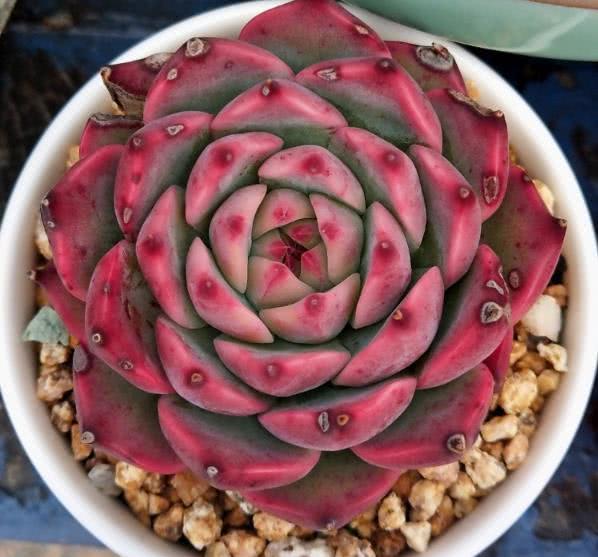
There are only two reasons for wanting to grow succulents outdoors in summer. One is the belief that more abundant light will make succulents look better. This is relative - more light will indeed make them look a bit better than less light, but however good-looking a succulent is in summer, it can't compare to the other three seasons (no low-temperature advantage). There's no need to tough it out; proper shading to keep them from stretching is enough. After all, risking death for that little bit of good looks isn't worth it. The other reason is simply laziness.
When can succulents no longer be grown outdoors in summer? First, it varies by species. For example, plants in the Aizoaceae family tolerate lower temperatures than those in the Crassulaceae family. Aizoaceae plants can handle roughly 28°C to 30°C; above that, they need shading from the sun. Most Crassulaceae plants can tolerate up to 32°C; beyond that, they need shading from the sun. Cacti and cactus balls can tolerate somewhat higher temperatures. Second is the environment: if they are merely grown outdoors without being exposed to direct sunlight, then they can be grown outdoors even at 38°C or higher.
When summer arrives, the red-leaf phenomenon in succulents generally disappears without a trace. At this time, most succulents show their natural color. The reason is simply that the reduced temperature difference between day and night leads to lower secretion of pigments such as anthocyanins. Moreover, when the temperature reaches above 35°C or even higher, many succulents stop growing completely, which we call the "dormant period." Once the dormant period arrives, succulents' growth rate becomes extremely slow, and their roots' demand for water relatively decreases. Combined with the high-humidity environment of summer, this makes root rot extremely likely, and can even kill the entire plant.
In most places, summer temperatures exceed 35°C, which is undoubtedly a test for the succulents at home. I think overly complicated ways of identifying dormancy are not necessarily suitable for everyone, so I'll roughly draw a line: when the temperature steadily stays above 35, most succulents begin to go dormant. Roots are the foundation of a plant - I don't think anyone would dispute that - and succulent roots especially tend to become the vital weak point in summer, precisely because they rot easily. Summer's high temperatures and high humidity both create conditions for succulent root rot, so ventilation is especially important.
If I say terracotta pots are a summer-survival miracle tool, probably no friend who has grown succulents for more than a year would disagree. The reason is that terracotta pots are so breathable that after watering, moisture can even slowly seep out through the pot walls, so there's no need to worry at all about root rot from overwatering. Porcelain pots and plastic pots, however, have very poor breathability, so for beginners who can't gauge watering, it's best to use them as little as possible in summer. All my prized plants are grown in terracotta pots - no cutting off water, no shading - and after several summers, not a single one has died.
This is a gathering place for succulent enthusiasts, sharing succulent care tips. You're welcome to follow and join the discussion.