Paclobutrazol is commonly used for growth control in peanuts, but are you really using it correctly?
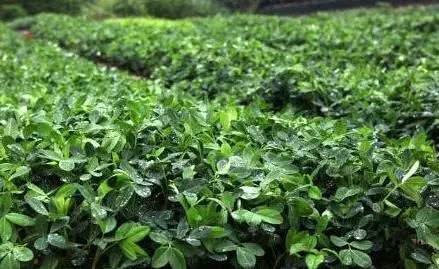
Paclobutrazol is a plant growth regulator commonly used in agricultural production. Because it is systemic, its efficacy can be absorbed by roots, stems, and leaves, and it regulates crop growth. However, when using paclobutrazol, attention must also be paid to the following points: principles of use, timing of use, dosage, application techniques, and so on. Below, Scientific Agriculture will introduce several issues in the use of paclobutrazol on peanuts based on the above aspects.
Principles of use
The use of paclobutrazol should still be based on the growth condition of the peanuts. Its purpose is to promote plant growth and development and control excessive vegetative growth, but using too much will affect plant growth and development. Therefore, when using paclobutrazol, it is still best to use as little as possible!
For the entire growth period of peanuts, it is usually enough to spray paclobutrazol two to three times. There is no need to apply too much paclobutrazol, and large amounts should be avoided.
Timing of paclobutrazol use
There is actually no precise statement about the timing of paclobutrazol application on peanuts. The common saying is that it should be applied when the plant is about 35-40 cm tall, but this statement is also rather general. From the perspective of controlling excessive growth, the aim is still to promote flowering and protect pods, so applying it when the peanut pegs are penetrating the soil gives a better effect. At this time, the peanut flowers have just faded, and after growth control, nutrients are concentrated and supplied to the pegs. This is beneficial for peanut pod enlargement!
However, as mentioned at the beginning, the use of paclobutrazol should still be based on the growth condition of the plant. Applying chemicals without considering the actual situation makes it difficult to obtain high yields. For example, at the seedling stage, if growth is too weak, a low concentration of paclobutrazol can be used to harden the seedlings, making the seedling root system stronger and improving the plant's stress resistance.
If used during the flowering stage, it can promote lateral branch development and increase the number of pegs, and it can also help prevent premature senescence, thereby increasing peanut yield.
Concentration of paclobutrazol use
In this respect, there is actually no fixed standard. As mentioned above, high-concentration use must be treated with caution, while low concentration will not necessarily be ineffective. Therefore, when using it, be sure to consult the instructions repeatedly and follow the instructions for application. The usual dosage is a 250-350 times dilution.
Basically, these are the issues with paclobutrazol use mentioned above, but Scientific Agriculture still wants to point out a few more small precautions. For example, due to fertilization or uneven soil fertility, some areas of a field may have weaker growth. For such peanuts, be sure to avoid them. Also, when spraying, if some laundry detergent or dishwashing liquid is added to the solution, the surface tension of the paclobutrazol liquid will be greatly increased, improving the adhesion of the spray droplets and greatly enhancing the effectiveness of the chemical.
This is Scientific Agriculture. You are welcome to follow us and learn together.