A soybean variety yields 280 kg per mu, so why has it not been promoted for so long?
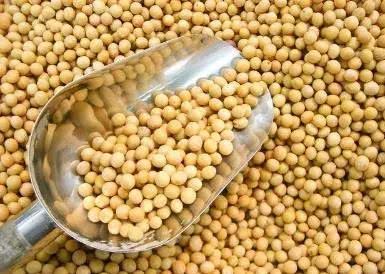
Recently, the high-protein soybean variety "Heinong 84", bred by the Heilongjiang Academy of Agricultural Sciences, underwent yield measurement, and the on-site yield measurement and acceptance gave an average yield of 280 kg per mu, more than double the average soybean yield per mu in Heilongjiang Province. Seeing such reports, many friends probably say that this variety's yield is really good, at least higher than my family's yield. But what is the actual truth? We still need to interpret such reports accurately.
First, the yield measurement data here come from test plots, not our ordinary fields! When yield comparison tests are carried out, they are all obtained under conditions of good nutrition and good management, and such conditions are not available in farmers' fields. The yield measurement data are only meant to show the yield-increasing potential of a new variety under good environmental conditions. Even if farmers buy this seed, it will still be difficult for them to achieve results like those in the report.
Second, the data comparison presented by the media is meaningless. In experimental yield measurements, a small area is generally selected. For example, in Yuan Longping's hybrid rice yield measurements, if you read the media reports carefully, you will also find that they usually specify 10 mu in a contiguous block or 100 mu in a contiguous block for yield measurement, because the smaller the area, the easier the environment is to control, and the larger it is, the harder it is to keep it at its best! That also makes it difficult to achieve better results.
As in the report above, what was selected was a small-scale yield measurement compared with the soybean yield per unit area data for the whole province of Heilongjiang! You should know that when calculating the soybean output of the whole province of Heilongjiang, soybeans whose yields were reduced by drought and disease are also included, and even the area of soybeans with total crop failure caused by environmental conditions is included. Therefore, such a comparison is meaningless.
In terms of the actual situation, the soybean yield measurement data of 280 kg per mu is still very impressive! For example, judging from the national soybean yield per unit area data published by China's Ministry of Agriculture, the average yield is only 120 kg per mu, and if there had been no disasters, the yield of ordinary soybeans would basically be in the range of 400-500 jin per mu.
However, compared with the United States, such data still lag by no small margin. Nationwide statistics in the United States have already reached a yield per unit area of more than 200 kg, and if ordinary farmers manage properly, soybean yields can generally all reach more than 450 jin.