A Detailed Explanation of the Important Role of Light in Bonsai Growth
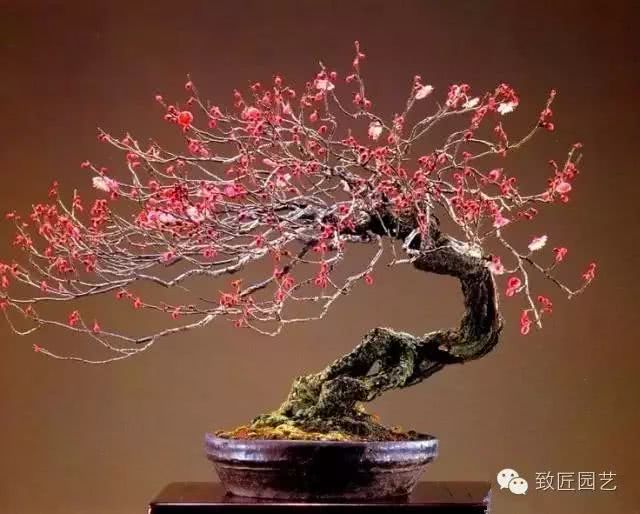
Some flower and bonsai enthusiasts often pay close attention to the effects of fertilizer, soil and water on plant growth and development, yet overlook the different needs of different kinds of flowering plants for light intensity and duration, assuming that as long as all flowering plants are placed in sunlight for care, they will grow well. In fact, this is not the case. If you do not grasp light intensity and light duration properly according to the different needs of different flowering plants, then even if watering, fertilizing and soil are all suitable, the plants still will not be grown well.
Lightis the source of energy for photosynthesis in green plants. If there is no light, or if the light does not meet the plant's requirements, chloroplasts cannot convert carbon dioxide and water into carbohydrates and oxygen, and the plant will find it difficult to grow and develop. However, because various flowering plants come from places with different sunlight intensity and also differ in their genetic factors, they have different requirements for light intensity and duration of exposure.
According to this characteristic of plants, the light requirements of flowering plants can be divided into four major categories:
1. Sun-loving flowering plants
These flowering plants like strong light (but not the stronger the better; generally it should not exceed 35C), are not tolerant of shade, and can grow, develop, bloom and bear fruit normally only under all-day sunlight. If light is insufficient, they will grow poorly, with leggy branches and leaves and faded leaf color; flowering and fruiting plants will find it difficult to form buds, bloom and bear fruit, and even if they can produce a small number of flowers, the blooms will be smaller than those of plants receiving normal light, with a fainter fragrance and faster fading. If light is insufficient for a long time, it can also lead to severe poor growth or death. Such flowering plants include pomegranate, plum blossom, Chinese rose and magnolia.
2. Neutral flowering plants
These flowering plants have strong adaptability to light levels, and the variable range of their sunshine requirement is relatively large, but they do not grow well under either strong light or shaded conditions. Therefore, they need ample sunlight in spring and autumn, and slightly more shade in the hot summer. Such flowering plants include osmanthus, oleander and wintersweet.
3. Shade-loving flowering plants
These plants grow well under insufficient light or in scattered light conditions. They generally require about 30% shade and cannot withstand strong light exposure, otherwise they grow poorly. These plants mostly originate from tropical rainforests or the shady sides of high mountains and under forest shade, such as rhododendron, camellia and evergreen.
4. Strongly shade-loving flowering plants
These plants are even less suited to strong light exposure than shade-loving flowering plants, and the shade level must reach about 80% for them to grow well, such as orchid family plants and ferns.
According to the different lengths of daily sunlight exposure required by various flowering plants to bloom, they can also be divided into the following three categories:
(1) Long-day flowering plants. Such as gladiolus and impatiens. These flowering plants mostly originate from temperate and cold zones, and their vigorous growth period is in summer. They need more than 12 hours of light per day to form buds and bloom; otherwise they will not bloom.
(2) Day-neutral flowering plants. Such as dianthus, cyclamen and Chinese rose. These flowering plants are not sensitive to day length; whether under long days or short days, as long as the temperature is suitable, flowering is not affected.
(3) Short-day flowering plants, such as chrysanthemum, poinsettia and clivia. These flowering plants mostly originate from the tropics or subtropics. As long as daily light does not exceed 10 hours (about 8 hours of sunshine per day is best), they can accelerate growth, development and flowering. If daily light duration is less than 10 hours, flowering will be delayed.
When mastering light, you must also recognize that the so-called "shade-loving and sun-loving" nature of flowering plants is all relative, and shade-loving flowering plants do not completely lack the need for sunlight. The vast majority of plants in the world need a certain amount of sunlight for growth; the only difference is how much and how strong that need is. Even some sun-loving flowering plants cannot be left to bake in the sun during the hot summer (referring to small and medium-sized bonsai plants planted in shallow pots) and need appropriate shading, otherwise their growth will also be adversely affected.
When talking about light, one cannot ignore the wonderful effect of moonlight on flowers and bonsai. Scientific experiments show that moonlight exposure is beneficial to the growth and development of flowering plants. When the moon is full, its light is equivalent to the illuminance of a 40-watt electric lamp at a distance of 15 meters. Although moonlight is weak, it can promote the growth of some flowering plants. Under stronger moonlight, gardenia has the strongest fragrance. Under moonlight, rhododendron blooms even better. At present, some countries are exploring the effect of moonlight on the growth of flowering plants.
In addition, when natural light is insufficient, artificial light (that is, electric light) is often used as a supplement to make flowers bloom on schedule, and good results can also be achieved.
Featured Content