These heat-tolerant flowers bloom more vigorously the hotter the dog days get
In summer, the hottest period is the dog days, which fall between Minor Heat and End of Heat, and are the hottest, dampest and most sweltering days of the year. Never mind plants, even people can hardly stand the heat! But some flowers are not afraid of heat, and during the dog days they still bloom abundantly, especially beautiful.
“
Flowers that are not afraid of heat
- Summer chrysanthemum -
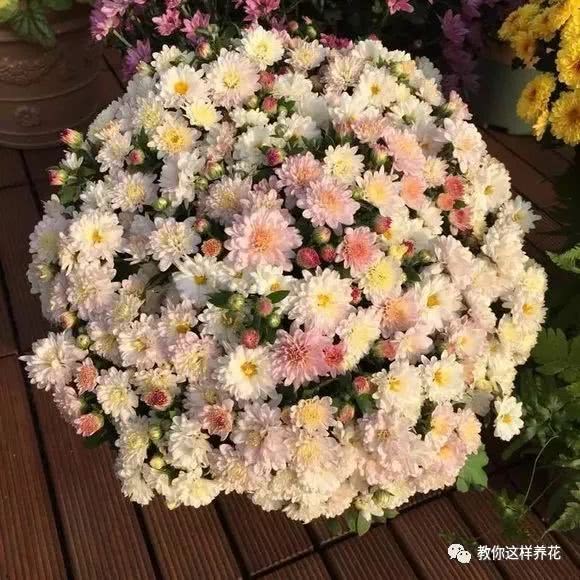
Summer chrysanthemums are different from traditional chrysanthemums that bloom in autumn; summer chrysanthemums bloom in autumn, and they produce a large number of flowers, with a wide range of colors and rich flower shapes. Summer chrysanthemums are heat-tolerant and moisture-tolerant, with stronger adaptability, making them a good choice for summer-blooming plants.
Caring for summer chrysanthemums is relatively simple; choose loose potting soil and add an appropriate amount of bone meal as a base fertilizer. They should be grown in a place with plenty of sunlight and can be grown in full sun. They must not lack light, otherwise the flowering period will be shortened or they may not bloom at all.
Summer chrysanthemums have a long flowering period, blooming from May to November. To make summer chrysanthemums bloom more, pinch them 2-3 times during the growing period. After six leaves have grown, remove the top two leaves; after the side branches grow to about 7cm, pinch again. Generally complete this before May, and no later than July. After pinching, the plant will become shorter and sturdier, with more branches and more flower buds.
(Image source: flower lover Dongguan Shan)
- Moss rose -
Moss rose is extremely heat-tolerant and sun-tolerant, and care is very simple. Normally, just water a little when the soil is dry, and it will keep blooming. Many people say that moss rose is a flower that even children can grow well, and this saying is really true. Moss rose is a must-grow flower in summer, because it does not take up much of your time and energy, and it will bloom beautifully on its own in a corner.
Moss rose flowers are very beautiful, especially many double-petaled varieties; the flowers are large and beautiful, like little peonies, very stunning. If you can plant a small patch densely, it looks like a flower carpet, especially beautiful.
Moss rose can be pruned appropriately to control the plant shape. When moss rose grows to 5-8cm, cut off the top branches, which will stimulate many side branches and make the moss rose plant fuller.
The cut branches can quickly take root when inserted into soil. And often they may already carry flower buds, and will still bloom the next day, making them very easy to root.
However, if you want more and more frequent blooms, it is best to supplement some fertilizer regularly. Normally keep it in a place with plenty of sunlight and good ventilation; in summer it does not need shading. Fertilize once a month, mainly with phosphorus and potassium fertilizer, or you can directly use 0.2% monopotassium phosphate, and the flowers will bloom more abundantly and vigorously!
- Madagascar periwinkle -
Madagascar periwinkle blooms very frequently, from the beginning of the year to the end of the year. Madagascar periwinkle likes light and has good heat tolerance, and in summer it still blooms luxuriantly and full of vitality. Madagascar periwinkle is a perennial plant, so after planting it, you can enjoy flowers year after year. Some flower lovers' Madagascar periwinkles can bloom for as long as 10 years.
Madagascar periwinkle flowers are fresh and elegant, extraordinary and refined, and are a mainstay of summer blooming. Summer care for Madagascar periwinkle is also relatively simple; it does not need shading, and sufficient light can make the plant compact, verdant and glossy, with bright flower colors.
Madagascar periwinkle must not lack light, otherwise the leaves easily turn yellow and fall off. In addition, you should also pinch Madagascar periwinkle: when the seedlings grow to 4-6 leaves, remove two and keep four; when the new shoots grow 4-6 leaves, pinch again. After 3 times, do not pinch anymore, otherwise flowering will be affected.
- Lisianthus -
Lisianthus flowers are fresh and charming, with a unique, light and graceful plant shape, elegant and bright colors, and unique and lovely flower shapes, and they are very popular among flower lovers. Double-petaled lisianthus have many petals and look like roses, while single-petaled lisianthus flowers look like poppy flowers. Relatively speaking, the double-petaled ones are more popular. Lisianthus blooms from May to July, and a single flower can stay open for about 20 days, especially beautiful.
After sowing lisianthus, wait until the flowering period ends, then cut off the main branches, and new branches will grow from the roots, so it will bloom again on the new branches, and one plant can become a clump of flowers. You can cut them and put them in a vase, especially beautiful.
Lisianthus likes a warm, humid environment with plenty of sunlight. The soil should be loose and airy; you can use peat soil, vermiculite, perlite, plus a little rice husk charcoal, plant ash or limestone. Watering can follow the rule of watering when dry and letting it dry between waterings; it likes moisture, but do not let water accumulate. Too much water is bad for growth, while too dry will make stems and leaves grow thin and weak.
- Dahlia -
When other flowers go dormant and fade away because of the summer heat, dahlias make a splendid entrance. Dahlias can bloom from summer to autumn, with a long flowering period and many flower shapes: ball type, chrysanthemum type, peony type, decorative type, and so on. Moreover, dahlias are easy to care for and have few pests and diseases, and many dahlias planted in the ground hardly need any management.
Dahlias can be planted as tubers in pots every spring and autumn, and they grow very quickly.
Dahlias like an environment with plenty of light, and during the growing period they need sufficient sunlight, preferably more than 6 hours a day, and they can also be grown in full sun. In summer, dahlias must be guaranteed sufficient water; if they lack water, they easily wilt. In the north, no management may be needed; in the south, where temperatures are especially high, when it exceeds 35°C, it is best to pull up a shade net to properly block the midday sun.
- Plumbago -
Plumbago is moisture-tolerant and heat-tolerant, fresh and elegant, with full flower shapes, and is a super beautiful sight in summer. Plumbago is relatively easy to manage; placed in a well-ventilated environment, it rarely suffers from pests and diseases.
In summer, if plumbago has always been grown outdoors, you can continue to care for it with plenty of water and plenty of sun. Plumbago can tolerate temperatures of 35°C; if the temperature exceeds this, it is best to provide appropriate shading.
Plumbago likes a humid environment, but it must not have water accumulation. In the morning and evening, check the condition of the potting soil. If the soil has turned white and dry, replenish water in time. Watering should be done in the early morning or evening, and must never be done in the mid-afternoon. It also must not have water accumulation; if there is water accumulation, drain it promptly.
Some flower lovers shape plumbago into a lollipop form; choose relatively straight branches, and after they grow to 1 m, keep topping and pruning, and it blooms into a flower ball that is very beautiful.
- Hibiscus -
Hibiscus is a strongly sun-loving plant and is not afraid of sun in summer, making it a good choice for summer flowering plants! Hibiscus is also called Zhu Jin; its flowers are large and brightly colored, opening in all four seasons, with a very long flowering period. It is planted in parks and courtyards in many places, blooming continuously throughout the year, almost nonstop all year round, simply a flowering machine.
The most common hibiscus is single-petaled and bright red, so in many places it is also called big red flower. There are many hibiscus varieties and many flower colors, and there are also double-petaled hibiscus, which are very beautiful.
Hibiscus is not afraid of sun and cannot tolerate shade; it needs no less than 8 hours of sunlight per day. When it lacks light, the buds easily fall off and the flowers shrink. In summer, make sure to guarantee sufficient water. After the soil surface turns white, water in time, and in summer be careful to water in the early morning or evening. Besides watering, also spray water on the leaves and around the flowerpot to lower the temperature and maintain air humidity. Do not water onto the flowers, so as to avoid the flowers falling.
Hibiscus blooms relatively a lot and has relatively high water and fertilizer needs. During the growing period, apply a dilute liquid fertilizer once every 7 to 10 days, and you can also add an appropriate amount of ferrous sulfate aqueous solution to increase the acidic environment of the soil.
Among these 8 flowers, which one do you like best?
Show it to flower lovers who need it!