Soybean imports face numerous difficulties: when will soybean prices in China finally rise?
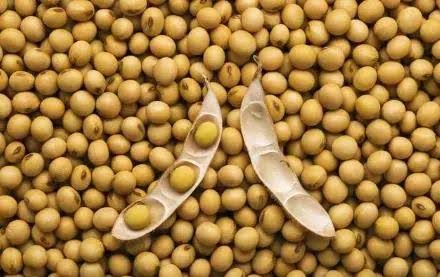
In mid-June, the trade countermeasures against the US officially began, with a 25% tariff added on US soybeans! Based on the current US soybean price of 3400 yuan per ton, after the tariff increase, the price of US soybeans will exceed that of domestically grown soybeans in China. This will undoubtedly deal a huge blow to US soybean exports!
According to the "China Agricultural Product Supply and Demand Report" released by Mei Xurong, vice president of the Chinese Academy of Agricultural Sciences, due to the above effects, domestic soybean prices in China are expected to rise by more than 5%. Looking at the current soybean market in China, although prices have not yet shown such a large increase, signs of an uptrend have gradually begun to appear.
However, what is noteworthy is that after the tariff increase on US soybeans, US soybean exports did not fall but instead rose by a considerable margin! According to statistics from the US Department of Agriculture, US soybean exports in June were 8 million tons, a sharp increase of 127%!
As is well known, in 2017 China imported as much as 33 million tons of soybeans from the US, accounting for one third of China's total soybean imports and one quarter of the world's soybean exports! Its weight in the market is pivotal. After China officially raised tariffs, US soybeans basically disappeared from the Chinese market. So why is it that US soybean exports can still rise instead of fall?
According to information noticed by Science Xingnong, after China raised tariffs, US soybean prices quickly declined. In response, US soybean farmers even spontaneously raised funds to advertise on major US television stations, calling on Trump to normalize China-US trade.
However, it was precisely because of the decline in US soybean prices that US soybeans quickly gained a leading advantage internationally. According to statistics, the main buyers of US soybeans in June included the Netherlands, Spain, Italy, Mexico, Pakistan, Argentina, Brazil and other countries.
What is noteworthy here is that among these countries importing US soybeans, there are actually two soybean-producing countries whose soybean output ranks second and third in the world: Brazil and Argentina! According to Argentina's explanation, the reason for importing US soybeans was to cope with the soybean production reduction caused by the country's severe drought!
If Argentina's explanation is still somewhat plausible, then Brazil's explanation seems hard to justify. Brazil Foods imported more than 1 million tons of soybeans from the US. As a soybean exporter itself, Brazil importing US soybeans at this critical moment can only mean one thing: importing US soybeans and then re-exporting them to China to profit from the difference!
US soybean prices are indeed somewhat cheaper than Brazil's, and during the China-US trade issue, media repeatedly reported that Brazil took the opportunity to raise prices on soybean exports to China. Brazil's practice of taking advantage of others' difficulties does indeed seem less than honorable!
In 2017, China imported more than 50 million tons of soybeans from Brazil, nearly half of Brazil's total domestic soybean output. At a time when China's soybean imports are being obstructed, this move by Brazil undoubtedly further pushes up China's soybean import costs and drives China's soybean prices higher again.
From the above, the root cause is still that China's voice in the international soybean market is too weak. At present, we can only work hard and strive to revitalize China's soybean industry, improve China's soybean output and quality, and gain more say in international soybean trade, so that we can grasp greater initiative and bargaining power in future soybean trade.
This is Science Xingnong. You are welcome to follow, and let us grow our knowledge together.