A Clivia Grows Big Flowers and Green Leaves in Just One Year of Care - Mom's Secret Is Actually a Few Soybeans
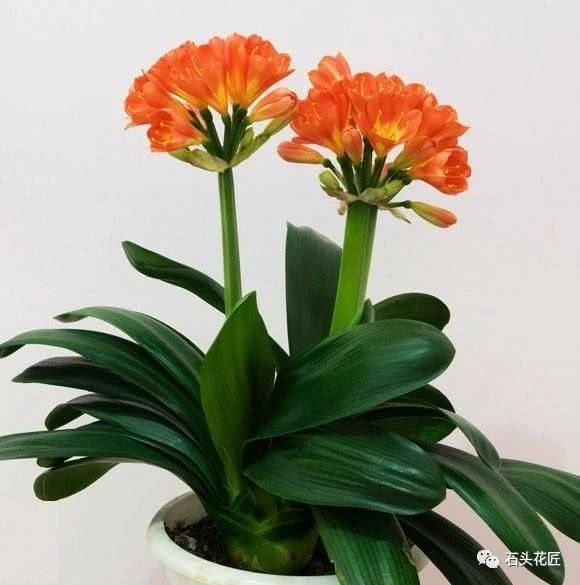
Mom has been retired for a year, and with nothing to do she actually started growing flowers, and now she has been growing them for nearly a year; at first I wasn't optimistic about her growing flowers, because I had rarely seen her tending to plants before, but unexpectedly she now grows them quite well, and she keeps many flowers at home, including clivia, jasmine, gardenia, spider plant, succulents, Chinese rose, camellia, rubber tree, dumb cane, and so on.
What I want to share with you today is that after Mom grew clivia for a year, it actually grew big flowers and green leaves, and only after asking did I find out that she regularly fertilized the clivia with soybeans. Here are the specifics:
1. Put the soybeans into a pot and boil them until the beans become soft; do not boil them until mushy, so that the later steps are easier to carry out.
2. Scoop the beans out and let them cool, then use a single chopstick to poke 7-8 holes 10cm deep in the soil in the pot, not too close to the roots, to prevent the beans from fermenting in the pot and burning the clivia's roots.
3. Put one boiled and cooled soybean into each hole, cover the holes with soil, and place the pot in a spot with good light for fertilization and care.
The method is actually very simple, but many flower growers still have doubts: can putting a few soybeans into a clivia pot really serve as fertilizer? Yes, it can; fermented soybeans are very good fertilizer.
Soybeans are fairly rich in elements such as nitrogen, phosphorus, and potassium, and fermented soybeans are suitable for applying to household foliage plants. However, you must pay attention to the choice of timing and the control of the fertilizer amount.
Using boiled soybeans to fertilize eliminates the earlier fermentation process. So the fertilizer amount must be controlled well; each time you fertilize, put in 7-8 beans, in a spot away from the roots, to avoid the soybeans fermenting and burning the roots.
The timing of fertilization is generally before and after the clivia blooms; do not fertilize during the flowering period, as it can easily cause the flowers to wither early. The fertilization cycle is once every two months.
When caring for clivia, fertilization is very important, but other aspects are also basic guarantees.
When growing clivia, it is best to choose breathable, loose, and airy soil to avoid the potting soil being poorly ventilated later and causing root rot; in summer, keep it indoors to avoid direct sunlight scorching the leaves; water according to the principle of watering when dry and stopping when wet, and do not let water accumulate in the pot, especially since the temperature has been relatively high recently, and standing water can easily cause root rot.
There is also a small tip to share with everyone. Previously, a flower grower left a comment saying that their clivia leaves were growing in a messy way, with inconsistent directions. Why is that?
In fact, the cause of this phenomenon is light, because the direction of the light is uneven and inconsistent, which leads to the plant's leaves growing in crisscrossing and inconsistent directions. The simplest method is to place the pot by a south-facing window, with the overall leaf direction placed east-west, and then the leaf direction can be corrected.