Bonsai Art: A Small Bonsai Condenses a Grand Landscape, Exquisite Craftsmanship Surpassing Nature
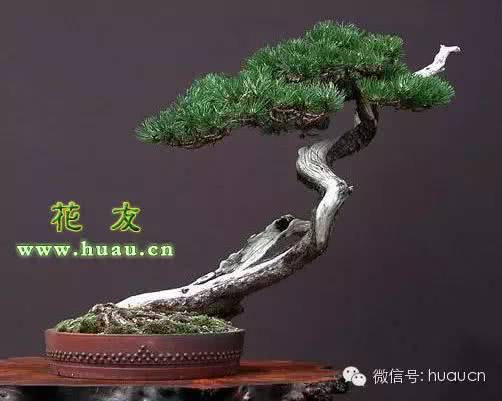
"A small bridge over flowing water, slanted; deep in the distance, a household lives. A distant path where the woodcutter returns late, heedless of falling flowers along the way." This is the artistic conception of bonsai.
Having lived long in the city, one often hears the roar of cars and sees reinforced concrete everywhere, unaware that a paradise exists beyond the world.
In contemporary times, the appreciation of bonsai seems less deeply rooted in people's hearts than the tea ceremony or incense ceremony. Yet a beautiful bonsai work can better embody the true meaning of life: "Follow the nature of things, accord with the naturalness of things, without contrivance or artifice."
The Art of Bonsai Has a Long History
China has long been known as the "Mother of World Gardens" and is the founding country of bonsai art.
"The origin of bonsai can be traced back very early in terms of physical evidence, roughly 7000 years ago, on the fourth cultural layer of the Hemudu site." Ao Kun, associate professor at the School of History at Nankai University, said in an interview with reporters, "According to archaeological findings, two pieces of pottery are engraved with potted plant patterns. One potted plant has five leaves, but it is unknown what specific plant it is; the other has three leaves. These are engraved patterns on pottery, not actual objects, but they indicate that potted plants had already appeared at that time."
A Han dynasty tomb in Wangdu, Hebei, once yielded a mural from the Eastern Han period, depicting a flower pot with 6 branches of red flowers. The pot has a rolled rim, basically the same as today's flower pots, and beneath the pot is a square stand, indicating that by then potted plants had developed into ornamental use for cultivating temperament.
There are many works in Song dynasty paintings that depict potted plants. Ao Kun told reporters that in Wang Shipeng's "Record of Rock Pines" from the Song dynasty, there is this record: "A rustic brought a rock pine to Meixi. It grows in clusters of unusual character, rooted in a fist-sized stone, lush yet not solitary, dense yet not tall, with cypress leaves and juniper body yet the bearing of a pine, concealing the meaning of towering to the sky and covering the earth within a handful, truly an extraordinary among plants."
During the Wanli period of the Ming dynasty, Tu Long's "Surplus Matters of the Studio" has a dedicated section called "Notes on Potted Delights," which is a systematic arrangement of potted plants. Coincidentally, the great connoisseur of the same era, Wen Zhenheng's "Treatise on Superfluous Things," also has a dedicated chapter - the chapter on literati amusements - that discusses bonsai.
The "Occasional Records of Bonsai" from the Jiaqing period of the Qing dynasty is a book specifically about bonsai, revered by later generations.
A Silent Poem, a Three-Dimensional Painting
Though bonsai is small, it is a reduced grand landscape, a grand scenery, pursuing the reproduction of nature's spirit within a small pot. It conveys meaning within hills and ravines, forests and springs, with unique ingenuity, expressing people's aspiration toward the spirit of nature. Precisely because of this, bonsai is called "a silent poem, a three-dimensional painting."
Chinese bonsai is mainly divided into several major categories: tree bonsai, landscape bonsai, tree-and-stone bonsai, and miniature bonsai.
Tree bonsai uses woody plants as the main material, through pruning, wiring, shaping and other artistic processing and careful cultivation, to reproduce natural plant landscapes.
Landscape bonsai uses rocks as the main material, through cutting, carving, layout, gluing and other techniques, with appropriate arrangement of plants and embellishment with pavilions, bridges, boats and other accessories, to reproduce natural mountain and water scenery, achieving the realm of "one peak suggests Mount Tai's thousand fathoms, one spoon suggests rivers and lakes for ten thousand li."
Tree-and-stone bonsai uses plants, rocks and other materials, combining the creative techniques of tree bonsai and landscape bonsai, combining trees and rocks into scenery, carefully handling terrain, landforms, slope feet, water shorelines and other elements to achieve the best effect. Miniature bonsai uses miniature trees, landscapes, tree-and-stone etc. as materials, unfolding creation within the fingers, containing heaven and earth in the palm, can be placed as decoration on a desk, bookshelf or by a window, and can also be arranged in multiple pieces in a curio cabinet, making it a comprehensive display art.
Shrinking a Dragon to an Inch, a Thousand Li Within a Foot
Ao Kun introduced that due to differences in regional environments and natural conditions, traditionally China's bonsai art is divided into five major schools: the Lingnan school, characterized by vigorous naturalness; the Sichuan school, characterized by twisted and varied forms; the Suzhou school, characterized by elegant refinement and classical grace; the Yangzhou school, characterized by strict order and solemnity; the Huizhou school, characterized by ancient simplicity and exoticism; and the Shanghai school, characterized by brightness and smoothness.
Among them, the Yangzhou school excels at using palm fiber to tie each branch of the potted plant into S-shaped curves - "one inch, three bends" - with the top forming an oval-shaped crown (called cloud pieces), imitating the drifting clouds in the sky - because high mountains and ancient trees subjected to wind and snow pressure cause the crown to form a flat state, also closely resembling the form of cloud-covered mountains and misty trees in Chinese painting.
The tree species of the Lingnan school differ from those of the north. They often dig small tree stumps from the wild, then prune them into scenery, mostly using the Lingnan school painting method of Chinese painting. The distribution of leaf clusters is natural, and Shiwan pottery pots from Guangdong are used. This school is relatively prevalent in Hong Kong, China.
The Suzhou school is also accustomed to using wild old tree roots, planting them in spacious pots, pruning and shaping according to traditional methods, coarse wiring and fine pruning, with crowns cut into arcs, staggered and layered, presenting an elegant temperament of ancient trees in lush verdure.
The artistic conception of bonsai is expressed through layout. So-called layout is the arrangement and placement of scenery, that is, composition and shaping. To express towering ancient trees and countless streams and ravines within a small pot requires special artistic techniques. In layout, there must be distinctions of primary and secondary, large and small, far and near, and front and back, handled according to appropriate proportions, achieving harmonious unity within variation, in order to obtain the artistic effect of seeing the grand within the small.
Bonsai layout requires natural variation, each with its own distinctive charm, because trees in nature are inherently uneven - dense forests rise and fall, gather and scatter; solitary trees lean and tilt, bow and lift; colors have depth and lightness, brightness and darkness; forms have sparseness and density, emptiness and solidity. Therefore, in arranging scenery, front and back, high and low must be staggered, avoiding neat symmetry.
Bonsai, through its technique of "shrinking a dragon to an inch, a thousand li within a foot," gathers mountain scenery, trees, flowers and stones within a pot, presenting the myriad moods of nature. It originates from nature yet rises above nature, being an organic combination of natural beauty and artificial beauty. Placing one pot indoors lets one experience, without leaving home, the realm of "picking chrysanthemums by the eastern fence, leisurely gazing at the southern mountains."
·END·
An interactive platform for flower growing, planting, and green plant enthusiasts to exchange ideas, show off, and boast. An online home for sharing flower cultivation methods and home gardening tips. A fresh flower subscription platform.
Fresh flowers: Hyacinth|Stock|Plum blossom|Carnation|Camellia|Kalanchoe|Jasmine|Gardenia|Peach blossom|Balloon flower|Osmanthus|Calla lily|Lily|Forget-me-not|Clivia|Apricot blossom|Honeysuckle|Aglaia|Peony|Sunflower|Chrysanthemum|Serissa|Crown of thorns|Tulip|Narcissus
Green plants: Poinsettia|Money tree|Pothos|Spider plant|Alocasia|Lucky bamboo|Asparagus fern|Aloe|Ivy|Anthurium|Monstera|Bougainvillea|Silk tree|Peace lily|Schefflera|Boxwood|Sago palm|Rubber plant|Maidenhair fern|Snake plant|
huau.cn
……
Search the public account "Flower Friends" or "huaucn" for the latest information
Business cooperation, promotion. Please contact WeChat private ID:ihuaucn