How exactly should azaleas be grown? Be sure not to step on these minefields.
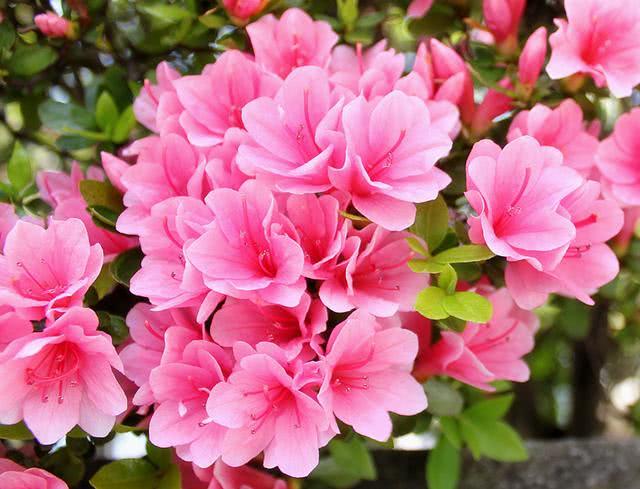
Azaleas like a cool and humid environment. They are averse to intense summer heat, strong light and dryness, and are neither drought-tolerant nor waterlogging-tolerant. But despite all these requirements, we can still grow azaleas well at home, because if we understand the "character" of azaleas, then the whole thing becomes very simple!
Soil: Azaleas are typical acid-loving plants. They have certain requirements for soil conditions. Azaleas like loose, fertile, humus-rich, well-aerated and well-drained slightly acidic soil. So when potting azaleas, we can use black slightly acidic soil taken from mountain forests, ditches and ponds, plus organic fertilizer. Do not use alkaline soil that easily compacts and has poor aeration and drainage.
Cultivation temperature: The best temperature for growing azaleas is between 12 and 25 degrees. This temperature is suitable for azaleas to grow and bloom. In the hot summer season, azaleas should be placed in a shady spot to avoid direct sunlight. And spray water to cool them down and keep them moist.
Watering: Azaleas like moisture. During the spring growth and flowering period, keep the soil moist with sufficient water. The principle of watering is to water thoroughly when the soil looks dry, but at the same time water according to seasonal changes. At the same time, appropriately add some ferrous sulfate and diluted fertilizer water when watering. The water used is best left to sit for a few days before use. In summer, the temperature is high, the air is dry, and water evaporates quickly. While ensuring moisture in the soil, you can spray water on the leaves to maintain air humidity. In winter, water only when the soil looks dry.
Fertilizing: Azaleas do not have high fertilizer requirements. Grasp the principle of applying thin fertilizer frequently. If the nutrients in the flowerpot can meet the nutrient supply for the growth and development of the azalea, then do not apply too much additional fertilizer. During the growth and flowering period, appropriately apply some thin fertilizer.
Pests and diseases: Common pests and diseases of azaleas include bud drop, leaf drop, brown spot disease, etc. For pests and diseases, use insecticide water and a diluted solution of thiophanate-methyl wettable powder to kill insects and treat diseases. Bud drop occurs because during the spring bud-setting and flowering period, the soil in the flowerpot and the air are too dry. The flower buds stop growing and drop, or it can also be that there are too many buds and leaves beside the flower buds competing for nutrients, causing the flower buds to lack nutrients and drop. At this time, nutrient supply should be increased and excess buds and leaves should be removed in time. Leaf drop is caused by changes in the environment, unreasonable watering, and improper fertilizing, resulting in root rot and leaf drop. At this time, when changing the growing environment of the azalea, we should keep it ventilated and keep the soil and air moist. Do not water too much or too little. Do not apply too much or too thick additional fertilizer, to avoid burning the roots, causing leaf drop and plant death.
Pruning: According to the plant shape and flower age, promptly remove spent flowers and dead branches, and cut off diseased, weak and unreasonable branches to reduce nutrient consumption. Ensure the growth of the remaining branches. If the main branches and old stems are too tall, they can be cut about 30 cm from the potting soil, so that new buds will grow the next year and new branches will develop to make the plant shape fuller. Pruning of the whole pot of azaleas should be carried out irregularly for pruning and shaping. Achieve a pot of azaleas with a beautiful plant shape and strong ornamental value.