How do you prune roses? Master these few simple tips for continuous blooming
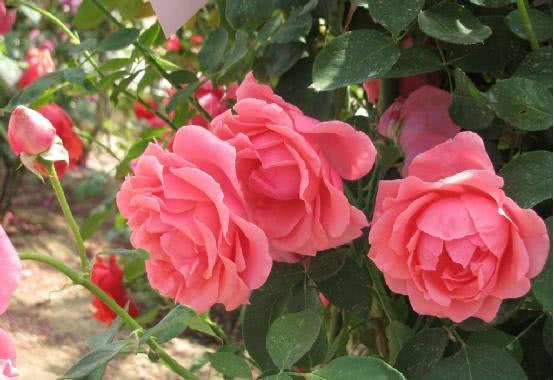
In the author's view, the rose is a very down-to-earth flower. It appears in ordinary people's homes, unlike roses (Rosa rugosa), peonies and the like, which can only be admired from afar and not touched. As long as you put your heart into it, it can fill your whole summer with fragrance. So after the flowers fade, a problem arises: how should you prune after flowering so that the next blooming period also arrives on schedule? This is not something to be done haphazardly!
After each blooming period there is a different pruning method. Do you want to know the correct pruning methods? Then come along with the author for a look!
The first pruning after flowering can be done around May, and pruning should be put on the schedule right after blooming. At this time, pruning should focus on maintaining the rose's plant shape, so that future flowers also bloom neatly rather than scattered. Note that at this stage light pruning is best, making sure to leave about 5 bud eyes on the plant. For branches that are growing poorly, you can be more ruthless, that is, prune hard, so that they grow new branches again.
But the main task is to prune away the spent, withered flowers so the rose does not set seed. Doing this also reduces nutrient consumption and lays the material foundation for the next bloom.
When pruning roses, be careful to keep some distance from the bud eyes, ideally about 0.5 cm above the bud eye.
The second pruning of roses can be done in June or July. Pruning at this time also has its rules, and you cannot just do whatever you like. Once the hot, rainy season arrives, most roses begin to enter a dormant state. At this point you must not prune hard; light pruning is enough. You only need to remove some crossing and overlapping branches and buds to keep the rose well ventilated and exposed to light. Not much pruning is needed. This is a process of building strength, making full preparations for the coming bloom.
The last pruning is around August. At this time you can prune appropriately, that is, moderate pruning. Simply put, leave two or three bud eyes on each branch. You can keep the robust branches, and cut away the old, weak, diseased and damaged branches without hesitation.
If well cared for, roses can bloom every month. But the author suggests not letting it bloom every month, as this takes too great a toll on its growth.