This "flower forcing" is not that "flower forcing" - learn about the secret guide to forcing Kalanchoe blossfeldiana to bloom
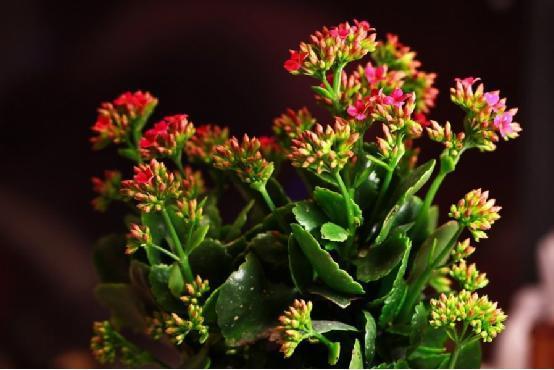
Kalanchoe blossfeldiana, true to its name, is named for its exceptionally long blooming period, and it truly lives up to its reputation. Many fellow enthusiasts take a fancy to this very trait and bring it home to grow. But in reality, enthusiasts run into all sorts of problems - for example, after growing it for quite a long time, when it reaches the age when it should bloom, it still does not flower. What should be done then?
Tip one: the flower pot should not be too large
What is the reasoning behind this? Could it be a fallacy? Fellow enthusiasts should not rush to question it - the editor will slowly explain some of the reasons. One view holds that the larger the pot, the better the Kalanchoe blossfeldiana grows and the easier it blooms. Actually this is not so. The larger the pot, the more space the root system has to grow, which needlessly consumes the plant's nutrients. The end result is sparse, narrow, small leaves, few flowers, and small blooms.
Therefore the editor suggests that the flower pot should still be chosen according to the size of the plant - by all means avoid one that is too large, and it should not be too small either.
Tip two: the plant shape should not be too tall
If the plant shape is too tall, that is the typical case of growing tall but not blooming. To control the plant shape, you can prune the Kalanchoe blossfeldiana, carrying out a major "makeover" before the Start of Autumn. After the long dormant period of summer, autumn happens to be the active growing season for Kalanchoe blossfeldiana, so pruning is best completed before the Start of Autumn. Proper pruning can both dwarf the plant shape and promote branching.
This pruning step is meant to reduce nutrient consumption and promote branching. Supplemented with proper fertilization, you need not worry that the Kalanchoe blossfeldiana will fail to bloom.
Tip three: fertilizer concentration should not be too strong
Some fellow enthusiasts, in order to save effort, apply a large amount of fertilizer all at once, not realizing that doing so will push the Kalanchoe blossfeldiana to the brink of death. Kalanchoe blossfeldiana is a plant with moderate fertilizer needs, so light fertilizer applied frequently is the golden rule. When top-dressing the Kalanchoe blossfeldiana, it is best to choose the bud stage and the blooming stage, and you can dilute bone meal and monopotassium phosphate into a liquid fertilizer.
Besides this, there is another little trick that can keep the flowers blooming nonstop. Fellow enthusiasts can spray the front and back of the leaves with monopotassium phosphate, and at the same time combine it with watering using bone meal and monopotassium phosphate. In the end you will get the effect of flower buds covering the branches - if you do not believe it, fellow enthusiasts can give it a try.