Succulent leaf cutting propagation: choose the right leaf to sprout and root
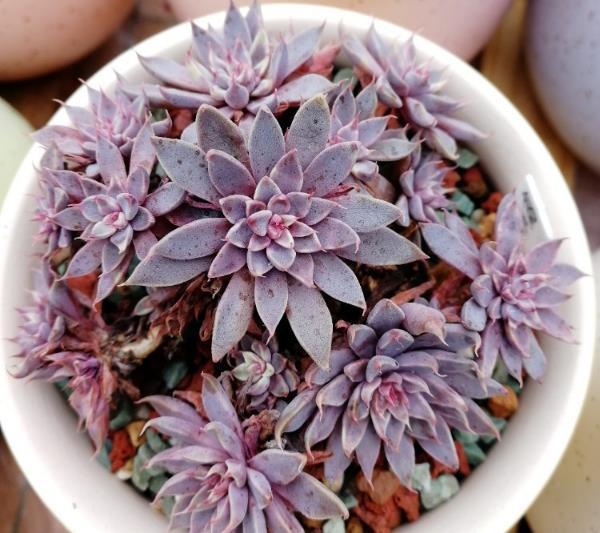
There are many kinds of succulents, and many of them are so beautiful that you want them all. If you buy all of them as succulent seedlings, the cost will probably be higher, but if you just buy succulent leaves and propagate them yourself by leaf cutting, it will be much more economical. So how do you leaf-cut succulents so they will sprout? What kind of soil should be used for leaf-cutting succulents? Actually, there is no need to agonize over it; ordinary soil from a home vegetable garden will do. But you need to pay attention to the soil's air permeability, and it should not be the kind of very wet mud. Succulents like dryness.
The selection of succulent leaves is the most important factor in whether leaf cutting succeeds. We should choose healthy, mature, well-developed leaves full of juice; we must not choose leaves with pest damage or yellowing, and new leaves that are not fully mature are also very unlikely to succeed. Remove the leaf by wiggling it left and right, using light and even force, making sure the leaf stays intact and does not get damaged. Succulent leaves are thick and store more water and nutrients, so compared with other plants the leaf-cutting effect is more obvious. The key to leaf cutting lies in rooting and sprouting, and this process relies on regulation by plant hormones. When the plant loses water (the leaf may shrivel or wrinkle a little), the hormone concentration increases, and together with auxins and other plant nutrients it moves toward the leaf's growth point, rooting and sprouting, while the original leaf gradually shrinks.
Although the soil mix does not need to be too particular, pay attention to better moisture retention. For succulent leaf-cutting soil mix, as long as there is a certain degree of moisture and dampness, you do not need to water; for example, in the spring rainy season, even if you think the soil is dry, you can completely skip watering. When watering, you do not need to soak it through, and try not to water directly onto the succulent leaves, as there is a certain chance they will turn to mush. If the soil mix is watered thoroughly, then with rising temperatures and strong light, the leaf-cutting seedlings may be gone just like that.
When leaf-cutting succulents, sometimes they neither root nor sprout. It may be that the growth point is not intact. The growth point is the place where the leaf connects to the plant. If the growth point is damaged, in many cases it cannot root or sprout, and it is not recommended for leaf cutting. If the leaf is intact but still does not sprout, then all you can do is wait; as long as the leaf is healthy, sooner or later it will sprout. Of course there are exceptions, such as Kalanchoe daigremontiana (mother of thousands); even half a leaf of this thing can grow a ring of tiny plantlets, and it reproduces so wildly that you cannot pull them all out.
Vermiculite is the most suitable medium of all for rooting. Of course, the soil beneath the vermiculite should be moist soil. After spreading the vermiculite on top, the vermiculite will quickly absorb the excess water from the soil below, and later, after roots and sprouts appear, you can judge whether watering is needed based on the vermiculite. If the vermiculite has dried out completely, that means the soil below is about dry too, so you can water. After spreading the vermiculite, you can place the varieties you want to leaf-cut on the soil surface (here it should be said that not all leaves are suitable for being placed directly on the soil surface for leaf cutting; for succulents like Echeveria 'Derlu' (Druj night, Echeveria derenbergii), Echeveria chihuahuensis (Chihuahua, Echeveria chihuahuensis), and Echeveria elegans (Jade butterfly, Echeveria elegans), I have found that first letting the leaves sit until they are a bit soft and then leaf-cutting greatly increases the success rate.
After more than ten days of succulent leaf cutting, you can basically clearly see the new sprouts growing; a few still have not come out, or only have sprouts or only roots, but time can change everything, so wait patiently. When the leaf-cutting sprouts come out, you must carefully observe the dryness and moisture of the vermiculite. If the vermiculite is already completely dry, then you can start spraying water with a spray bottle, and just water the soil below thoroughly~ Leaf-cutting seedlings need more water than large seedlings, so a bit more water is not a problem; water with confidence.
This is a gathering place for succulent enthusiasts, sharing succulent care tips; welcome to follow and exchange ideas.