These best-selling flowers at the flower market are not suitable for keeping at home
Human life is inseparable from plants. In recent years, as living standards have continued to rise, more and more people like to keep a few pots of flowers at home. Flowers can beautify the living environment and add joy to life, and growing flowers with your own hands makes life more meaningful. However, when it comes to keeping flowers at home, not just anything will do, because some kinds of flowers, when kept at home, give off scents that can seriously harm your health.
Through visits and surveys of flower markets in Beijing, it was found that some vendors are currently selling flowers that are harmful to the body when placed at home, and what is worrying is that many consumers who come to buy flowers do not know this.
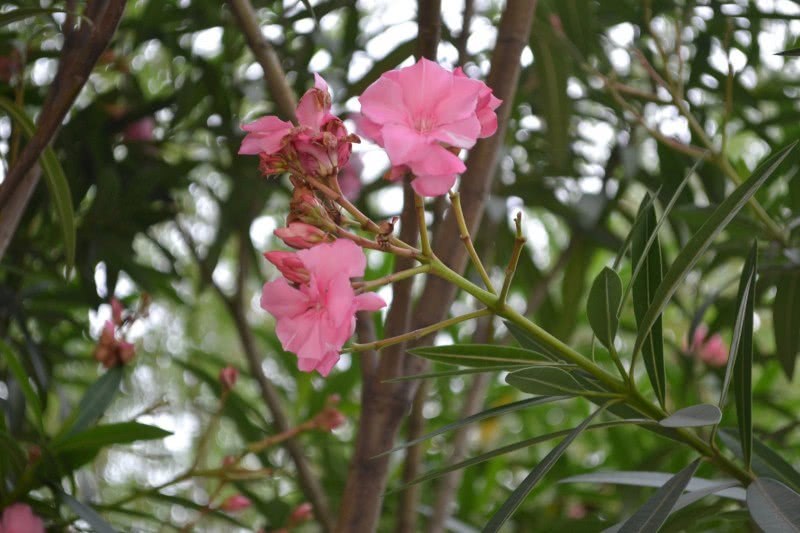
1. Oleander (Nerium oleander), whose stems, leaves, flowers, bark, roots and seeds are all toxic
Oleander is recognized worldwide as one of the most poisonous plants. Its roots, stems, leaves, bark, flowers and fruit contain a variety of deadly toxins. In real life, there have been multiple genuine reports of fatalities caused by the toxins contained in oleander. The toxins in a single leaf are enough to kill an infant. These toxins remain in the plant's trunk even after the plant dies. No animal in nature eats oleander, which shows just how unusual its toxicity is. The largest-dose and most lethal toxin contained in oleander is oleandrin, commonly found in the bark and leaves. When the bark and leaves are damaged, the white liquid they secrete contains large amounts of oleandrin.
Oleander
2. Coniferous plants such as pines and cypresses that give off aromatic scents
Common coniferous plants at flower markets include five-needle pine, Buddhist pine (Podocarpus macrophyllus) and Chinese arborvitae. During growth, coniferous plants secrete a resinous substance, commonly found in the stems, and give off a strong pine scent. At first sniff it seems fresh, but after more than ten minutes it makes people feel dizzy and listless. This scent strongly irritates our stomach and intestines, can seriously affect our appetite and harm our digestive system.
Buddhist pine
3. Night-blooming jasmine (Cestrum nocturnum), whose strong fragrance harms health
Night-blooming jasmine was very popular some years ago, and many families have kept it. This plant, which blooms only at night, gives off a strong fragrance when it flowers and is even flatteringly credited with repelling mosquitoes. What people do not realize is that at night this strong scent releases harmful particles that strongly irritate the sense of smell. People in poor health, especially those with high blood pressure and heart disease, feel short of breath, dizzy, depressed and palpitations, which makes their condition worse.
Night-blooming jasmine
4. Poinsettia (Euphorbia pulcherrima), toxic in all its parts
Poinsettia is mostly used as a seasonal flower and generally appears in flower markets in winter and spring; its bright colors once made it deeply loved. Authoritative departments have publicized its harm to the public through the media: the whole poinsettia plant is toxic, especially the milky white sap secreted when the stems and leaves are damaged. The white sap contains a relatively large amount of toxic alkaloids, which irritate human skin. After irritation, it causes red swelling, fever, rashes and other severe allergic reactions. If accidentally ingested, in mild cases it causes vomiting and diarrhea, and in severe cases it endangers life.
Poinsettia
5. Lilac (Syringa), whose irritating fragrance affects health
Many friends like lilac. When it blooms, the fragrance it gives off is especially sweet, and the scent travels quite far. With heavily scented lilac, after smelling it for a long time people feel uncomfortable and experience physical reactions such as asthma, chest tightness and confusion. In particular, people whose health needs recuperation should stay even further away from such a strong floral scent that is unfavorable to recovery.
Lilac
6. Red spider lily (Lycoris radiata), whose vivid flower color bewitches people
The red spider lily, which has appeared in several very popular films, is well known to Chinese people for its mysterious legends, and its vivid color has also left a deep impression. The red spider lily is the most toxic flower among the Lycoris species. The roots and stems of the plant contain toxic alkaloids such as lycorine, which can cause spasms, vomiting, dizziness and weakness, and have an obvious harmful effect on the human central nervous system. Keeping it at home is especially not recommended.
Red spider lily
7. The highly toxic plant datura
This terrifying plant is very common in the streets and alleys of villages, and because its flowers are highly ornamental, some "bold" people have planted it around themselves. In datura, the leaves, flowers, fruit and roots - the entire plant - are highly toxic. The seeds of datura alone can easily kill a strong horse in a short time, so one can imagine how terrifying its toxicity is. If a human accidentally eats it and cannot be taken to hospital for treatment within a short time, it will cause terrible consequences.
Datura
Especially for families with children, pregnant women, or patients whose health needs recuperation, when choosing to buy green plants and potted flowers to beautify the home environment, a careful choice must be made when faced with good looks versus health.
Whether or not you keep flowers, learn more about these different kinds of knowledge, and do not let flowers and trees harm us. Share it so more people see it.
Fellow flower lovers, if you have other questions, you can leave a comment.
Liking and following is the best support.