How much do you know about the mini succulent? Let us give you a complete introduction to it
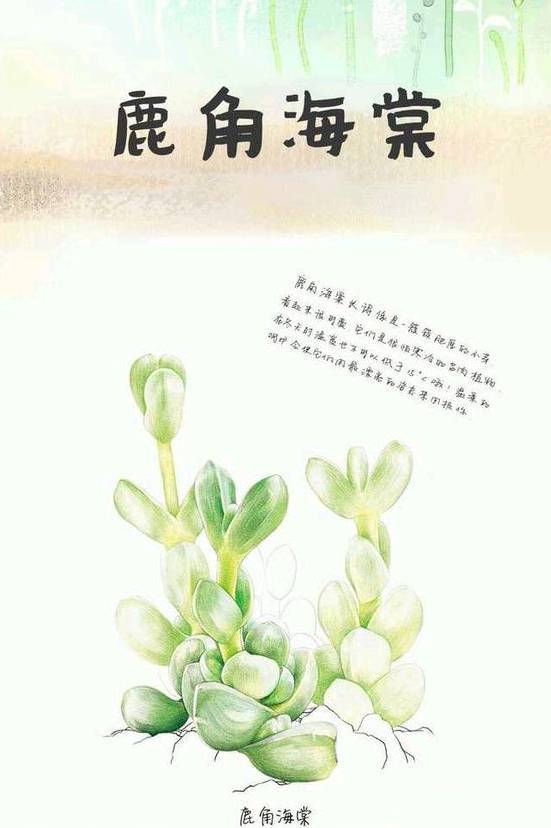
The mini succulentAlso known as fragrant wave chrysanthemum. An evergreen succulent herbaceous plant, often subshrub-like, with many creeping branches. The leaves are fleshy and three-angled. It blooms in winter, with white, red, and pale purple colors. Common varieties are long-leaf and short-leaf, and those that bloom in summer are all yellow.
Care for the mini succulent
1
Temperature and light
The mini succulent likes a warm, dry environment with plenty of sunlight. It is not cold-tolerant and fears high temperatures. When summer temperatures are high, the plant enters a semi-dormant state, so it needs appropriate shading, or the plant should be moved to a place with plenty of indirect light. In autumn, winter, and spring, it should be given sufficient light. In winter, the temperature should not be lower than 15°C.
2
Watering
During the spring growing season, keep the potting soil from drying out, and often spray water on the ground to maintain a certain level of air humidity. In summer, the mini succulent is in a semi-dormant state and can be kept in a semi-shaded place, keeping the potting soil from becoming excessively dry. The cool season is their peak growing season. When the temperature is below 2 degrees, watering should gradually be stopped; keeping the potting soil dry will allow it to overwinter.
3
Soil
The mini succulent is suitable for fertile, loose sandy loam. You can use cinder mixed with peat, cover the soil surface with granular river sand, and water after potting, or keep the soil slightly moist.
4
Propagation
The main propagation method for the mini succulent is cuttings, and it can also be grown from seed.
Cuttings: Best done in spring and autumn. Select tall stem nodes, cut them into 8-10 cm pieces, let them dry for a few days, then insert them into soil. They can root in about 15-20 days. When the roots are 2-3 cm long, they can be potted.
Sowing: From April to May, sow indoors in pots. They germinate about 10 days after sowing. At this time, the seedlings have fine, shallow roots, so watering must be done carefully. After 1 month, the seedlings can be transplanted.
5
Fertilizing
After autumn, the mini succulent begins to grow again. Fertilize once every half month. As winter approaches, stem and leaf growth enters a vigorous period, and flowering begins. When the indoor temperature is kept at 15-20°C in winter, it will bloom continuously.
6
Pest and disease control
When potted plants are kept in excessively humid conditions, the mini succulent often develops root-knot nematode disease, which can be controlled with 3% carbofuran granules. For pest damage, it may be attacked by scale insects, which can be sprayed with a 1500-fold dilution of 55% fenitrothion emulsifiable concentrate.