How do you care for an anthurium to keep it thriving? A full breakdown of practical methods
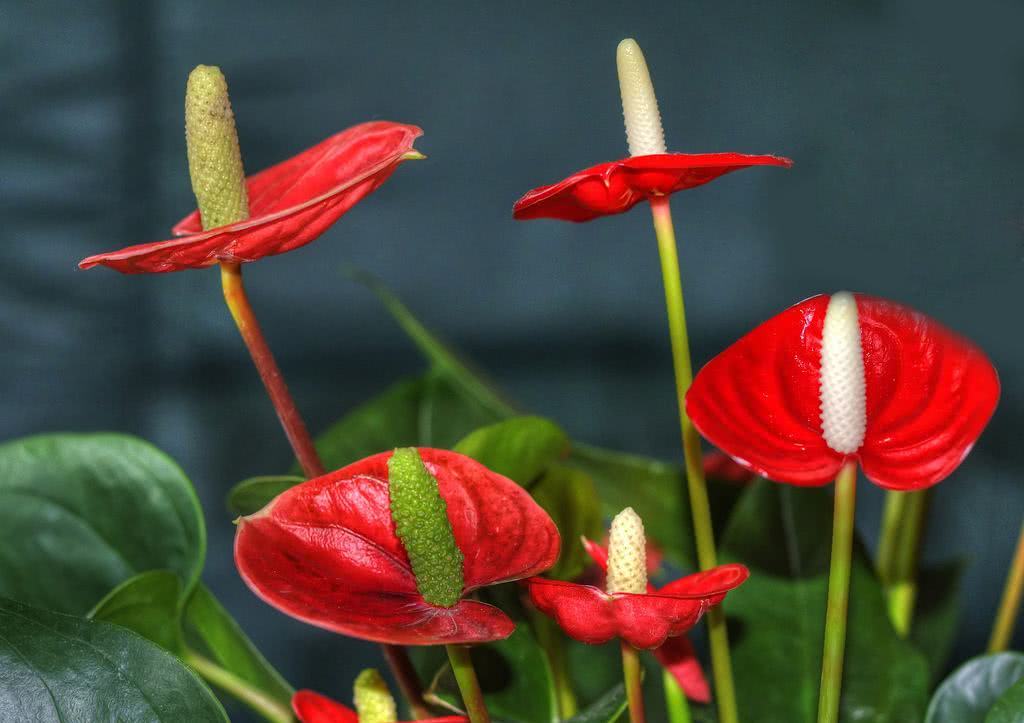
The anthurium has short stem nodes; leaves are oblong-heart-shaped or ovate-heart-shaped. The leaf stalks are slender, the spathe is held flat, leathery with a waxy sheen, orange-red or scarlet; the spadix is yellow, and it can bloom continuously year-round. The vivid red gives a striking visual impression, and it can also absorb waste gases released by the human body, absorb various harmful gases (formaldehyde, etc.), and at the same time help keep the air humid. So how do you keep an anthurium thriving?
One: Soil substrate
Potted anthuriums should use a well-draining substrate; you can use a composite substrate of peat, perlite and sand, or if you find that troublesome you can just buy a ready-made potting mix. If you want the soil to maintain good permeability and drainage, you can mix in some clay pebbles.
Two: Watering
Watering should be considered according to the size of the anthurium plant itself. If your anthurium is still fairly small, after planting you should spray water 2-3 times a day, and always keep the substrate moist to encourage it to send out new roots early and abundantly. If it is a medium or large seedling-stage plant growing fast, it needs more water, and the water supply must be sufficient. Anthuriums like warmth, heat and high humidity, so maintaining relatively high air humidity is the key to growing them well. You can increase air humidity by misting the surrounding area. In hot seasons, water usually once every 2-3 days, and at noon also use a spray bottle to mist the leaf surface to increase the relative humidity indoors. In cold seasons, watering should be done between 9 a.m. and 4 p.m. to avoid freezing the roots.
Three: Temperature
The suitable daytime temperature for anthurium growth is 26-32°C, and the nighttime temperature is 21-32°C. In summer the temperature should not exceed 35°C; if it does, it is recommended to lower the temperature by misting the surrounding area. In winter, keeping it at around 14°C allows it to overwinter safely.
Four: Light
Anthuriums like a semi-shady environment, and light should be moderate; they can be placed in a bright, indirect-light semi-shady spot for care. If there is too little light, the plant cannot carry out photosynthesis, which may lead to malnutrition and affect growth. When light is too strong, some of the plant's leaves will warm up, which may cause leaf discoloration, scorching or withering. Especially in summer, be sure to shade it. During the flowering period, the light requirements are low.
Five: Humidity
Anthurium growth requires relatively high temperatures and quite high humidity. When the temperature is below 20°C, normal indoor care is enough; when the temperature reaches above 28°C, you must mist or use a humidifier to increase the indoor relative air humidity.