Succulent plant care cannot be done by simply imitating the place of origin; you need more hands-on practice.
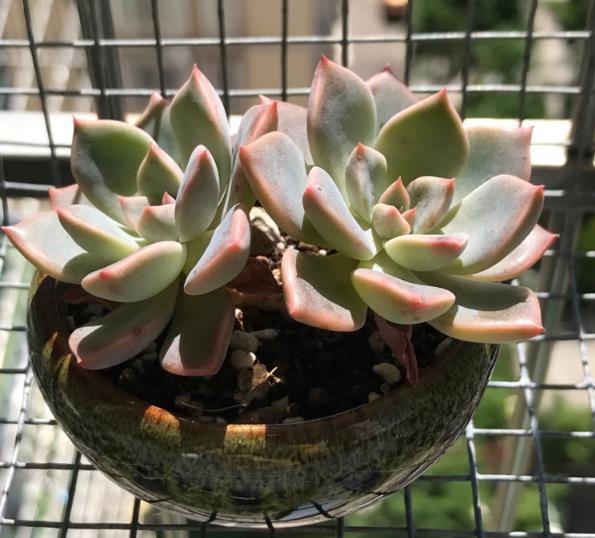
What exactly is the rule for growing flowers? Many people know that the basics to pay attention to when growing flowers are nothing more than temperature, water, soil and light. This view is certainly correct, but different flowers and succulents have undeniably different needs for these four points. So people came up with another method: imitate the environment of the place of origin for care. It must be said that this method is indeed convenient and practical, but its shortcomings and problems are also numerous.
1. It is easy to misunderstand the environment and climate of the place of origin, which leads to poor growing results.
Many flower lovers have never personally visited the places where the plants originate, so they often do not understand them. Take succulents as an example: many succulents come from South Africa, and people often think that the soil there is poor, the climate is hot and dry all year round, and that it is all endless desert. Actually this is not the case. South Africa has a warm subtropical climate all year round, and the climate varies greatly from place to place. Most areas have a tropical savanna climate, the eastern coast has a tropical monsoon climate, and the Cape Plain in the southwest has a Mediterranean climate. Only the northwest is desert, forming part of the Kalahari Basin, while the rest of the region is mostly plateaus and plains. The soil in which succulents native to South Africa grow is often little different from China's garden soil; it is just that the conditions are harsher (less soil, less water). If you misunderstand the place of origin of succulents, then naturally you will not grow them well.
2. Plant variation
This is not hard to understand. Our succulents (especially those bought online) basically all come out of greenhouses, and the fertile, loose peat soil and humid air in greenhouses are often vastly different from the place of origin. Succulents grown long-term in greenhouses will inevitably show some variation, though this effect is not considered great. Moreover, plants are adaptable, so even if you continue to imitate the environment of the place of origin, there will not be much of a problem. Of course, mutated plants are not entirely without merit; everything has two sides.
We can use those plants and the vegetation they form that can adapt after mutation to grow in polluted land or water to improve and restore damaged environments. Such plants are often also more resistant than normal plants and are even more beneficial to humans. For example, the pondweed family plant dwarf eelgrass growing on asphalt soil along the Caspian Sea coast is 5 times larger in volume than when grown under normal conditions, and plants of the goosefoot family also appear in giant forms. As long as they do not reach a level that humans find hard to control, how is that a bad thing? At the same time, they are also warning humanity that protecting the environment is very important!
3. If you grow them according to the conditions of the place of origin, and there are none of the above misunderstandings, the plants still die.
First you need to know that it is extremely difficult to almost completely imitate the environment of the place of origin. Second, even in the environment of the place of origin, some plants will still die; otherwise they would have become overrun there long ago, so it is not surprising that they still die when grown. In fact, there is no absolutely perfect rule for growing flowers. As long as you truly love flowers and practice more, in time you will certainly develop your own set of flower-growing methods and rules!
This is a gathering place for succulent lovers, sharing succulent care tips; you are welcome to follow and exchange ideas.