These plants brought so much joy to childhood; how many of them can you still remember?
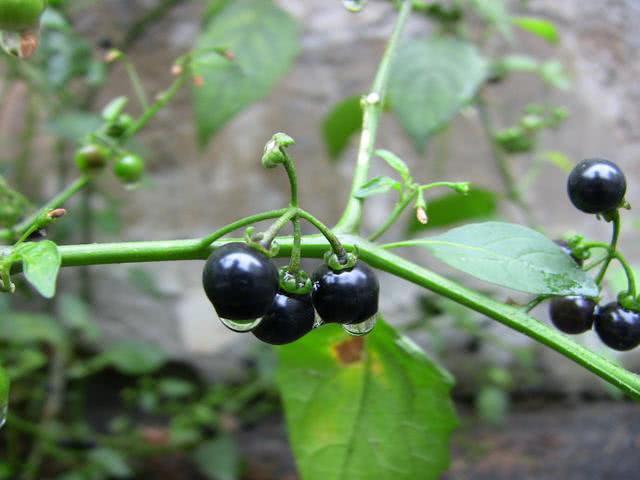
The first plant is black nightshade. When I was little, there was not much to eat, so whenever we saw wild berries we wanted to eat them, but the adults would tell us these wild berries were not edible, so although we craved them, we never ate these fruits. Black nightshade looks like small grapes, very tempting, green when unripe and turning purple-black when ripe. Although we did not eat these fruits, we could still play with them; full of curiosity, we would mash them up and squeeze out the juice to use as ink. In the end, though, apart from staining our clothes and getting a beating from Mom and Dad, nothing much came of it. Who doesn't have a childhood? But I doubt I was the only one who got a beating!
Growing habits of black nightshade: the suitable growing temperature is 22-30°C, and the suitable temperature during the flowering and fruiting period is 15-20°C, at which the fruit-setting rate is high. It is not strict about soil, growing well in loam rich in organic matter with strong water and fertilizer retention, while on clay soil lacking organic matter and with poor aeration, the root system develops poorly, the plants grow weakly, and the market quality is poor; the suitable soil pH is 5.5-6.5. In summer and autumn, growing it in the open field under high temperature and high humidity is difficult; when planted in the open field in winter and spring, the plants grow slowly, and the tender shoots readily become fibrous and aged, resulting in poor market quality, so to meet market demand, it can be cultivated in protected facilities all year round.
When we were little, we often drank cooling herbal teas to clear heat and detoxify, made from all kinds of tree bark or herbaceous plants simmered in a pot with water, and the brewed liquid came out dark. Among them, Centella asiatica was a very commonly used cooling herbal tea, and it could also be cooked as a vegetable to eat; although it was slightly bitter, it was quite tasty, especially when there was meat in it, and not a drop of the soup was left! Perhaps it was because we ate too little meat in those days. Thinking back on it, I feel quite wronged. Centella asiatica can be propagated by seeds, division, and tissue culture; at present, the commonly used method is raising seedlings and transplanting them, which helps the seedlings grow uniformly, makes management easier, increases yield, and saves seeds, but it is labor-intensive.
Goosegrass, which grows most abundantly in the crop fields. When it first sprouts, it is just one or two small, slender tender leaves, almost invisible from a distance. Yet a single light rain is enough for it to flourish and spread like wildfire. Although its roots are shallow and almost merely floating on the soil, if you do not pull it out completely or if you pull it out but still throw it on the ground, then it still cannot be put to death; just one night's dew is enough for it to sprout anew or come back to life, and its vitality is often astonishing. When it grows a little larger, it joints and puts out a slender spike, filled with hundreds and thousands of seeds, fluffy and swaying in the wind, like a mischievous puppy wagging its tail.
Generally called foxtail grass, it is perhaps the wild grass we saw and came into contact with most in childhood. Foxtail grass also comes in all kinds, varying in size and color, but they all have a fluffy appearance. Being clever and handy, we would even use foxtail grass to weave all kinds of cute little animals. Foxtail grass is a plant that cattle, donkeys, horses, and sheep love to eat. Whether old or tender, fresh or dried, it is a very good livestock feed. The dried grass of autumn can also be used as fuel to light fires, boil water, and cook meals, and for warmth and bedding; even more artistically, it sometimes appears in the writings of poets and authors, or in the works of painters and photographers, turning such a lowly foxtail grass into a treasure with artistic vitality.
Childhood memories are always so nostalgic; the surroundings of childhood have entered my dreams time and again. I cannot forget the little river of childhood, nor the beautiful creatures of childhood whose names I could not call, each with a long string of memories. Plants are so familiar to me, yet the plants of childhood are drifting further and further away, hard to find in life, and even when found, they have lost their former charm.
This is a gathering place for flower lovers, sharing flower care tips; you are welcome to follow and exchange ideas.