In summer, succulents need moderate sun exposure; avoid root rot and black rot so they can grow plump
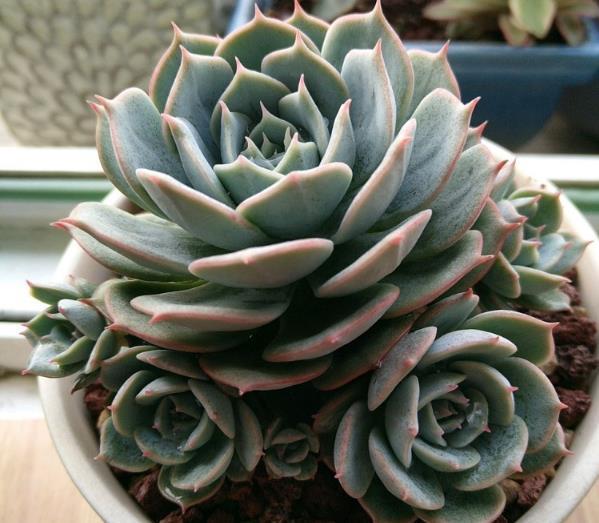
In summer, it is absolutely out of the question to put succulents out in the blazing sun, because summer's ultraviolet rays are the strongest, but some buyers are also very conflicted: they know it is precisely because the sun's ultraviolet rays are strong that succulents cannot be put out to sun, yet they insist on buying those ultraviolet lamps. Undeniably, they can indeed color the plants, but the result is not truly coloring. After a period of time, the succulents will turn purple-black, and after another period of time, they will slowly wither. Even if they do not wither, that purple-black color will remain unchanged, because the cells inside the succulents have already been sunburned by the ultraviolet rays, which is why they turn purple-black.
Moving succulents indoors in summer is not foolproof; ensuring ventilation is the real key. Moving them indoors is to protect them from the sun, and the temperature indoors is also much lower than outdoors, but ensuring ventilation is even more important for preventing black rot. Moving them indoors without frequently opening the windows for ventilation creates a stuffy, hot and humid environment where air does not circulate, which is not conducive to water evaporation and makes it hard to lower the temperature, and can also easily lead to root rot. When growing succulents in summer, sufficient sunlight should be provided, otherwise the plants are prone to leggy growth. The sufficient sunlight mentioned here does not mean being in the sun all day long; the midday period should be avoided.
Succulents dislike waterlogged soil. If you water frequently in summer, the roots will remain wet and rot for a long time, making it hard for them to continue growing. The amount of water must be well controlled. If you really cannot resist the urge, you can water a small amount along the inner wall of the pot or briefly soak the pot (control it to about 10 seconds), that is, let the flower pot sit in the water for a moment and then take it out; a bit of moisture is enough. Experts may scoff at this, but for beginners, keeping succulents alive is the real key. Shading may cause leggy growth and loss of color, making the plants look worse, but if you do not shade them and let them bake in the sun, you may end up with sunburn or even death by sun. For the safety of the succulents, shading is the better choice. When installing a shade net, ventilation must also be taken into account; do not let shading make ventilation worse instead, and ultimately cause the succulents to develop black rot and turn to mush.
Outdoor-grown succulents are very likely to develop rot at the core, because after heavy rain, water remains on the leaf core, and over time the core easily rots. So after heavy rain, remember to remove the water from the leaf core. Summer is a rainy season, so how should succulents be handled when it rains? Of course, when it rains in summer, the air humidity is relatively high, which means that when it rains in summer, you should not water at all. It does not matter if the succulents grow leggy; the key is that they must not turn to mush, and during the rainy season succulents can easily turn to mush with even a slight misstep.
In summer, absolutely do not use that kind of non-breathable soil to grow succulents. Non-breathable soil that compacts is of no help at all for succulents getting through summer; instead, it will kill your succulents. Therefore, soil with a high proportion of grit is the first choice for getting succulents through summer safely. The greatest advantage of gritty soil is that after overwatering it can quickly drain excess water without becoming waterlogged, so the succulent roots can breathe normally and the tragedy of excess water causing root rot can be avoided. Friends who do not want to spend money on grit should also use as much coal cinder, coarse sand and the like as possible to mix their own soil. Do not harm your own succulents just to save effort and money.
In summer, with the obvious high temperatures, once the temperature reaches above 35°C, shading is necessary, otherwise the succulents will get sunburned or even die from the sun. Dark-colored flower pots have strong heat-absorbing properties. If a dark-colored flower pot is exposed to the blazing sun, it is truly like cooking meat. After a while, Paopao will specifically test the temperature difference between dark-colored flower pots and light-colored flower pots under the same conditions, so that everyone can more intuitively understand the harm of dark-colored flower pots in summer.
This is a gathering place for succulent lovers, sharing succulent care tips. You are welcome to follow and exchange ideas.