Orchids never grow? Water them with natural aspirin, and they will sprout many strong little shoots and even grow roots
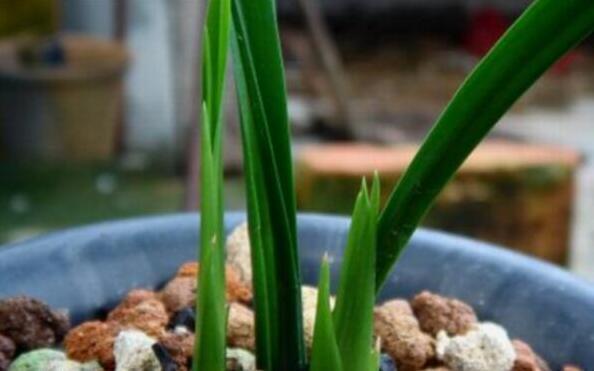
Orchids are the gentleman's flower of our country, and many scholars and refined people love them dearly. Their leaves are slender and unadorned, the foliage stays evergreen, and the leaf texture is soft yet firm. The flowers are delicately fragrant and carry far, giving them extremely high ornamental value. They are a treasure for displaying in the living room, bedroom, or as an accent in the study or entryway. Although many people love orchids, slow growth is a common trait of orchids, and many people find that the orchids they grow grow especially slowly. If old orchid leaves wither and new orchid leaves have not yet grown, it is very easy to end up with fewer and fewer orchids, and they do not look very good either. So is there any way to make orchids grow faster?
Don't worry, today I will share a little method, and I hope you like it!
Still not growing? Pour a little "natural aspirin" into the pot, and there will be many strong little shoots, and it can even grow roots!
This is about using willow branches to grow orchids. Everyone knows that willows are plants that grow especially fast and are especially easy to keep alive. Old people often say: "Plant a flower with care and it will not bloom; plant a willow without care and it will become shade." This perfectly illustrates that the willow's growth ability is outstanding. This is mainly because willow sap contains salicylic acid, which is a natural growth hormone and is called "natural aspirin." This substance can promote rapid growth in potted plants and also has an anti-corrosion effect. It not only lets orchids grow many new little shoots, but also nourishes the roots.
The method of use is as follows:
Fellow flower growers can cut a few willow branches when going to the park. After returning home, remove the leaves, cut them into sections, and then soak them in clean water. After soaking for 2-3 days, the water can be taken out to water the flowers. It is recommended to use it 3-4 times a month. After persisting for a period of time, you will find that the orchid has grown many small side shoots, strong and green, especially delightful.
When your orchid is full of little shoots, then fellow flower growers cannot neglect the other care steps either!
1. Soil
The soil used for orchids should be mainly humus, primarily leaf mold or mountain forest humus soil. In the south, use the humus soil from the place of origin, commonly known as orchid mud; you can also use leaf mold, vermiculite, perlite, etc., artificially mixed into a loose, airy, water-permeable growing medium.
2. Light
Orchids prefer shade and fear direct strong light, so shading should be carried out in spring, summer, and autumn. For growing orchids at home, in order to control the amount of light, it is best to place them on a balcony windowsill or under the eaves with bamboo blinds for shade. Generally, shade from 9 a.m. to before 6 p.m., and pull the blinds open in the morning and after 6 p.m. so they receive scattered sunlight. In winter, move them indoors to a place with visible scattered light, but also avoid direct sunlight. Among orchids, the shade tolerance is strongest in Cymbidium sinense, followed by Cymbidium ensifolium, while Cymbidium goeringii and Cymbidium faberi have weaker shade tolerance.
3. Watering
Watering orchids depends on the species, growth condition, and local climate. It should be moist but not wet, dry but not parched; watering cannot be too much or too little. Grasp the principle of not dry in autumn and not wet in winter. In winter, when the temperature is low, the plant is in a dormant state, so watering should be controlled. Generally, water once every 5-7 days, but Cymbidium sinense, which blooms in winter, needs more water.
That is all for today's sharing