Sorghum was once one of the five grains, but today very few people grow it. Is it because it does not taste good?
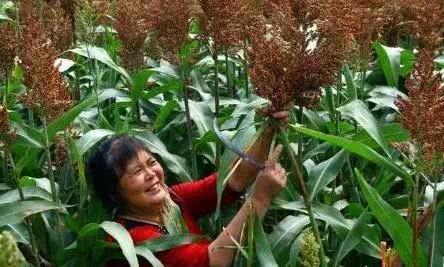
Sorghum belongs to the "chestnut" among the five grains "millet, beans, hemp, wheat, and rice," and for a very long period it was a major food crop in China. However, with the continuous development of science and technology, the breeding of high-yielding varieties of wheat, corn, and rice, and the rapid development of the fertilizer industry, sorghum has gradually faded from the dining tables of ordinary households.
There are three reasons why very few people grow it now:
First, from an economic perspective, sorghum takes about 95-160 days to mature. According to the latest data from the National Bureau of Statistics, in 2016 China's sorghum yield per unit area was 318 kg per mu. Since 1990, the yield per unit area in 2015 was the highest, at 391 kg per mu, far lower than other crops such as corn (ordinary corn is around 700 kg, and high-yield corn reaches more than 900 kg).
Moreover, spring-sown corn takes about 120 days to mature, and summer-sown corn takes about 100 days. Although the price of corn is lower than that of sorghum, corn's advantages in yield and cultivation management are beyond sorghum's reach. So from an economic perspective, growing other crops is clearly more cost-effective than growing sorghum, and naturally fewer people grow sorghum.
Second, from the perspective of taste, before chemical fertilizers became widespread, when wheat yielded only 50 kg per mu, sorghum already yielded more than 100 kg per mu. But sorghum is not as tasty as one might imagine. The seed coat of sorghum contains a large amount of tannins, the same substance found in many unripe fruits, such as green persimmons, which are truly unpleasant to eat.
But in an era of food and clothing shortages, sorghum's relatively high yield made it once a staple food for Chinese families. Now that material life is so good, occasionally eating a meal of sorghum steamed buns or the like feels fine, but eating sorghum as a staple food every day, and wanting to eat something else but having nothing, is not just ordinary discomfort. Nowadays, many elders at home, when recalling the era of sweet potato flour and sweet potato buns when one could not survive without sweet potatoes, all sigh at how wonderful a life with rice and flour every day is. So from the perspective of taste, sorghum's withdrawal from the staple food stage is also entirely reasonable.
Third, from the perspective of demand, there is only a market when there is demand. Since eating sorghum all the time is not as comfortable as eating rice and wheat, sorghum can be used as feed and can also be used for brewing alcohol. There is also a type of sorghum whose stalks, after variety breeding, contain about 20% sugar and can also be used as feed. But in 2016 China consumed about 8.3 million tons of sorghum. Compared with food crops such as wheat and corn, the market demand is worlds apart. From the perspective of demand, the market demand for sorghum will not let sorghum return to the staple food stage again.
The above comes from Science Agriculture.