Clear for orchids, rich for jasmine: growing jasmine demands a bold hand
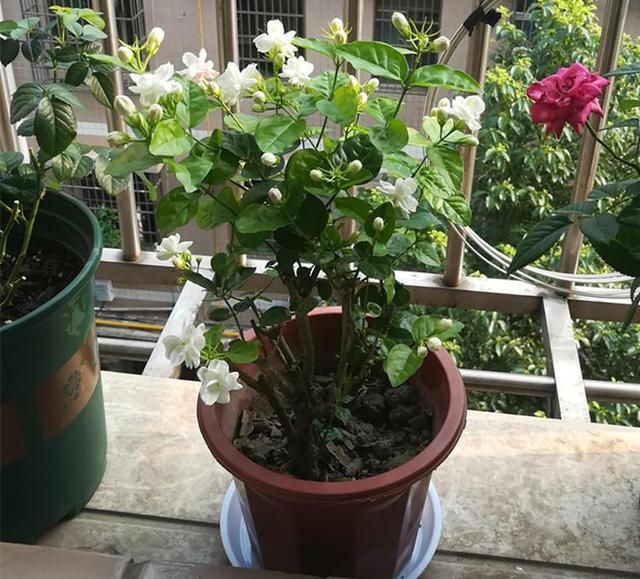
Jasmine is a flower that loves fertilizer, hence the saying "clear for orchids, rich for jasmine." Especially during new flower formation and the peak bloom harvest period, you must pay even more attention to fertilizing regularly to ensure the plant's nutritional needs are met. You could say that for growing jasmine, fertilizing has to be done with a "bold hand."
Fertilizing jasmine should be carried out according to the different seasons, different growth stages and the weather conditions. When fertilizing, stick to the principle of "light fertilizer, applied frequently": apply more during the hot growing season, less during the cold season, and none during winter dormancy (except for plants overwintered in a greenhouse). Generally, apply a general-purpose organic fertilizer for flowers once a week, diluted 500 times and poured onto the roots. But during the peak growth season, when new flowers are forming and at full bloom, apply a general-purpose organic fertilizer solution every 1-2 days, so as to promote vigorous growth and blooming.
In addition, fertilizing jasmine requires a fertilizer containing all three elements: nitrogen, phosphorus and potassium. Nitrogen fertilizer can make jasmine's branches and trunk sturdy, its flowers and leaves large, and its growth luxuriant. But applying too much easily causes the branches and leaves to grow excessively, while too little leaves the plant small and weak. Phosphorus fertilizer can make jasmine's flowers bloom well; a lack of phosphorus fertilizer affects blooming. Potassium fertilizer mainly enhances jasmine's ability to resist cold and disease.
When growing jasmine at home, many flower lovers like to apply soybean cake or sesame oil residue to jasmine, soaking and fermenting it, then diluting with water and pouring it on the jasmine. With homemade fertilizer solutions, the amount mixed in must be strictly controlled. Liquid fertilizer made by soaking soybean cake or sesame oil residue must be diluted with water before use; never apply the undiluted liquid, because even a relatively low concentration of the undiluted liquid easily burns the roots and turns the plant's leaves yellow.
For those who want to make it themselves, you can do it like this: soak crumbled soybean cake or sesame oil residue in clean water weighing 10 times its weight, put it in the sun for over 1 month to fully ferment and decompose, and when the water turns dark brown and smells strongly, it is ready to be diluted with water for use. When fertilizing, first take one part of the undiluted liquid fertilizer, then add 10-15 times its volume of clean water, stir thoroughly, and spray it on with a watering can.
When growing jasmine, it is strictly forbidden to apply raw fertilizer that has not been fermented and decomposed, such as water from washing fish or water from rinsing out milk bottles, and even more so, do not place eggshells with leftover egg liquid upside down in the flower pot, because these raw fertilizers cannot be absorbed by the plant; once applied, they do not serve as fertilizer and also compact the soil.
For jasmine whose roots have been burned by a fertilizer concentration that is too strong, causing leaf drop, you must immediately repot it. The method is: take the affected plant out of the pot, first remove the outer layer of soil around the roots, then replace it with fresh potting soil. After potting, immediately water thoroughly, place it under a shade awning, and after some time, once the plant grows new branches and leaves, put it in the sun for normal care.