How do you grow lithops so they grow fast? All the secrets are right here.
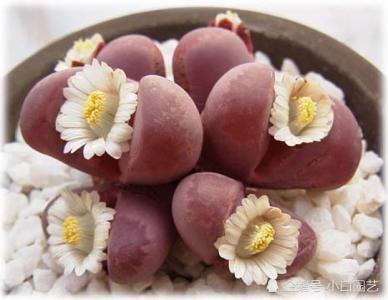
Lithops originate from southern Africa and southwestern Africa, generally growing in crevices of rock beds, and are called "living stones." Lithops can bloom, and when they flower at the same time, the ground covered with numerous lithops can be seen very clearly. When the dry season comes, they basically return to their original state. Lithops must grow into a stone shape, and even their colors mimic the colors of stones, so that they can effectively avoid being eaten by herbivores. This is how they have survived to this day, forming a wide variety of lithops. Many friends wonder: how exactly should they be grown to make lithops grow fast? Follow the editor below to learn more.
About lighting
Lithops are indoor flowers and should be kept in a greenhouse for care all year round. They are not suitable for open-air cultivation, nor for planting in the ground. When grown in pots, the pots should also be raised with bricks or placed on a rack or table of a certain height, to avoid the pots being submerged by water entering the greenhouse during heavy rain, which can cause the plants to rot. At the same time, provide more ventilation to prevent them from smelling bad.
Sunlight
Lithops grow slowly or stop growing completely during high summer temperatures. Under well-ventilated conditions, give them sufficient light. If they are cultivated in a greenhouse with poor ventilation in summer, avoid strong direct sunlight, control watering, or even cut off water completely, so that the plants enter dormancy in a dry environment and get through the hot summer. In midsummer, shade them appropriately to avoid strong direct sunlight. At the same time, strengthen ventilation in the growing area, thereby lowering the temperature and humidity, and provide as much as possible an environment suitable for lithops to spend the summer safely. Fourth, during the summer period, do not move the plants around at will, so as not to affect their safe passage through summer due to changes in the microclimate.
About water
Watering is generally done at night or in the early morning when the temperature is lower. Do not water during the day when the temperature is higher, so as to avoid harming the plants due to a sudden drop in temperature. During cultivation, avoid rain exposure, especially prolonged rain or heavy rain, otherwise excessive water absorption will cause the tops of the plants to split.
About soil
If the soil has poor air permeability and the cultivation environment has poor ventilation, it will also cause the plants to rot. Therefore, for the soil, use as breathable a medium as possible for growing lithops.
The issue of pest and disease prevention
Lithops are mainly affected by leaf spot disease and leaf rot disease, which can be sprayed with a 600-fold dilution of 65% zineb wettable powder. Pests include ants, root-knot nematodes, and root mealybugs. Changing the soil can reduce damage from nematodes and root mealybugs, and abamectin can also be used as a root drench. To prevent ants, double-potting with a water barrier can be used for care, so that ants cannot climb onto the tender, juicy, spherical leaves.
About settling into the pot
Regarding settling into the pot, after the plant is buried in the growing medium, it must be given a heavy watering to encourage rooting, preferably at night. By the next day, place it in diffused light, or give it a little gentle sunlight, but absolutely do not expose it to strong sun. Wait until the plant shows a tendency to grow taller, then place it in ventilated, direct sunlight, to ensure that growth hormones concentrate at the top and prevent leggy growth. After a few days, if the plant is no longer loose, it has basically settled into the pot.
The joy of growing stones lies in the process. Cultivate them carefully, and absolutely do not try to pull up seedlings to help them grow or deceive yourself by covering your ears while stealing a bell. The above is a little experience summarized by the editor, and I hope it can provide some reference for friends who love stones.