A succulent has not been repotted for three years, its leaves are withered and it looks listless. How can it be saved?
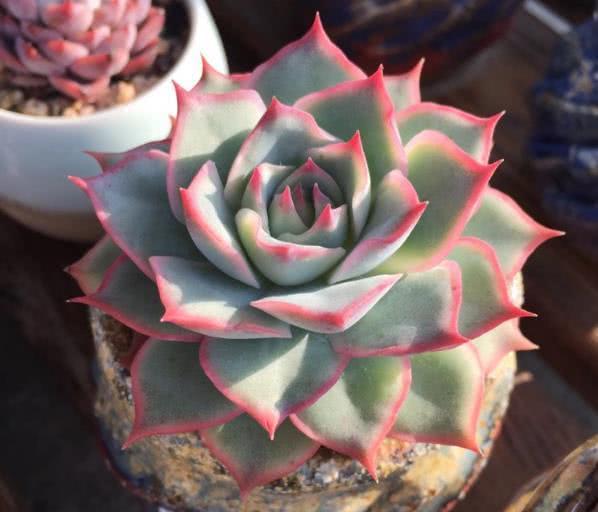
Generally speaking, we usually choose to repot succulents with fresh, nutrient-rich soil once every one or two years, because the nutrients in the original soil may already be used up, and it may also become compacted. Repotting is greatly beneficial to the later growth of succulents. As for me, I always think about being economical, so I insisted on not repotting my succulents for three years. As a result, the root system of the succulents is not that good, which has caused the leaves to wither somewhat.
The steps for repotting a succulent: first, remove it from the pot. Simply put, this means prying the succulent out of the pot so that the root ball separates from the pot. Shake the soil off the roots cleanly, cut off excess rotten roots and old roots, and keep the thick main roots. Place it in a cool, ventilated place to dry for 2~5 days until the wounds are dry, then pot it. When planting, a layer of mesh should be placed over the drainage hole at the bottom. The specific material depends on personal preference; it can be gauze that is not used at home, or a small piece cut from old clothes. Its main purpose is to prevent pests and keep soil from leaking out of the bottom of the pot.
When mixing soil, I mainly use coarse perlite, Northeast pine needles, and gravel, at a ratio of about 5:3:1, then add a small amount of charcoal, activated carbon, and some nut shells, etc. This soil mix is very breathable, and the filling materials in it can also slowly release nutrients such as humic acid. It is moderate in weight, and the key point is that it is cheap. However, it may not last as long as pure granules, but for mature succulents, coarse granular soil really works very well.
Some people say that after potting you must not water immediately, while others say that after potting you must water thoroughly once. This varies according to personal experience. But I still prefer to water a little after potting. In my mother's words, this is called "settling water." Then I put it in a cool, ventilated place with bright, indirect light for a week to let it grow roots well. After a week, it can be taken out for normal care. Of course, if you choose to pot in moist soil, it is best not to water at all for the first three days.
Volcanic rock is not compatible with plant roots. It can be considered for top dressing or as a bottom layer in the pot, but it is best not to use it in a soil mix. If cost is not a concern, Kanuma soil and green zeolite should be the best soil mix components. The maifan stone sold for succulents on the market is actually a kind of granite, but many maifan stones are actually fresh grayish-white granite gravel. On close observation, you can even see reflections on the surface of the particles. This kind of fresh rock does not absorb water or breathe, and it is very difficult for it to release mineral nutrients. It is not conducive to the root respiration of succulents, so if you are going to use it, use granite that is highly weathered.
Quite a few succulent varieties are relatively miniature, and their growth is relatively slow. They will not grow very large in a short time like radishes or lettuce, so their demand for fertilizer in the soil is also very limited, which means they do not need to be repotted every year. Some varieties must be grown in relatively poor soil to do well. For example, certain ornamental varieties of columnar cacti that have undergone cristate mutation, such as the san pedro cristata, are very prone to reversion when cultivated in fertile potting soil, growing tall and straight columnar stems, which seriously damages their ornamental value.
This is a gathering place for succulent lovers, sharing succulent care tips. You are welcome to follow and exchange ideas.