How much a camellia blooms is related to soil conditions
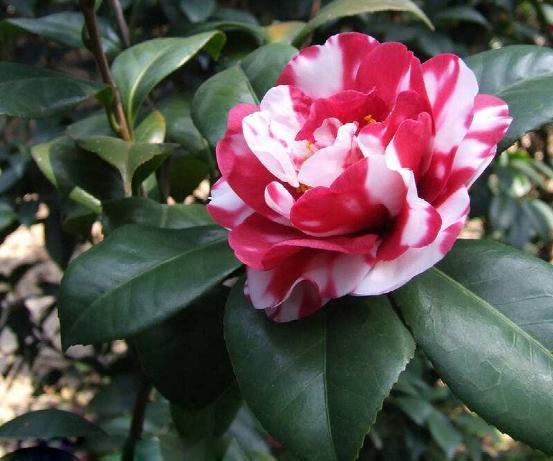
The camellia's requirements for soil are quite a set of rules; it is not that it is very picky, but if one really had to describe it, then it would be strict. Camellias generally prefer acidic soil. If you want to know more exciting content, then read on patiently; I guarantee there will be no dull moments and it will be full of useful information!
Camellias like two kinds of soil. One is sandy red loam; you can try the power of sandy red loam. First, the most
important point is that the soil is acidic, and sandy red loam achieves this. Its soil is airy and breathable, and it contains relatively abundant minerals. After planting, rooting is especially fast, but at the same time this soil also has a downside, namely poor fertility, so after planting it is necessary to fertilize appropriately.
The other is black soil rich in humus; generally this soil is more common under trees in deep mountains and old forests. This black soil is not only loose and breathable, but also rich in organic matter, and is very suitable for camellia growth. If you do not have the conditions to find this soil, you can settle for the next best thing and buy it on the market.
In addition to the useful information above, I have also prepared some "surprises." Next, you will see some precautions for growing camellias. Are your little notebooks ready?
When watering camellias, you can first let tap water sit for a day, wait for the ammonia in the water to slowly evaporate completely, and only then water the camellias. If conditions permit, you can add ferrous sulfate to the water; the benefit of doing this is that it can effectively improve water quality.
Camellias cannot tolerate overly strong light exposure, so in summer and early autumn, attention should be paid to shading them from the sun.
When fertilizing, not only should attention be paid to the amount applied, but also to the different fertilizers needed at different stages. For example, too much nitrogen fertilizer can easily cause flower buds to wither; after flowering, fertilizer can be applied sparingly or not at all.
Do not keep staring at when the camellia will bloom; sometimes temperature also affects the camellia's flowering period, and camellias cannot stand the cold.
So with all this useful information, have you learned it? If so, then congratulations, you have conquered a "big mountain" on the road to growing camellias.