How to extend the flowering period of roses? Four essential tips
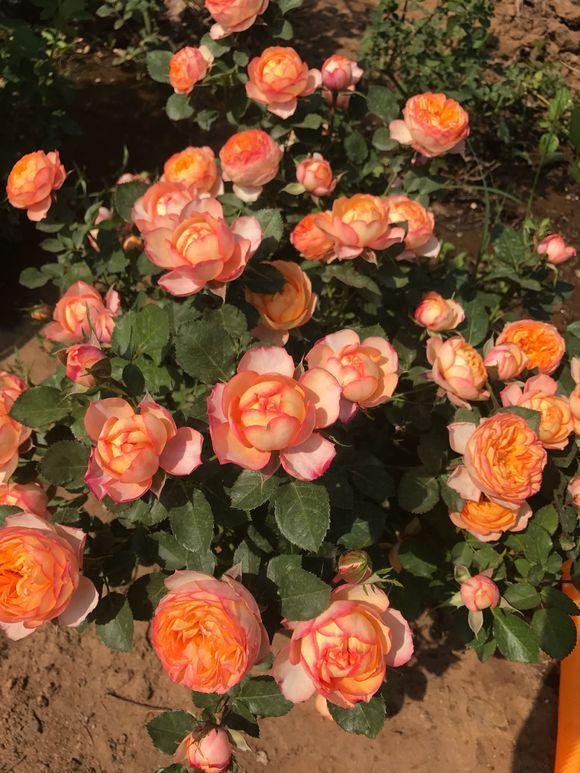
The reason roses are called "monthly flowers" is that their growth cycle is relatively short, and they bloom within one month. Buds appearing on them throughout the four seasons are a common sight, and for flower lovers this is very pleasing to the eye, but as for the length of their flowering period, it is closely related to how well they are cultivated. So how can you make roses produce more flowers that are dense and beautiful?
As for the length of the rose flowering period, the flowering periods in early spring and in the early part of the transition into winter are generally longer. Setting aside the seasonal growth patterns of roses, the main factor affecting how long the flowering period lasts is also temperature; temperature is inversely proportional to the length of the flowering period, meaning that when temperatures are high the period is short, and when temperatures are low the period is long. In addition, it depends on the health of the rose plant; firm, thick petals will last somewhat longer.
Conversely, if the seasonal climate is suitable, the flowering period can last as long as about 10 days; if the climatic conditions are not favorable, it may last as little as 1 day, and both are normal phenomena. But overall, you cannot change the objective climate, though you can improve the environment artificially. For example, you can give the roses a small shelter and surround them with curtains and other warming measures, or move them to a cool, shaded place to lower the temperature, which can also extend the flowering period. By improving environmental conditions according to different environments, you will get unexpected rewards.
Four conditions: sufficient fertilizer and light are key, and constant temperature and pruning are indispensable
Rose buds are large, so they naturally require a lot of fertilizer; an appropriate amount of fertilizer will make them grow more vigorously. But fertilizing also involves the distinction between organic and inorganic; before the roses sprout, the branches and leaves are relatively tender, so organic fertilizer is more suitable for early care. You can use loam, leaf mold, decomposed manure, and sandy soil in a ratio of 5:2:2:1 to make potting soil, and then apply fertilizer once every half month.
During the growth and development stage, roses need to receive sunlight more fully than usual, with 8 hours as the standard measure. However, direct sunlight at noon on the top of the plant should not be exposed directly, as it will cause accelerated water loss in the roses, so around noon is not the best choice for supplementing light. This can extend their flowering period.
The temperature roses feel is much lower than that of humans; above 33°C they enter a semi-dormant state, and 20-25°C is their preferred temperature range. In summer, when high temperatures are common, you can use spraying to mist them with water to achieve artificial cooling and replenish moisture in time. This is beneficial to the growth of rose flowers and leaves.
When pruning, pay attention to selecting the part below the third compound leaf of the flower, first pruning weak branches and then vigorous ones; this helps the roses grow flower buds earlier and strengthen the branches. At the same time, the pruning length should be controlled at 1/2 of the branch, to avoid delayed axillary bud sprouting, and it is appropriate to leave about 5 flowers. Too many flowers easily disperses nutrients and fails to achieve the expected effect, but too few will result in small flowers and also affect the next flush of blooms.