He brought down two important imperial ministers with a single accusation. Why did Emperor Qianlong weep after his death?
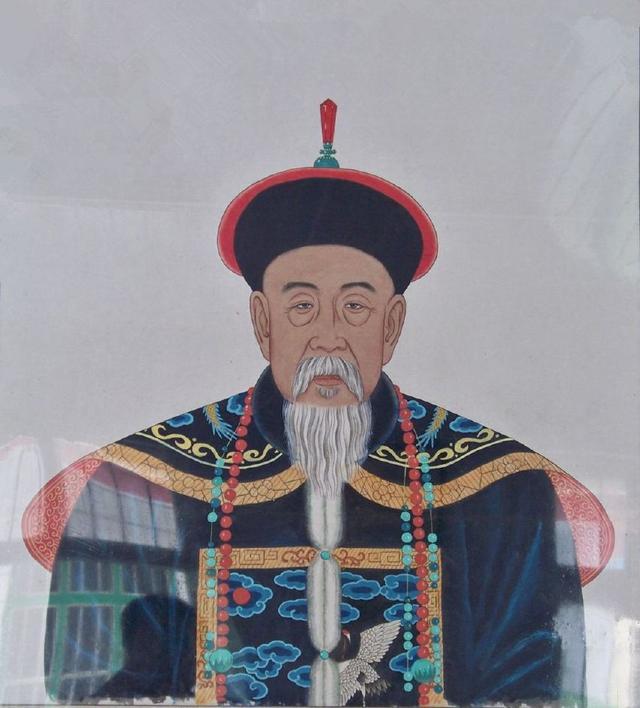
In 1739, there were two enormously powerful and influential ministers at the Qing court.
One was the Grand Secretary Zhang Tingyu, who managed confidential state affairs. He was a veteran of three reigns, those of Kangxi, Yongzheng and Qianlong, deeply trusted and holding the highest position a subject could hold, and by Emperor Yongzheng's posthumous edict he was to be honored in the Imperial Ancestral Temple after death.
The second was Neqin, a famous general of the Yongzheng and Qianlong periods. Neqin was a man of the Manchu Bordered Yellow Banner, of impeccable pedigree, and had successively held such important posts as Minister of the Imperial Household, Grand Minister of the Grand Council, Minister of War and Minister of Personnel.
Yet in 1739, these two important imperial ministers were simultaneously "dismissed": they had been brought down by one man's accusation!
This man was Liu Tongxun. Liu Tongxun, courtesy name Erdun, art name Yanqing, was born in 1698 in Qiangzhou, Shaanxi. Liu Tongxun's grandfather Liu Bixian was a jinshi graduate, and his father Liu Qi was also a jinshi graduate, so Liu Tongxun received a good family education from childhood and passed the jinshi examination at the age of 19. Truly "three jinshi in one family," a splendid distinction.
Liu Tongxun's official career was smooth sailing as well. After passing the jinshi examination, he successively served as compiler, attendant in the Southern Study, attendant in the Imperial Study, household official and Grand Secretary of the Grand Secretariat. In 1737, when Liu Tongxun held the post of Vice Minister of Justice, rank 2b, he was only 35 years old. At that time Liu Tongxun's mood was probably that of "riding the spring breeze, my horse galloping swift; in a single day I take in all the flowers of Chang'an."
Not long afterward, Liu Tongxun's mother died of illness. According to the ritual system of the Qing dynasty, Liu Tongxun resigned his official post and returned to his hometown to observe mourning for his mother.
In 1739, Liu Tongxun's mourning period ended and he returned to the capital. The court appointed him Left Censor-in-Chief of the Censorate. The Left Censor-in-Chief held the rank of 1b, a high and powerful position, which shows how much Emperor Qianlong valued Liu Tongxun.
The duty of the Left Censor-in-Chief was to supervise all officials, and he could even "memorialize on the basis of hearsay." Before long, Liu Tongxun struck a heavy blow, aimed directly at the important imperial ministers Zhang Tingyu and Neqin.
Liu Tongxun impeached Zhang Tingyu for intermarrying with the Yao clan and for shielding each other in official recommendations, and asked the emperor not to promote or entrust Zhang Tingyu with important posts for 3 years.
Liu Tongxun impeached Neqin for being obstinate and self-willed while overseeing the Ministry of Personnel and the Ministry of Revenue, so that "subordinate officials raced to curry favor, and colleagues vied to avoid his sharp edge," and asked the emperor to issue him a reprimand and make him reflect and correct his mistakes. The authority he managed should also be appropriately reduced.
How did Emperor Qianlong reply? He said: "We consider that if Zhang Tingyu and Neqin had indeed arbitrarily wielded power and shown off their might, Liu Tongxun would certainly not have dared to submit such a memorial. Great ministers bear great responsibilities, and it is only natural that they cannot escape people's censure. To be delighted to hear of one's faults is what the ancients admired. If there were the slightest grudge in their hearts, that would not be the bearing of a great minister. Now, seeing this memorial, they should exhort themselves all the more. As for their holding too many offices, if any can be reduced, wait for Our decision."
What did this mean? In Emperor Qianlong's view, if Zhang Tingyu and Neqin had not arbitrarily wielded power and shown off their might, Liu Tongxun would certainly not have dared to submit such a memorial. So Emperor Qianlong stripped Zhang Tingyu and Neqin of their posts and publicly posted Liu Tongxun's memorial of forthright and courageous remonstrance at court. Liu Tongxun's fame spread far and wide because of this, and he became known throughout the court and the land.
Emperor Qianlong greatly appreciated Liu Tongxun. In 1746, Emperor Qianlong sent Liu Tongxun out to serve as Director-General of Grain Transport to control flooding. In 1754, Liu Tongxun was promoted to Grand Tutor of the Heir Apparent and concurrently Governor-General of Shaanxi and Gansu, becoming a great frontier official. During this period, Liu Tongxun surveyed and dredged the Grand Canal, supervised the repair of river channels and controlled flooding for more than 10 years. In 1761, Liu Tongxun became Grand Secretary of the Eastern Pavilion and concurrently managed the affairs of the Ministry of Rites and the Ministry of War.
Emperor Qianlong and Liu Tongxun were close. When Liu Tongxun was 70 years old, Emperor Qianlong personally wrote and bestowed on him a plaque with the 4 characters "Zan Yuan Jie Jing."
On November 16, 1773, on his way to the morning court audience, when Liu Tongxun reached the outside of the Donghua Gate, the bearers noticed that the sedan chair was tilting. Opening the sedan curtain, they found Liu Tongxun's eyes tightly shut and that he could no longer speak. When Emperor Qianlong heard the news, he quickly sent the Minister of the Imperial Household Fulong'an to treat him, but alas Liu Tongxun had already died of illness. He was 76 years old.
Emperor Qianlong was deeply grieved by Liu Tongxun's death. He went in person to Liu Tongxun's home to offer condolences, and finding the doorway narrow and small and the household simple and frugal, he was all the more moved. On the way back to the palace, Emperor Qianlong thought of Liu Tongxun's deeds and could not hold back his tears. He said to the ministers around him: "We have lost a pillar of state!" He also said: "Only someone like Tongxun is truly worthy of the name of a true chancellor."