Detailed explanation of cultivation techniques for various types of cabbage, master the key points of planting
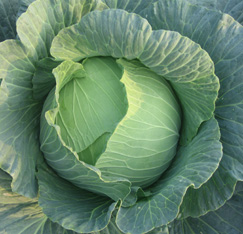
Cabbage pictures
(I) Early-maturing cabbage cultivation
1. Sowing and seedling raising
Small-arch-shed cabbage is sown and raised in greenhouses, hotbeds or improved sun-facing seedbeds from mid-to-late December to early-to-mid January, using strongly winter-hardy varieties such as Zhonggan No. 11, 83-98, Zhonggan No. 12 and Lu Cabbage No. 1.
The seedbed should be prepared with fertile nutrient soil with good physical properties, watered thoroughly, and sown with dry seeds. The sowing rate is 3-4 g/m2. Cover with soil 0.5-0.8 cm. To prevent damping-off, after sowing and after covering with soil, use 50% carbendazim wettable powder or 70% thiophanate-methyl wettable powder at 8-10 g/m2 to disinfect the soil.
After sowing, keep the seedbed at 20-25°C; after emergence, 15-20°C during the day and 5-8°C at night is suitable; after pricking out, about 20°C during the day and about 10°C at night to promote root growth; after the seedlings recover, lower the temperature appropriately. Keep it at 15-20°C during the day and above 8-10°C at night to prevent the seedlings from sensing low temperatures and undergoing vernalization, which would lead to premature bolting.
Prick out when there are 3-4 leaves, with a plant and row spacing of 10-12 cm square. When the seedlings grow to 6-8 leaves, they can be planted out. Harden the seedlings by lowering the temperature 7-10 days before lifting the seedlings, so as to help them recover and resume growth after planting.
2. Planting out and management
When preparing the land, apply 5000 kg of organic base fertilizer and 50 kg of superphosphate per mu, then plow, level and make beds. A 1-1.4 m wide bed plants 3-4 rows, with a shed height of 0.5-0.7 m; a 2 m wide bed plants 6 rows of cabbage, with a small shed height of 0.8-1.3 m.
In early-to-mid March, when the 10 cm soil temperature inside the shed reaches 5°C, plant out in holes with a plant spacing of 30 cm, apply a small amount of urea in the holes as starter fertilizer at 7.5 kg per mu, and water immediately after planting. About 1 week after planting, water to help the seedlings recover and apply a small amount of chemical fertilizer. After the seedlings recover, choose a sunny day to remove the film and cultivate the soil. When they begin to head, topdress and water again, and water once more after about 10 days. Do not ventilate within 1 week after planting. When the temperature is low, cover with straw mats or paper quilts at night to keep warm. Afterwards, keep the shed temperature at 18-20°C during the day and about 10°C at night; ventilate to cool down when it is above 25°C to prevent scorching the seedlings. 25-30 days after planting, when a few plants begin to head, remove the shed; 1-2 days before removing the shed, water lightly and shallow hoe once.
For greenhouse cultivation, cabbage is planted from late January to early February. From February to March, early-maturing cabbage can also be planted in the low, short areas around the four sides of the large shed.
(II) Spring cabbage cultivation
Spring cabbage is cultivated in the open field and is harvested after early-maturing cabbage.
1. Sowing and seedling raising
Use early-maturing varieties with strong winter hardiness. In most areas of North China, sow in sun-facing seedbeds from late January to early February or sow in greenhouses in early February, then prick out into sun-facing seedbeds; in Northeast or Northwest China, sow in greenhouses in early February.
Cover the sun-facing seedbed with film 1 week before sowing. For every about 10 m2 of sun-facing seedbed, apply 100-150 kg of decomposed high-quality organic fertilizer such as horse manure and 1-1.5 kg of compound fertilizer. The bedding soil and covering soil should be sprayed with carbendazim or thiophanate-methyl for disinfection. Rake the bed surface level, water thoroughly, and after the water seeps down, scatter a thin layer of fine soil and sow dry seeds. Use 5-8 g of seed per 1 m2 of seedbed. After sowing, cover with about 1 cm of soil, cover the bed surface with plastic film to retain moisture, and seal the surroundings of the seedbed tightly with soil to keep warm.