An Introduction to the Creation Techniques of Weeping-Branch and Downward-Branch Styles in Penjing
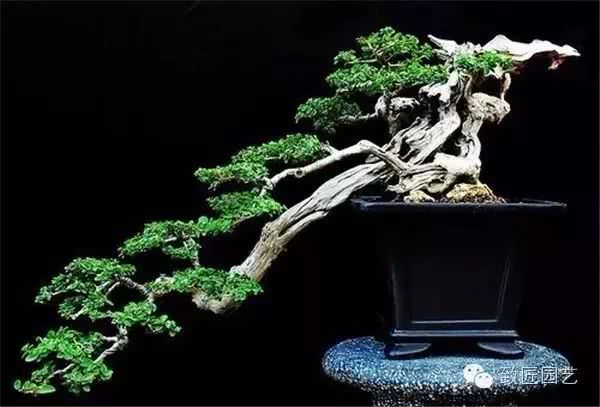
To create a weeping-branch tree penjing, species with abundant and supple branches are often chosen, such as winter jasmine (Jasminum nudiflorum) and tamarisk (Tamarix chinensis). The shaping method relies mainly on wiring and secondarily on pruning, so that all branches assume a weeping form, though it is best if the branches vary in length and are arranged in a pleasing, irregular manner. The trunk may be styled as formal upright, slanting, or curved-trunk. The branches are soft and graceful in shape, giving a sense of leisurely contentment and a distinctive charm of their own.
For a weeping-branch tree penjing, it is best to choose a pot of medium depth or a relatively shallow one. A deep pot fails to bring out that graceful bearing of branches gently brushing, teasing the water and stirring ripples, soft and elegant, as seen along the banks of rivers and streams.
Downward-branch penjingtrees may be upright, slanting, or somewhat curved, but must be of a certain height to fully display the elegant, unrestrained and age-old charm of the downward-branch style. The shaping characteristic of a downward-branch specimen tree is that, at a certain height on the trunk, a large branch grows obliquely downward. The angle between the downward branch and the trunk is best at about 60 degrees; the branches below the downward branch should be entirely removed, or only one small branch retained, in order to highlight the form of the downward branch.
The key to creating a downward-branch specimen tree is the working of the downward branch (the trunk and crown should also be attractive). A robust side branch should be selected from the upper part of the trunk for wiring; the downward-hanging angle of the branch and the length of the hanging branch should be handled flexibly according to the different forms of the tree.
For a downward-branch penjing, it is best to use a shallow pot or a pot of medium depth. If the downward branch goes to the left, then plant the tree in the pot toward the right and somewhat to the rear. Only such a compositional arrangement can set off the towering trunk and the elegant, unrestrained downward branch, evoking the charm of hanging branches drooping upside down on a sheer cliff,
Highlights