Detailed Guide to Spaghetti Squash Cultivation Techniques: The Whole Process from Sowing to Field Management
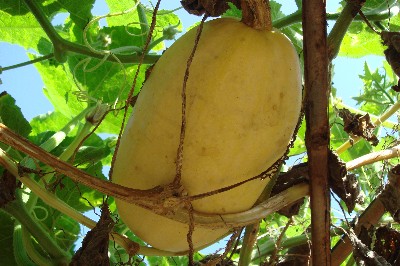
Spaghetti squash
I am a college-graduate village official in Hehu Village. Our village has a vegetable base. I happened to see this spaghetti squash on TV for the first time, and we don't sell this kind of squash around here yet. From what was introduced about this squash on TV, it seems really good. I also looked up information on it online; the growing conditions are not very demanding, and it is not very difficult to grow.
What I would like to ask is: 1. Can it be grown in our area? Our soil here is suitable for growing pumpkins, winter melons and the like. I asked the villagers about our village's land, and it belongs to "night-damp soil." Even if it doesn't rain for a long time, the soil won't get too dry.
2. Is this kind of cultivation feasible?
3. If I want to learn how to grow it, where should I go to learn?
I look forward to the expert's guidance!
Answer: Comrade Liang Rong:
Hello. Spaghetti squash, also known as jin gua, jiao si gua, jin si jiao gua, and si ji mei jiao gua, is an annual herbaceous plant of the Cucurbitaceae family, a variety of zucchini, and a rare specialty vegetable of our country that is storagetolerant, transportable and of high quality. Its edible parts are the young squash and the mature squash. Spaghetti squash has wide adaptability, grows vigorously, and likes fertilizer and sunlight. Anywhere that watermelon, muskmelon or pumpkin can be grown, it can be grown and yield a good harvest. Besides being grown in fields, on hillsides and on wasteland as a trailing vine, it can also be trained up trees, onto roofs and onto trellises, and it can grow and produce abundantly in all these cases; moreover, it has strong disease resistance, and after long-term cultivation no serious diseases have been found. It is widely cultivated in Jingmen City, Hubei Province, with a relatively long history, and it is also grown in northern China. Spaghetti squash is easy to cultivate, and its product is easy to store; after freezing it is not afraid of being knocked or bumped.
I. Botanical characteristics
The spaghetti squash plant is vining, with strong growth vigor and prostrate growth; the stem is relatively thick, nearly round, with long internodes; the leaves are heart-shaped, with shallow lobes, green, 24 cm long and 28 cm wide; there are many lateral vines bearing fruit; the first female flower is borne on nodes 5-7 of the main vine; the squash is oval, 25 cm in longitudinal diameter and 11 cm in transverse diameter, with light yellow skin, a smooth surface, a short stalk, and light yellow flesh; the mature squash is filamentous, with a single squash weighing 1-1.5 kg, and a growth period of about 150 days.
II. Requirements for environmental conditions
Spaghetti squash is a warm-loving, heat-tolerant crop and is not cold-tolerant; seedlings suffer frost damage when exposed to frost. The suitable temperature for seed germination is 25-30°C, and the suitable temperature during the growth period is 25-30°C.
Spaghetti squash is a light-loving crop, especially fond of strong light, and grows well under conditions of sufficient light; it is not shade-tolerant and cannot be intercropped or relay-cropped with tall crops.
Spaghetti squash is drought-tolerant but not waterlogging-tolerant. During the growth period and the squash enlargement period it needs sufficient water; if water is lacking, the plant develops poorly and the squash does not grow large.