The growth-control use of monopotassium phosphate, many people don't know about it
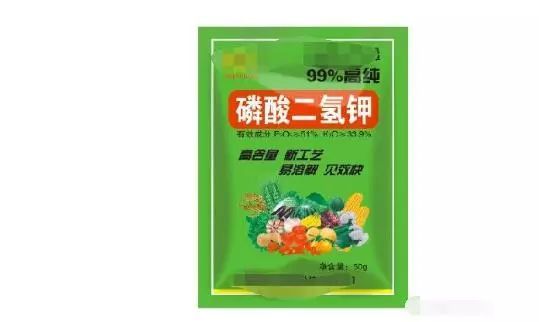
Monopotassium phosphate is a very common fertilizer in agricultural production, and its uses are also very wide-ranging; it can be used as a base fertilizer and also as a top dressing! The purpose of applying monopotassium phosphate is mostly to supplement the crop's demand for phosphorus and potassium fertilizer, achieving the effects of disease resistance, lodging resistance, and drought resistance in the plant, as well as preserving flowers and fruits.
However, in production, there are also cases where monopotassium phosphate is sprayed when crops are growing excessively; regarding this, Kexue Xingnong has also mentioned before that, in fact, the uses of monopotassium phosphate go beyond the above, and if used properly, it can also achieve the purpose of growth control.
Monopotassium phosphate is a highly efficient, quick-dissolving binary compound fertilizer, and can be used as a foliar fertilizer or as a soil fertilizer. When growth control is needed, simply spraying monopotassium phosphate at high concentration multiple times can achieve growth control!
Replace with a high-definition large image
The specific method is: dilute monopotassium phosphate at 800 times, and spray continuously three times at intervals of four to five days to achieve the purpose of growth control.
In fact, this practice is not difficult to understand from a physiological perspective; in short, it is about adjusting the ratio of nitrogen, phosphorus, and potassium in the plant, increasing the phosphorus and potassium ratio and reducing the nitrogen ratio. In this way, the excessive growth of the plant is controlled.
Replace with a high-definition large image
Monopotassium phosphate has a very wide range of uses, and can achieve good results for vegetables and melons and fruits. However, if foliar spraying is chosen, it is very suitable when the crop is about to flower, during the grain-filling stage of rice and wheat, or when fruits and vegetables are about to flower and the fruit is expanding. It is also very suitable for underground root and tuber crops such as potatoes or sweet potatoes; for these starch-accumulating crops, spraying monopotassium phosphate can also promote the expansion of underground tubers.
After reading the above introduction, everyone should have a relatively clear understanding and knowledge of the uses of monopotassium phosphate. I hope the above can be helpful to everyone.