Does Chang Ching-sen alone decide the national spatial plan? Environmental groups question the Executive Yuan's abuse of power and black-box review
The National Spatial Plan, which is responsible for guiding and coordinating the spatial plans of all counties and cities, was announced and put into effect on April 27 this year, marking the first time Taiwan has had a clearly defined statutory top-level spatial plan. But environmental groups have questioned the Executive Yuan's illegal abuse of power, pointing out that the 286-page draft spatial plan, which the Ministry of the Interior had compiled from more than a hundred public hearings and opinions from all sides, was drastically cut down to only about 100 pages after being sent to the Executive Yuan for review by Minister without Portfolio Chang Ching-sen, and that the review process was not made public, with the groups charging that the Executive Yuan was engaging in black-box operations.
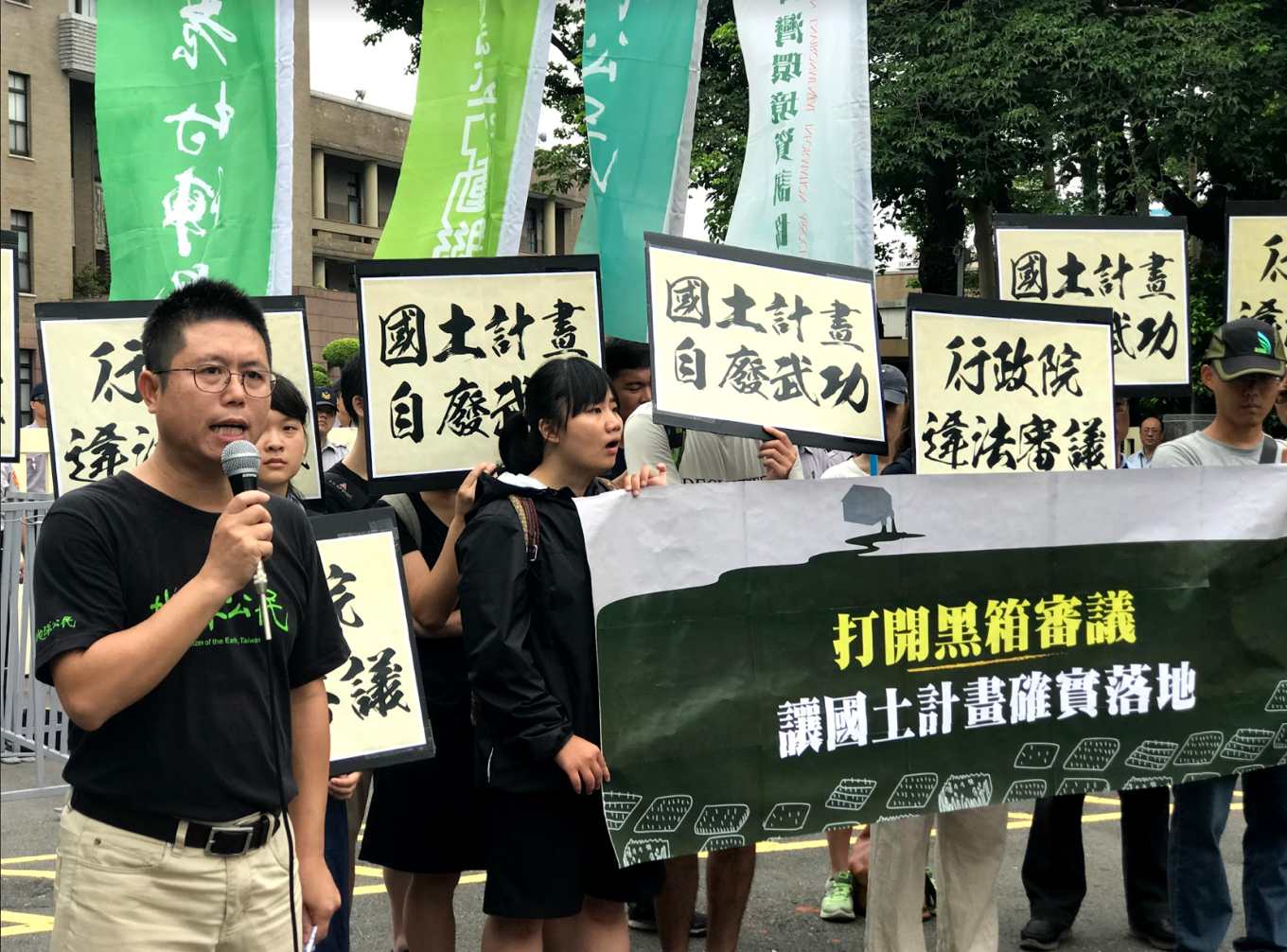
The Citizens of the Earth Foundation, the Taiwan Environmental Information Association and the Environmental Jurists Association held a joint press conference yesterday (the 23rd) to express their objections to the new version of the National Spatial Plan announced by the Executive Yuan, demanding that the review process should implement information disclosure and public participation, and that the criteria for designating Category 1 agricultural development areas should be corrected.
Changing the criteria for identifying Category 1 farmland affects the area of core farmland
In addition, under our country's spatial plan, which designates use principles according to the conditions of each area, "Category 1 agricultural development area" refers to land that has an excellent agricultural production environment, can maintain the function of food security, or has previously received investment in the construction of major agricultural improvement facilities, and is of great significance to ensuring the sustainable development of the core agricultural production environment.
Wu Chi-jung pointed out that in the announced new spatial plan, the criteria for identifying "Category 1 agricultural development area" were arbitrarily raised without explanation, changing from a single-condition to a dual-condition system: in addition to meeting the standard of "areas with a contiguous land area of 25 hectares and an agricultural use area of 80%," they must also meet the condition of "investing in major agricultural facilities or being designated as a specialized agricultural industry operation zone." Otherwise, the land will be classified as "Category 2 agricultural development area," which will greatly reduce the area classified as core farmland and affect the future allocation of agricultural resources and the identification of land development.
Wu reiterated the importance of food security and farmland protection, saying bluntly that the government should not allow Taiwan's farmland to be lost and fragmented, and demanding that the Executive Yuan revise the content of the National Spatial Plan and conduct the relevant reviews through a collegiate process to implement information disclosure and public participation, stressing that the government should shoulder the responsibility of protecting farmland.
Appendix: The Citizens of the Earth Foundation, the Taiwan Environmental Information Association and the Environmental Jurists Association put forward the following demands:
1. The three meetings of the Executive Yuan's National Spatial Plan review committee were all seriously flawed and should be immediately corrected; the committee should be changed to a standing body, with scholars, experts and representatives of civil society groups openly selected and appointed, and more fair-minded members of society included, so that the relevant reviews are conducted through a collegiate process and information disclosure and public participation are implemented.
2. The Executive Yuan should immediately make comprehensive adjustments and hold the relevant personnel accountable for the flaws in the relevant reviews.
3. The Executive Yuan should immediately urge all ministries and commissions to draft departmental plans within half a year and submit them for review, correct the announced content of the National Spatial Plan, and fill in the vague departmental spatial development strategies.
4. The criteria for designating agricultural development areas should be corrected, maintaining that "areas with a contiguous land area of 25 hectares and an agricultural use area of 80%" should be classified as Category 1 agricultural development areas, and at the same time, the goal of sustainable development of farmland for agricultural use should be incorporated into the National Spatial Plan.