These 6 Buddhist sacred flowers: keep a few pots for a lifetime of peace
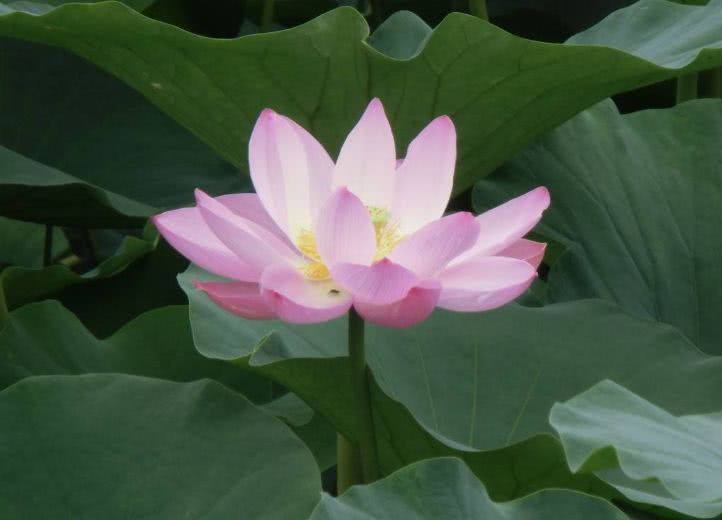
The Avatamsaka Sutra says: "Buddha lands give rise to five-colored stems; one flower, one world; one leaf, one Tathagata." A single flower is a world, and a single person is also a world. All things and beings have their own Buddha-nature; it is just that people have not discovered it. In Buddhism, there is also the saying of the "Five Trees and Six Flowers." The "Five Trees" refer to the lofty banyan, the bodhi tree, the talipot palm, the areca palm and the sugar palm, while the "Six Flowers" refer to the lotus, the grand crinum lily, the yellow ginger lily, the golden lotus banana, the white magnolia and the frangipani. Because of their respective forms and histories, they have all been endowed with profound Buddhist connotations and have become Buddhist sacred flowers. Let's take a look!
“
Buddhist sacred flowers"
-Lotus-
The lotus is a symbol of Buddhism. It is said that Shakyamuni Buddha attained enlightenment while seated on a diamond lotus throne. The lotus is a sacred and pure flower; rising from the mud yet unstained, it represents freedom from pollution by impure things, obstacles of the mind and obstacles of the heart within the cycle of reincarnation. However, in Sanskrit and Pali Buddhist scriptures, "lotus" is a general term for both the sacred lotus and the water lily, meaning both represent the lotus. The Buddha liked to use the lotus as a metaphor. Classics in the Taisho Tripitaka say that the lotus has four virtues: first fragrance, second purity, third softness, and fourth loveliness.
Most of thelotus grown at home are bowl lotuses. Bowl lotuses are small and compact, suitable for home care. Bowl lotuses should be placed in an environment with sufficient light; they grow poorly in shaded places. They require a warm environment, with a suitable growing temperature of 20-30°C; growth stalls below 15°C. They like moisture and fear dryness, and prefer relatively stable still water. Fertile clay rich in organic matter is suitable. The suitable pH is 6.5. They like water but fear flooding; deep water easily rots the leaves; the water should be shallow in the early stage and gradually deepened later. They like fertilizer but cannot tolerate heavy fertilizer; too much fertilizer easily rots the stems, so the base fertilizer should be sufficient and topdressing should be minimal. It takes about 60 days from planting to flowering.
Water lilies are even easier to care for. Compared with bowl lotuses, they are more cold-resistant and heat-resistant, and care is simpler, so even beginners can grow them well. Water lilies like strong light and can be grown in full sun, with at least 7-8 hours of sunlight daily. They must not lack water. 25-30°C is the most suitable temperature for the growth and development of water lilies. Especially in weather with alternating rain and sunshine, water lilies grow even better.
-Grand crinum lily-
The grand crinum lily is beautiful in both flower and leaf and has high ornamental value. The Dai people in the Xishuangbanna region all believe in Theravada Buddhism, and almost every village has a Buddhist temple and plants grand crinum lilies. The name of the grand crinum lily comes from Manjushri Bodhisattva, who sits upright in Buddhist temples with a dignified expression and is worshiped by devout men and women, and is the embodiment of human wisdom.
The grand crinum lily has low soil requirements, and loose, breathable, well-drained potting soil is best. It likes a humid environment, and the potting soil should be kept moist during the growing period. Watering can follow the principle of watering when dry and stopping when wet, but there must be no waterlogging. The grand crinum lily is suitable for growing in an environment with sufficient light, and shade should be provided in midsummer to prevent sunburn. It likes warmth and is not cold-tolerant. The suitable growth temperature is 15-20°C, and in winter it needs to overwinter indoors at no less than 5°C. Normally, phosphorus and potassium fertilizer can be applied 2-3 times a month, and the flowers will be abundant and long-lasting.
-YellowGingerLily-
The yellow ginger lily has a faint fragrance when it blooms, comfortable and pleasant. Buddhism attaches great importance to fragrance and often uses it to metaphorize the virtue of cultivation. Incense must also be used when making offerings to the Buddha and Bodhisattvas. The richly fragrant yellow ginger lily is one of the flowers used as offerings in worship.
The yellow ginger lily is cold-resistant, drought-resistant and tolerant of barren conditions, and likes a warm and humid climate. Generally, loose, fertile, well-drained sandy loam is chosen. The suitable growth temperature is 25-32°C. It likes an environment with sufficient light. Its rhizomes are thick and fleshy and cannot tolerate waterlogging. Usually, it is best to water only when dry, and when watering, water thoroughly.
-Golden lotus banana-
Legend says that when the Buddha was born, every step he took produced a golden lotus from beneath his feet, namely the golden lotus banana. The golden lotus banana has a relatively long ornamental flowering period, reaching about 250 days. Six bracts form one whorl, terminal or axillary, glittering golden, shaped like petals, gradually opening layer by layer from bottom to top, just like a blooming lotus. Moreover, the golden lotus banana blooms before its leaves appear. When it blooms in early spring, it suddenly emerges from underground and quietly blossoms, astonishing people, hence the name "golden lotus banana."
The golden lotus banana likes sufficient light and a warm environment. Generally, fertile, loose and breathable potting soil is chosen. During the growing season, watering should alternate between dry and wet, and about 1-2 times a month, dilute cake fertilizer water should be applied. It is not tolerant of low temperatures; below 0°C, the aboveground parts will be damaged by frost.
-White magnolia-
The Burmese osmanthus among the sacred flowers is the white magnolia. The white magnolia is pure white and fragrant, with deep green leaves. In the flowering season, people often string them together and wear them on the chest to express their devout devotion to the Buddha.
The white magnolia likes acidic soil and requires loose, breathable, well-drained acidic soil for cultivation. White magnolia is a sun-loving flower and needs sufficient sunlight, with no less than 6 hours of light per day. However, in summer it should be properly shaded to prevent sunburn. The white magnolia has fleshy roots. If the potting soil is too wet, the leaves will turn yellow and fall off, and even root rot may kill the plant; if too dry, the leaf tips will wither and the leaves will curl. Generally, it can be watered once the surface soil is dry. The white magnolia likes warmth and fears cold, and the wintering temperature should not be lower than 5°C.
-Frangipani-
The frangipani has been designated by Buddhist temples as one of the "Five Trees and Six Flowers" and is widely planted, so it is also called the "temple tree" or "pagoda tree." The petals of the frangipani are like the egg white of a cooked egg wrapping the yolk, very special.
The frangipani is a sun-loving tree species and likes high temperatures, humidity and a sunny environment. But it can also grow in semi-shaded environments; however, in shaded environments the branches grow leggy, with few flowers or leaves but no flowers; and the yellow frangipani in a shaded, humid environment will grow aerial roots on the branches. The soil suitable for planting frangipani is deep, fertile, well-aerated, acidic sandy loam rich in organic matter.
The frangipani is drought-tolerant, dislikes waterlogging and has good stress resistance. However, drought is not conducive to plant development and can cause poor growth in severe cases; waterlogging easily causes root rot. The frangipani has poor cold tolerance, and the most suitable growth temperature is 20-26°C. During overwintering, prolonged periods below 8°C make it prone to cold damage. In many towns and cities south of the Tropic of Cancer in China, open-ground cultivation can generally overwinter safely; in Central China and North China, it is only suitable for pot cultivation and should be moved into a greenhouse for winter.
The six flowers of Buddhism each have their own characteristics
Keep one pot at home
Good-looking and with good meaning too
Share it with flower lovers who need it!