Grow grapes with the right mix of 4 soils, and clusters will hang all over the vine
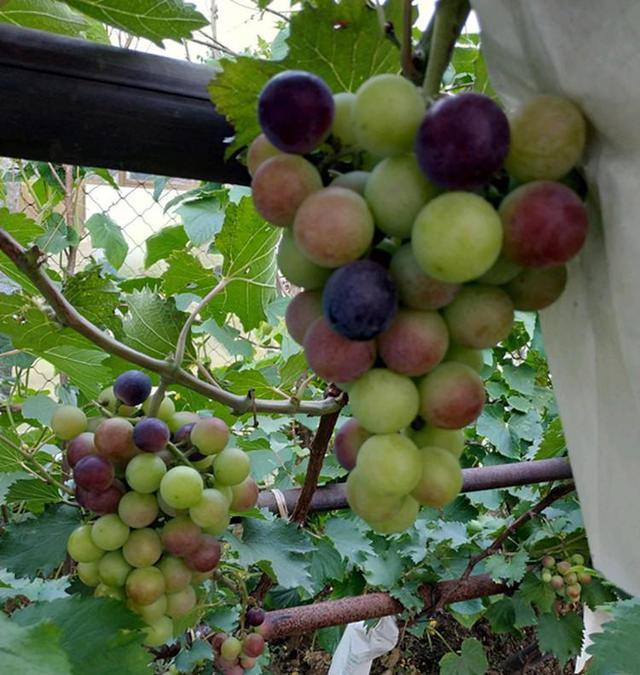
For potted grapes, if you want growth as strong as that of field-planted vines, you have to put effort into the potting soil. So what kind of potting soil can make grapes bear more fruit and grow vigorously? Today, I will introduce the 4 most suitable formulas for potted grapes.
Grapes can generally be planted and potted in spring, autumn and the plum rain season. The potting soil should be loose and fertile, so that after watering it does not form a crust, when wet it is not sticky, and when dry it does not crack. Commonly used are leaf mold, vegetable garden soil and nutrient soil that have been soaked and composted with fertilizer water. The formulas are:
1. 4 parts peat soil, 3 parts garden soil, 3 parts coarse sand (or sieved fine cinder), 0.5 part bone meal.
2. 4 parts leaf mold, 3 parts garden soil or compost, 3 parts coarse sand, 0.5 part bone meal.
3. 6 parts peat soil or leaf mold, 3 parts perlite or vermiculite, 1 part decomposed barnyard manure or puffed chicken manure, 0.5 part bone meal.
4. 5 parts garden soil or compost, 3 parts perlite or vermiculite, 2 parts decomposed barnyard manure, 0.5 part bone meal.
Choose 1-year-old strong seedlings with well-developed roots, thick and sturdy branches and vines, and plump buds. Before potting, prune appropriately, leaving 2-3 branches and vines, and generally cut the branches and vines back to 3 buds at the base; at the same time, cut off dried roots, and shorten the lateral roots to about 15 cm. When planting, try to keep the root system spread out. After planting, water once thoroughly, place in sunlight, pay attention to watering, and keep the soil moist to help sprouting.
In addition, when caring for grapes, in early spring there are not many branches and leaves and the temperature is not high, so water once every 2-3 days. As the plant grows and the temperature rises, the frequency of watering gradually increases. When the temperature is 25°C, water once a day. When the temperature is as high as above 30°C, the plant grows quickly, so water once in the morning and once in the evening each day.
In autumn, to promote the maturity of branches, vines and fruit, control water appropriately and water once every 2 days. In winter, watering should be reduced; during the dormant period, water once every 15-20 days, following the principle of "water thoroughly only after the soil dries out." To avoid root rot, do not water too frequently or too much.
Grapes like fertilizer, but concentrated application will "burn the roots," so apply light fertilizer frequently. During the seedling growth season, fertilize once every 10 days until the end of September. For fruiting trees, fertilize once every 5-7 days, and after the fruit is harvested, apply diluted cake fertilizer once every 10 days. To keep fertilizing odorless and not affect the ornamental value, you can choose organic liquid fertilizer specially made for fruits and vegetables.
During the spring budbreak stage and the swelling stage, spray 0.3% monopotassium phosphate liquid fertilizer once every 10 days, for 3-4 consecutive sprays. When new shoots are found to be yellowing, appropriately apply ferrous sulfate as a top dressing; it is best to use organic liquid fertilizer specially made for fruits and vegetables mixed with ferrous sulfate.