How to water potted jasmine? Remember the three "don'ts" and you will grow it well
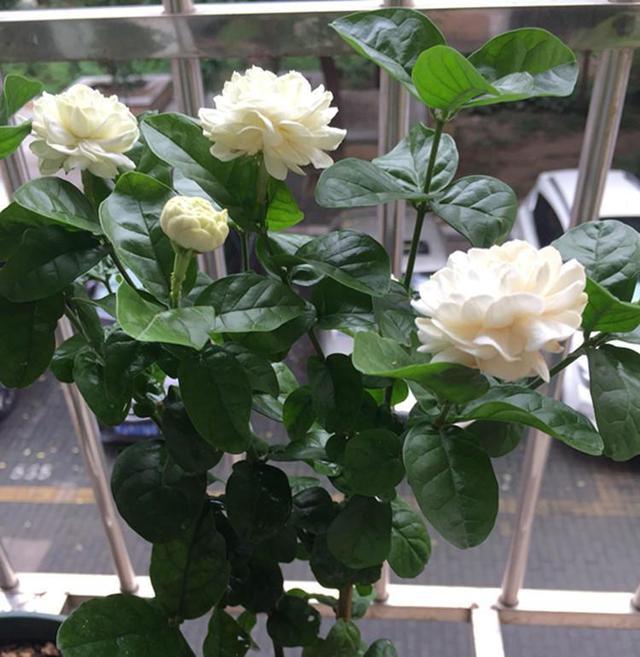
Many people love growing jasmine, but they always feel they cannot grow it well - either the leaves turn yellow or the roots rot, and some have grown it for years without it ever blooming. Is jasmine really that hard to grow, or is it something else? Actually, with potted jasmine, it is not that you do not know how to grow it - you just do not know the three "don'ts" of watering.
Since jasmine originated in subtropical regions and has long lived in hot, humid environments, it has gradually adapted to them and made them part of its own habits. Therefore, when cultivating jasmine, you should water it a bit more (including spraying water on the leaves) and keep the relative humidity in the air at 75-85% to meet its needs for growth and development.
How much to water also depends on the climate and on how the plant itself is growing. For example, in spring, when jasmine has just been moved outside, as the temperature gradually rises, jasmine begins to sprout and grow, unfurling leaves and forming buds. At this time it needs a sufficient supply of water, but because the temperature is not yet high, the plant does not lose much water through evaporation, so watering once every afternoon is enough.
In the hot summer, when sunlight is intense and the plant grows vigorously, its evaporation increases, and with the air being dry as well, it needs more water. It is best to water twice a day, once in the morning and once in the evening. In the afternoon, check each plant for water and supplement as appropriate. In autumn, as the temperature drops and light weakens, watering once a day in the early morning or evening is enough. As for winter, for jasmine moved indoors, watering about 1-2 times a week is fine, depending on the room temperature and how wet or dry the potting soil is.
When watering jasmine, many people do not fail because they cannot grow it - they simply do not pay attention to the three "don'ts":
1. Do not give "half-way water"
That is, each watering should soak through in one go, not be a short measure of water. Because giving half-way water means the roots in the lower part of the pot cannot get water, and over time they are likely to dry out and die. Each time you water, you should fill the pot's watering opening until water flows out from the bottom hole. For some potted flowers whose potting soil is dry, because there is a gap between the soil ball and the pot wall, the water quickly flows out from the bottom hole when poured. This does not mean it has already been thoroughly watered; you still need to water 1-2 times in succession to fill and soak it thoroughly.
2. Do not give "raw water"
So-called raw water means tap water or well water just drawn. Because this kind of water is very cold, pouring it directly onto potted flowers, with the relatively large difference between water temperature and soil temperature, irritates the roots and affects the plant's growth. So generally this water is first put into a container and left for three to five days before use. This practice is called "resting the water".
For this reason, you should prepare a water container and let the water stand in advance; take it as needed, which is both convenient and good for jasmine. If you also keep goldfish, using fish tank water to water jasmine is best of all. Because fish tank water is not raw and also contains fish droppings, it is a very good fertilizer. If you do not keep fish, you can use a general-purpose organic liquid fertilizer for flowers instead, diluted 500 times to water jasmine, which can replenish nutrients and water and promote jasmine's growth and blooming.
3. Do not give excessive water
Excessive water means waterlogging. This is the phenomenon most likely to occur when growing jasmine at home. Beginners who grow jasmine fear that their beloved jasmine will lack water and not grow well, so without checking whether the soil is dry or wet and without asking about the specific situation, they water every day, or even several times a day. As a result, because the roots remain soaked in water for a long time, they cannot carry out normal respiration and suffocate and rot; in severe cases the plant is drowned, and in mild cases the leaf tips turn yellow, the leaf edges turn yellow with a rusty water-colored appearance, and the leaves even fall one after another.
Inexperienced growers may still think this is caused by drought, but it is actually caused by waterlogging. The main feature of a jasmine plant suffering from drought due to lack of water is that the fallen leaves are yellow and withered, with no rust spots on the leaf surface. For a waterlogged plant, stop watering and control it for a period, then water again when the potting soil becomes dry and whitish. At this time, to help jasmine recover quickly from the yellow-leaf problem, you can add 0.2% ferrous sulfate to improve the yellow-leaf problem of jasmine.
During continuous rainy days in midsummer, also avoid letting rainwater pour directly into the pot, to prevent too much accumulated water from causing waterlogging. It is best to move the flowerpot to a place where rain cannot reach it, or tilt the flowerpot so that rainwater cannot fall into the pot, and then set the flowerpot upright again when the weather clears.
In addition, to meet jasmine's humidity needs, you should also spray the leaves from time to time. Spraying has many benefits: it can increase the humidity in the air, and can also wash away dust on the leaves and branches; it enhances photosynthesis in the leaves, keeps the plant neat and attractive, and can also wash off pests on the branches and leaves, preventing pests and diseases.