3 lessons from growing roses: if you don't learn them well, they turn into grass, so don't plant them in green spaces
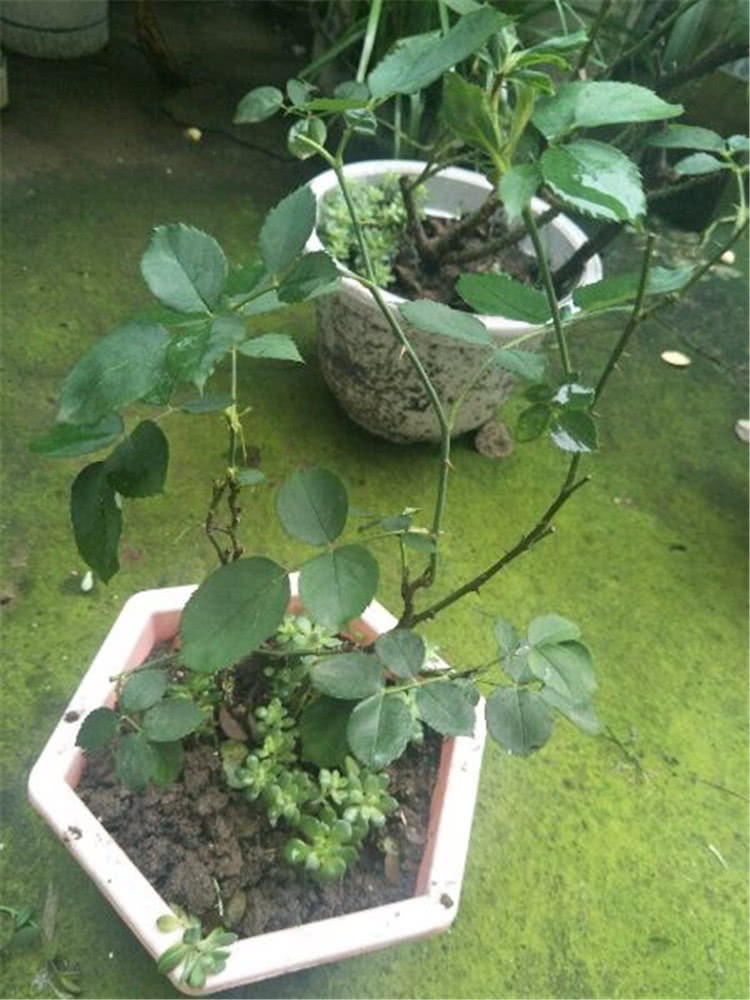
Recently, a rose-growing beginner posted a photo in a group, saying that his rose never grows well, and forget about it not blooming. Today, after pruning the yellow and withered leaves again, it is almost bald. As soon as the little gardener saw the rose he was growing, he found quite a few problems. Let us take a look together and learn a few lessons, which will help you grow roses in the future.
1. The first "lesson": lack of light
This is that beginner's rose. It looks a bit too pitiful to bear looking at. At first glance, the little gardener saw thick moss on the ground. Where there is moss, and it is growing so lushly, it shows that this place is shaded, with insufficient light and plenty of moisture, which is why the moss grows. So this gives us the first "lesson."
When we usually care for roses, light is one of the factors that must be guaranteed. It is best to give them more than 6 hours of sunlight a day. This beginner's rose is clearly very lacking in light. A rose lacking light has leaves that do not look energetic enough, look old-fashioned, are not plump, and it also grows leggy. If a rose grows in such a "green space," it will definitely not grow well.
2. The second "lesson": lack of fertilizer
The second problem is lack of fertilizer. This rose clearly lacks fertilizer and looks very "thin and weak." This gives us the second "lesson": when we usually care for roses, we must supplement fertilizer in time. Roses like fertilizer. Rural flower owners can use farmyard manure, and urban flower owners who have the time can compost fruit peels and fish intestines themselves. The little gardener suggests you use ready-made organic nutrient solution.
It is not that composting is bad, but composting smells very strong, and using it at home is bad for the health of family members. We can directly useHuadongde rose-specific organic nutrient solution. It strengthens roots and promotes flowering. It is an organic fertilizer fermented from sugarcane bagasse, fully fermented, green and safe, very suitable for families with elderly people and children, safe and reassuring.
3. The third "lesson": pot and soil
The third problem is poor air permeability. This flower owner also said himself that it has been raining continuously recently, and this rose was left on this moss, so the potting soil must be too wet. In addition, the soil is a bit compacted, the roots cannot breathe smoothly, and the rose's pot is not large either. Adding these factors together, the rose naturally cannot grow well. This gives us the third "lesson."
First, during our usual care, we should basically repot roses into pots two sizes larger once a year, which helps them grow roots. Second, when repotting, it is best to choose soil with good air permeability, such as coconut coir soil, which is very suitable for roses. Third, the placement location should avoid heavy rain and standing water as much as possible, otherwise problems are very likely. This flower owner's rose does not grow well precisely because these points were not handled well.
By looking at other people's flowers, we can sum up our own experience. Everyone remember these three "lessons." When caring for roses yourself, avoid these points, and only then can our roses grow well. Experienced flower friends, do you think there are any other problems with his rose?