Edible Flowers in Cooking: Put Spring into Your Food
Rose
Rose flowers taste sweet with a slight bitterness and are mildly warm in nature, entering the liver, spleen and stomach meridians. Their fragrant, dispersing quality makes them effective for soothing the liver and relieving depression, harmonising the blood and regulating menstruation. They mainly treat fullness and oppression in the chest and diaphragm, stomach and hypochondriac pain, traumatic injuries, wind arthralgia and carbuncles.
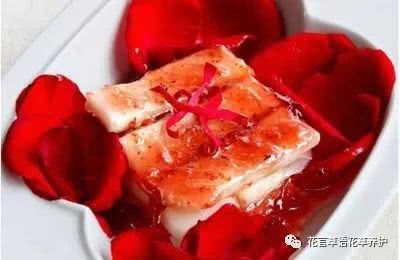
Honey-Glazed Rose and Chinese Yam
Roses can help nourish the blood, boost qi and nurture the complexion. Rose oil can be extracted from the flowers, and the dried flower buds and roots can be used as medicine. They have the remarkable effects of clearing heat, reducing internal fire and beautifying the face.
Rose Tea
Rose tea is a premium tea made by blending fresh rose flowers with tea leaf buds in proportion and scenting them using modern high-tech processes. Its aroma is rich, with subtle variations, and it is gentle rather than harsh. The rose is a precious medicinal herb that beautifies the face, unblocks the meridians and invigorates the collaterals, softens blood vessels, and has significant therapeutic effects on cardiovascular and cerebrovascular conditions, high blood pressure, heart disease and gynaecological disorders. It harmonises the liver and spleen and regulates qi and the stomach.
Rose Scones
1. Steep 2g of rose flowers in 50g of boiling water, discard the steeped rose flowers, and strain the water for later use!
2. Take the remaining 4g of rose flowers, remove the receptacles and sepals, keeping only the rose petals
Tear the petals into small pieces to make rose petal fragments
Mix the cake flour and baking powder and sift together, then add the salt, sugar and softened butter, and rub together with your hands until evenly combined
3. Keep rubbing until the butter and flour are completely combined, resembling coarse cornmeal
4. Pour in the whole egg liquid and the rose water
5. Mix with a rubber spatula into a moist batter! Just mix until combined; do not overmix
6. Turn the mixed dough out onto the work surface; at this point the dough is very wet, soft and sticky
7. Dust the surface of the dough with a layer of flour, press the dough flat, and roll it with a rolling pin into a round disc 1.2cm thick!
8. Use a knife to cut the round disc of dough into 8 portions
Arrange the cut triangular pieces of dough on a baking tray and brush the surface with a layer of egg liquid! Place in a preheated 200°C oven with both top and bottom heat, on the middle rack, for 15 minutes, until the surface is golden brown, then take them out!
Chrysanthemum
Chrysanthemum Cake
Chrysanthemum cake is one of the traditional famous pastries of Meizhou, Guangdong. Chrysanthemum cake has a history of over a hundred years in Chaoshan. There is a saying: "Rice porridge fills you up, chrysanthemum cake is a clever treat."
The Chaoshan specialty chrysanthemum cake is renowned for being fresh, sweetly fragrant, soft yet crisp with no off-flavours. Compared with ordinary pastries, chrysanthemum cake has the extra cool fragrance and calmness of chrysanthemum, and it is attractively shaped. This cake is sweet, soft and crumbly, melting in the mouth
the moment it enters, leaving fragrance on the teeth and cheeks, and it has the effect of cooling and reducing internal fire, which makes it especially popular.
It is green in colour, sweet and refreshing to eat, delicate and smooth, with a rich chrysanthemum fragrance that refreshes the heart. It stands out uniquely among pastries. According to experimental determination, it contains various vitamins, fructose, riboflavin, protein, tannins and other components. It is not only a nutritious food, but also has effects such as clearing the heart and brightening the eyes, calming the spirit, lowering blood pressure and improving blood circulation.
Chrysanthemum Sea Bass
Chrysanthemum sea bass is a traditional famous dish of Fuzhou, Fujian. It is shaped like a chrysanthemum, with each piece standing upright and elegant. The sea bass has an elongated, laterally compressed body, a large mouth, a protruding lower jaw, and is silvery-grey with small black spots on its back and dorsal fin. It inhabits coastal waters and also enters freshwater. In early spring it spawns in estuaries where salt and fresh water meet. It is distributed along the coasts of our country, and large catches are made in summer and autumn.
Sea bass has been used in cooking since ancient times, and it is recorded in historical texts of successive dynasties. The "Yanhua Ji" records Emperor Yang of Sui's evaluation of sea bass: the so-called golden minced fish with jade sliced fish, a delicacy of the southeast. Sweet and sour in flavour, slightly yellow in colour, quite elegant, crisp and fragrant, tender and fresh, sweet and sour to the taste, and good for strengthening the spleen and opening the appetite.
Chrysanthemum and Lily Congee
Chrysanthemum and lily congee is made by cooking Hangzhou white chrysanthemum, goji berries, fresh lilies, rock sugar and rice together. It is golden in colour and fragrant in taste. A few goji berries are added at the end as a garnish, so the congee not only has a mild sweetness but also the light fragrance of chrysanthemum. It is both filling and good for brightening the eyes and reducing internal fire.
Osmanthus
Osmanthus Ice Jelly
1. Mix the white jelly powder with part of the water into a smooth, lump-free thin paste
2. Pour the remaining water into a pot and bring to a boil. After it boils, pour in the prepared paste while stirring, and cook until transparent, then turn off the heat
3. Pour in an appropriate amount of sweet osmanthus and stir well. Let it cool until set, then refrigerate for an even better taste.
4. The chilled jelly is icy and cool, smooth and slippery, with a hint of osmanthus fragrance. Every spoonful is a surprise!
Osmanthus and Glutinous Rice Lotus Root
Osmanthus and glutinous rice lotus root, also known as honey-glazed glutinous rice lotus root, is one of the traditional famous snacks of the Jiangnan region. Glutinous rice is stuffed into lotus root and carefully prepared with osmanthus sauce and large red dates. It is a uniquely characteristic Chinese dessert among the traditional dishes of the Jiangnan region, enjoying a fine reputation for its sweet fragrance, crisp texture and rich osmanthus aroma.
Hangzhou's osmanthus and glutinous rice lotus root is soft, sweet and fragrant, and the lotus root from West Lake is the finest of all lotus roots. The equally famous Nanjing osmanthus honey-glazed lotus root, together with osmanthus sugar taro sprouts, plum blossom cake and red bean fermented rice wine small round dumplings, is hailed as one of the four most heartfelt street snacks of Jinling, Nanjing.
Osmanthus Sour Plum Drink
Osmanthus sour plum drink has been an excellent summer beverage since ancient times. In the Qing dynasty it was improved by the imperial kitchen to become a drink for imperial use, the so-called "tribute plum decoction". Because of its effects of removing heat and bringing coolness, calming heart pain, resolving phlegm and relieving cough, warding off epidemics, and promoting fluid production and quenching thirst, it was praised as the "rare treasure of the Qing palace, the imperial dark plum drink". Later it spread among the common people, and so vendors selling osmanthus sour plum drink could be seen everywhere in the streets and alleys and at the entrances of dried and fresh fruit shops.
Sophora Flower
Sophora Flower Pancake
Sophora flower pancake is a common traditional snack in northern China. Sophora flowers taste fragrant and sweet, are rich in vitamins and various minerals, and also have the effects of clearing heat and detoxifying, cooling the blood and moistening the lungs, lowering blood pressure and preventing stroke. The sophora flower pancakes made from them are sweet at the first bite and leave fragrance throughout the mouth.
Sophora Flower with Tofu
Sophora flower: Sophora flowers taste fragrant and sweet, are rich in vitamins and various minerals, and also have the effects of clearing heat and detoxifying, cooling the blood and moistening the lungs, lowering blood pressure and preventing stroke.
1. Prepare the ingredients.
2. Wash the sophora flowers and add a small amount of salt to season them briefly.
3. Evenly rub half a teaspoon of salt over the surface of the tofu to season it.
Simply arrange the sophora flowers around the tofu.
Lily
Lily, Snow Fungus and Lotus Seed Soup
Lily, snow fungus and lotus seed soup is a traditional famous Han Chinese dish. It is made by cooking snow fungus, lotus seeds, lily and other ingredients. Snow fungus is rich in nutrients and beautifies the face. Lily and lotus seeds have the effects of calming the heart and soothing the spirit, and moistening the lungs and relieving cough. It is a well-known health food and a food suitable for all ages.
Celery with Lily
Western celery and Chinese celery have the same nutritional and therapeutic value. Western celery is cool in nature and sweet in taste. It contains aromatic oils, vitamin P and various vitamins, multiple free amino acids and other substances, and has effects such as promoting appetite, lowering blood pressure, benefiting the brain, clearing the intestines and relieving constipation, detoxifying and reducing swelling, and promoting blood circulation. Experiments show that celery has a clear blood pressure-lowering effect, and its duration is prolonged as the amount consumed increases. It also has sedative and anticonvulsant effects.
Celery with lily is made by tossing celery and lily together as a cold dish, with a colour of green touched with red. This dish is quite simple to make, yet its taste is especially pleasant. Only one seasoning is used, salt, yet the flavour is endlessly layered and the fragrance fills the air. Looking at this fresh green and elegant white, one's mood becomes especially bright.
Peach Blossom
Peach Blossom and Angelica Dahurica Wine
Flowers have a beautifying effect. The ancients once used "peach blossom and human face reflecting each other's red" to praise a young girl's delicate and beautiful looks. Peach blossom is sweet and pungent in taste and mildly warm in nature, with effects such as invigorating the blood and beautifying the skin, strongly promoting urination, and resolving blood stasis and relieving pain.
Peach blossom contains kaempferol, carotene, vitamins and other components, among which kaempferol has a relatively good beautifying and skin-care effect. According to the "Guojing Bencao", "Pick fresh peach blossoms, steep them in wine, and drink some every day; this can make the complexion rosy and beautiful as peach blossoms." The "Puji Fang", when introducing the preparation method and effects of peach blossom wine, states: "On the third day of the third month, pick fresh peach blossoms, steep them in top-grade baijiu, and take after 49 days. Taken over a long period, it can eliminate illness and benefit the complexion."
Angelica dahurica is pungent in taste and warm in nature, entering the lung and stomach meridians; it has effects such as releasing the exterior and dispersing wind, unblocking the orifices, relieving pain, drying dampness and stopping leukorrhea, and reducing swelling and expelling pus.
Peach blossom and angelica dahurica, used together with medicinal wine, jointly achieve the effects of invigorating the blood and unblocking the collaterals, and nourishing the skin and removing spots.
— END —