Peanut growth control has many benefits, yet it can easily lead to premature senescence in peanuts
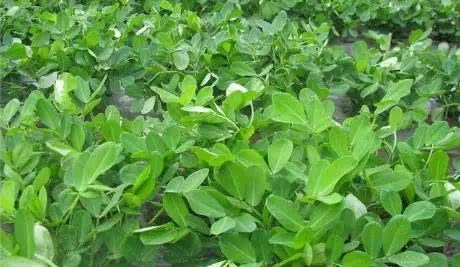
After peanut growth control, plant growth is inhibited to a certain degree, which is often accompanied by the appearance of premature senescence. In fact, from the perspective of plant evolution, this is merely a stress response of the plant, advancing development to complete fruit maturation as early as possible and continue the next generation.
Similar behavior also occurs after flooding, with earlier flowering and fruiting and an earlier end to life. If effective measures cannot be taken against such behavior, it will cause yield reduction in production.
And if premature senescence occurs in a peanut field, the seeds in the pods will not develop plumply enough, and the seed-setting rate will also decrease, affecting yield. Therefore, after peanut growth control, it is very necessary to take certain measures to prevent premature senescence.
For this, you can start from the following angles:
Supply nutrients after growth control. Some friends may wonder here: the cause of excessive growth is precisely excess nutrients, so why supply nutrients? Actually, there is a bit of a misunderstanding here! The saying that excessive growth comes from excess nutrients is not wrong, but it is excess nitrogen, not excess of other nutrients. Therefore, in terms of nutrient supplementation, you should not start from nitrogen fertilizer, but from phosphate and potassium fertilizers.
Use nutrients to supplement the peanut's physiological resistance, delay aging, make the plant's fruit develop more completely, and improve fruit maturity and plumpness.
Specifically, after growth control, you can use 0.2% monopotassium phosphate, 0.2% zinc sulfate and 0.1% boron fertilizer as foliar fertilizer and spray them to comprehensively and efficiently supply nutrients to peanuts and delay peanut senescence. Of course, there are also some peanut-specific foliar fertilizers in production at present, which are rich in various trace elements as well as phosphorus and potassium. After spraying, they can promote leaf growth and improve the plant's photosynthetic utilization rate, thereby achieving the purpose of increasing yield.
In fact, spraying foliar fertilizer can not only delay peanut premature senescence, but also improve the peanut's resistance to disease and lodging, thereby achieving the purpose of increasing yield.
This is Science Agriculture. You are welcome to follow and join us to grow your knowledge together.