The earlier you cut off spent rose blooms, the better it is for the next round of flower buds to grow
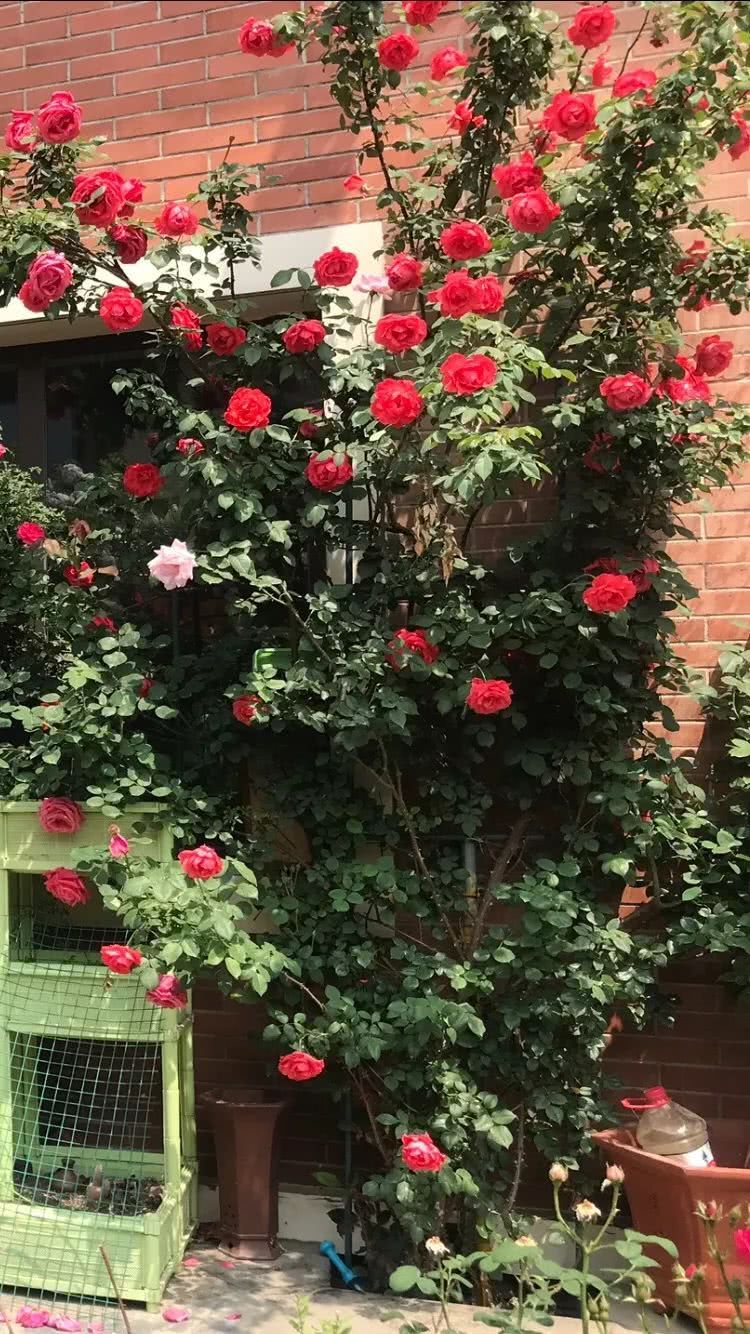
[Growing Potted Roses on the Balcony Like This] Series
Part 4
The earlier you cut off spent blooms, the more it helps the next round of buds grow
Today is Major Heat, and Chongqing is at a high of 40 degrees.
Some people are complaining about the temperature, others about the 40 degrees.
The editor-in-chief is still on the balcony, watering and pruning.
After a rose finishes blooming, the spent flowers need to be cut off to encourage nutrients to flow back to the branches and leaves. Especially for repeat-flowering varieties, the earlier the spent blooms are cut, the more it helps the next round of buds to grow.
Although there are some differences between varieties, usually if you cut off the first flush of flowers in May, it takes about 40 days for the second flush to bloom.
Cutting a single flower
Basic cutting method
One: Positioning
The photo shows a 'Heidi Klum' rose in bloom.
After blooming, the spent flower should be cut off as soon as possible, cutting just above the 5-leaf point below the flower, meaning the cut-off portion has no pinnate compound leaves with 5 leaflets.
Two: The state after cutting
For repeat-flowering varieties, cutting to just this point is enough.
If you cut too much, new buds will sprout more slowly and affect the second flush of bloom. But for once-blooming varieties, it is usually cut at the middle part of the flowering branch.
Cutting a single flower
Cutting for fresh flowers
One: State before cutting
The photo shows a 'Crush on You' plant.
If you want to cut the flowers from a potted plant to use as cut flowers, although cutting the entire flowering branch off may be the most satisfying, it will have a bad effect on the plant.
Two: Cut a bit shorter
Usually the cut branch will have one or two 5-leaflet compound leaves on it.
If you cut too long, it will excessively reduce the plant's vigor, so from the perspective of the whole plant, you need to cut as short as possible.
The case of cluster-flowering varieties
Cut off one by one
One: State of spent flowers
When multiple flowers bloom on one flowering branch, it is called cluster flowering; some varieties even have dozens of flowers in one cluster.
In the photo, one cluster of the rose 'Spring Breeze' has both flowers in full bloom and flowers that have already faded.
Two: State after cutting
Cut just below the faded flower, meaning only the single spent flower is removed.
Keep the other unopened buds in the same cluster, and cut them off one by one after they fade, thus maintaining the good appearance of the flower cluster.
The case of cluster-flowering varieties
Cut off all of them
One: State of spent flowers
This is the same variety as in the left photo, 'Spring Breeze'.
Sometimes balcony friends may not have time or other reasons and cannot cut off the spent flowers one by one.
Two: Cut off the whole cluster
Then cut everything off from below the flower cluster with one 5-leaflet compound leaf.
Cutting off all of them is not a bad method to use either; it is convenient and quick, only the time for the flowers to bloom again is a bit longer. As for which method to use specifically, balcony friends can slowly figure it out themselves... wahahaha!
[Growing Potted Roses on the Balcony Like This] Series
To let balcony friends who like roses and are interested in growing roses understand and master in a 720-degree all-around way how to grow roses and how to make roses burst with blooms, the editor-in-chief is releasing in advance the table of contents of the [Growing Potted Roses on the Balcony Like This] series, and editing and displaying it at the end of the article, for everyone to choose and consult.
4. Growing roses in summer: the earlier you cut off spent blooms, the more it helps the next round of buds grow
5. Growing roses in summer: create excellent main branches, learn to deal with rose basal shoots and pinching
6. Growing roses in summer: roses of various branch types should be pruned like this in summer
7. Growing roses in summer: daily care of potted roses on the balcony
8. Growing roses in autumn and winter: potting up bare-root seedlings of upright varieties
9. Growing roses in autumn and winter: potting up long-branch seedlings of climbing varieties
10. Growing roses in autumn and winter: the branch-winding and training method for climbing varieties
11. Growing roses in autumn and winter: pruning and training of mature climbing varieties
12. Growing roses in autumn and winter: roses of various branch types should be pruned like this in winter
13. Growing roses in autumn and winter: change the soil for your potted roses on the balcony!
14. Growing roses in autumn and winter: daily care of potted roses on the balcony
15. Putting full effort into solving for you the seven difficult problems that trouble most rose lovers in caring for roses
Do you like the [Growing Potted Roses on the Balcony Like This] series?
Follow "Grow on the Balcony" and come chase the articles!