Succulents are hardest to keep in summer? Learn these tips to effectively avoid root rot and black rot
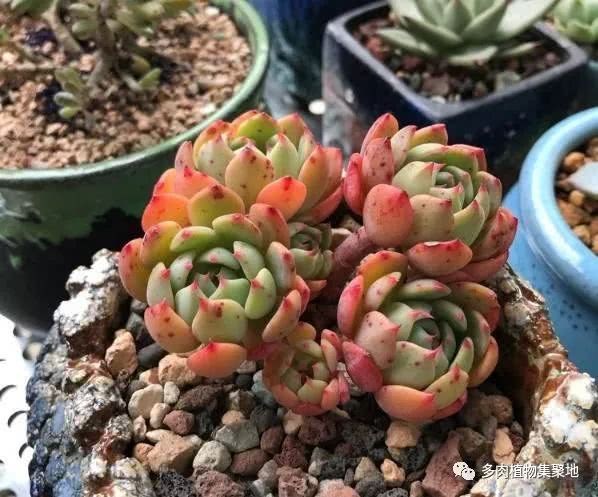
When growing succulents in summer, give them plenty of sunlight, otherwise the plants are prone to becoming leggy. Be sure to place them in a ventilated environment; in a hot, humid environment with poor air circulation, water does not evaporate well and the temperature is hard to lower, which also easily leads to root rot. Simply put, when growing succulents in summer, pay attention to these three points: avoiding water, ventilation and light. These are the keys to growing succulents in summer.
Succulents in the Crassulaceae family generally like a sunny environment; otherwise they will not grow well. Haworthia cooperi and Haworthia cymbiformis, which need appropriate shading, are both plants of the genus Haworthia in the Liliaceae family, not Crassulaceae plants. Plants like Graptopetalum paraguayense, Aeonium and Aeonium arboreum 'Zwartkop' are Crassulaceae, and they must have very good sunlight to prevent legginess and keep a beautiful shape. When caring for succulents in summer, the potting soil needs to be dry, the soil mix should be mainly granular, and if there will be no continuous rainy weather in the coming days and good ventilation is guaranteed, you can supply a small amount of water along the pot wall; in principle, as long as the soil can dry quickly, you can provide a small amount of water.
In summer, when temperatures exceed 30 degrees, most succulents need to be moved to a cooler place at home; in winter, when temperatures are below 3 degrees, it is best not to let them be exposed to cold wind, and move them to the brightest place indoors. To have succulents with rich colors, besides sufficient ultraviolet light, you also need a temperature difference. Without a temperature difference, even the strongest ultraviolet light cannot make the plants shed their gray-green coats. When the day-night temperature difference is greater than 15°C, succulents show even better colors. This is also why succulents grown outdoors are more beautiful than those grown indoors, and why succulents in spring and autumn are more plump and radiant than those in winter and summer.
For shading, ventilation and water control, try to place the plants in a well-ventilated spot, do not put them in a closed space, and ensure fresh air circulation. For shading, you can use shade netting; in early summer and late summer you can use 75% shade netting, and when the sunlight is especially strong you can use one with a 50% shading rate. When the plum rain season brings days without sun at all, you can remove the shade netting and mainly strengthen ventilation; during this period you should usually control water or stop watering, and when air humidity is high, keep the plant roots dry, as absorbing only moisture from the air can also keep the plants alive.
In old succulents, the stems and root systems are severely lignified, and dried old leaves easily rot and breed bacteria, so dried old leaves should be removed promptly to keep the potting soil clean. For those buying old succulents, the purchase date should be slightly earlier than the first recommended time; if the old roots are excessive, you should trim away the extra fine roots, remove soil impurities from the root system, keep part of the main root, and after root trimming let the wounds dry fully, then replant in soil after new roots grow again. Yiyang feels that directly purchased old succulents are not recommended to be planted directly without root trimming; old roots often contain a large number of fine roots mixed with a lot of soil impurities and bacteria, and in a high-temperature environment they easily rot, causing the old succulents to develop black rot.
After most succulents enter summer, they automatically enter a dormant period, and at this time their functions work only very little, so they should be kept in an environment with air circulation and away from light, otherwise succulents are easily killed by the sun. This is similar to how our bodily functions slow down while we sleep. Also, after watering, water droplets may remain on the leaves, and we need to blow the droplets off, otherwise the succulents are easily sunburned.
This is a gathering place for succulent lovers, sharing succulent care tips; you are welcome to follow and exchange ideas.