Many people love eating cicadas in summer. Do cicadas have parasites?
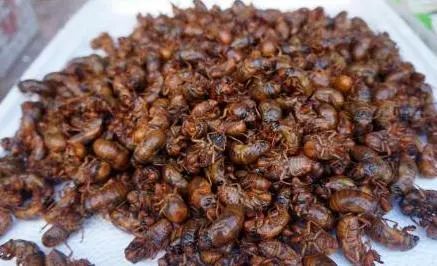
I was quite surprised to see this question. I am a country person myself, and the thing I loved doing most in summer as a child was going with my friends to catch "crawling grasshoppers" - that is what we call cicadas around here. Back then there were plenty of trees, and plenty of cicadas, and in one evening you could catch dozens of them. When I brought them home, my mother would salt them down, and the next morning she would steam them to eat.
Cicadas taste good, but when eating them I never once thought about the parasite issue. Still, since it has been brought up, I went and looked at some relevant material, and I will share it with you here.
The cicada is actually a kind of insect that is high in protein and highly nutritious. Cicadas are also called "Tang Monk's flesh", and there are many people who love eating them. Cicadas spend most of their lives underground, and generally need more than three years before they can climb out of the ground and become cicadas.
Cicadas are relatively sensitive to changes in the environment. When the environment is unsuitable, or when there are relatively many pathogenic bacteria and toxins in the soil, it will affect the growth of cicadas and cause the death of cicada larvae. Moreover, cicadas have a repelling effect toward heavy metals. Once heavy metals in the surrounding environment exceed the standard, it very easily affects cicada growth, and this is also related to the cicada's growing environment. Therefore, in the process of artificial breeding, they are required to be raised in uncontaminated soil.
And because cicadas live deep underground, pesticide contamination is very small, and there is no way to use various hormone-type drugs to speed up cicada growth. The main reason artificial breeding can shorten the cicada raising time is that people provide the cicadas with a more suitable growing environment, and winter warmth, tree root nutrition and so on all lay the foundation for shortening the cicada's growth period.
But as insect larvae, cicadas still carry some bacteria in their bodies, as well as a small amount of parasitic disease. However, because the levels in cicadas are too low, and after high-temperature preparation they will not harm the human body. Still, people with sensitive bodies are not advised to eat too many - just tasting a little is enough.
In addition, cicada shells are also a kind of Chinese medicinal material, with effects such as dispersing wind and clearing heat and soothing the throat. When I was little, there were often people who would specifically go looking for cicada shells during the day and then sell them to the people who collected cicada shells.
Below I will also share with you some points to note when catching cicadas.
Because there is a lot of rain in summer and the weather is muggy, and catching cicadas is done at night, you must be on guard against snakes. In the north it is better, as the snakes are generally non-venomous, but the south has more venomous snakes. So you must be on guard against venomous snakes.
In addition, children had best stay together with adults. After all, it is nighttime, and when it is dark accidents are more likely. People who are timid and afraid of the dark should not go either - just wait at home to eat.
After cicadas are caught, you can soak them in salt water overnight and eat them the next day. This not only keeps them fresh, but also kills some of the bacteria and parasite pathogens on the cicadas. If you want to preserve them for a long time, you can wash the cicadas clean, then soak them in clean water for a while, then steam them in a pot until 80 percent cooked, let them cool, put them into sealed fresh-keeping bags - ideally vacuum bags - and put them in the freezer.
The above comes from Science Xingnong.