More and more people are growing clivia this way, and it is a clever method worth trying.
Clivia is a flowering plant commonly kept at home. With proper care, it can bloom twice or even three times a year. What is more, this flower has a very long lifespan; some veteran growers have kept the same clivia for twenty or thirty years, and it still blooms every year. It is very valuable, and it is fair to say they would not sell it for any amount of money.
To grow clivia well, many growers have summed up some little tricks. For example, a commonly used one is watering it with beer diluted in water in the early stage before the flower stalk emerges, which can prevent the stalk from getting stuck. Regularly watering clivia with rice water can make the leaves even more dark green. In fact, besides these, there is another little trick for growing clivia.
That is to use "it" to grow clivia. Once you have tried it, you will find that you can even skip fertilizing!
This thing is the "soybean" shown in the picture. Soybeans contain a large amount of nitrogen and amino acids, both of which are good fertilizer for the growth of clivia leaves. What is more, soybeans are easy to get, and basically every household has them, so you do not even need to buy special flower fertilizer. Besides, special flower fertilizer is generally inorganic fertilizer, which cannot compare with this "natural organic fertilizer".
Using soybeans to grow clivia also involves quite a few details.
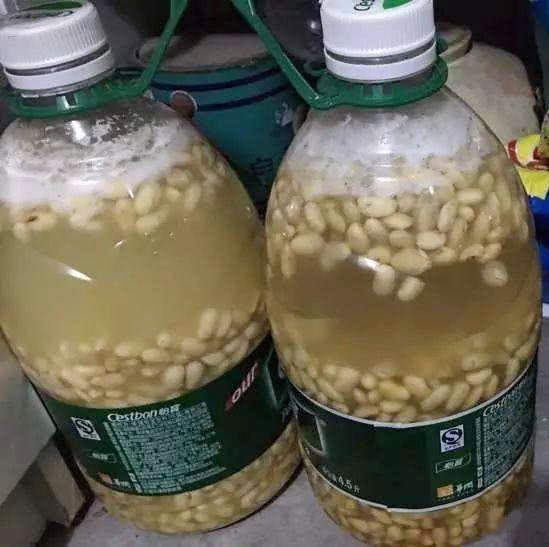
First of all, remember that unfermented soybeans do nothing when buried in the clivia pot, and worse, they may generate heat during decomposition and burn the roots. The method of fermenting soybeans is very simple: soak the soybeans for two hours, then boil them, put them into a sealed container, fill it with water, do not screw the lid on too tightly, and then leave it in the sun for half a month.
The fermented soybeans can simply be buried in the clivia pot as shown in the picture above. When burying them, be careful not to place them too close to the roots; you can keep them a little closer to the edge of the pot to avoid burning the roots.
Quite a few clivia growers are already using this method to grow clivia, and the general feedback is that it is fairly reliable. Moreover, it is not only suitable for growing clivia; it can also be used for growing cymbidium orchids, Christmas cactus, and foliage plants such as spider plants and money trees.
Two days before applying soybean fertilizer to clivia, remember to stop watering first, and after burying the soybeans, do not water immediately. It is best to wait three to five hours or water thoroughly the next day. Fertilizing any potted flower should follow this principle, and the finer points of watering should also be paid attention to.
To grow clivia well and have it bloom many times a year, besides daily care, watering and fertilizing, remember to repot it and change the soil regularly. Why? Because the root system of clivia is a fleshy root, and its growth is vigorous. It can completely "eat up" all the soil in just a few months. If you do not repot at this point, it will affect the normal growth of the clivia. Repotting can be done every spring and autumn. When repotting, remember to check the roots, cut off the rotten roots, and then pot it again.
That is all for sharing these little tips about caring for clivia. Thank you for reading!
Remember to like and share~