Grow mint this way and it won't turn yellow - lush green leaves grow like crazy and fill the pot in 1 month
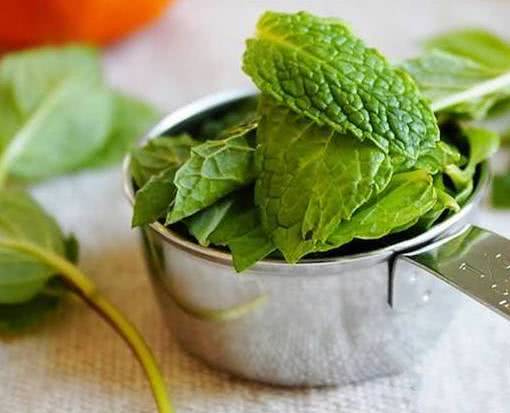
Mint is one of our commonly used traditional Chinese medicines. It has a special fragrance, is pungent and cooling, and induces sweating to relieve fever. It can treat influenza, headache, red eyes, fever, sore throat, swollen and painful gums, and other conditions. Used externally, it can treat neuralgia, skin itching, rashes, eczema, and more. Ordinarily, mint is used as a tea substitute to clear the heart and brighten the eyes. Keeping a pot of mint at home is not only attractive, but also edible and can be brewed as tea, with many uses.
“
Mint"
-Medicine and food from the same source-
Mint is a commonly used Chinese herbal medicine. The young tender stem tips can be eaten as a vegetable, and the whole plant can also be used medicinally. The active ingredient it contains, menthol, treats colds, fever, sore throat, headache, red and painful eyes, muscle pain, skin rubella itching, incomplete measles rash, and other conditions.
I believe anyone who has traveled to Yunnan is deeply impressed by the local ingredients. Yunnan's cuisine is as numerous as the stars and extremely delicious. Of course, there are some foods that even flower lovers cannot appreciate, such as Houttuynia cordata. Besides Houttuynia cordata, mint is also a very popular local delicacy. Just as northerners love cilantro, mint is the great love of Yunnan people. It removes gaminess and enhances flavor, and is the perfect companion for beef and mutton. For example, with fried dried beef or fried ribs, there will definitely be fried mint lining the plate, and the dipping sauce will definitely come with a small dish of mint to go with it. For them, this is the elevation of deliciousness!
Mint leaves can also be used as a garnish for food. If you are a baking expert, using a few mint leaves as a garnish can make it look as upscale as a Michelin restaurant!
Besides being used as a seasoning, mint can also be used as a spice, and can also be paired with alcohol, brewed as tea, and more.
However, note that people with yin deficiency and blood dryness, hyperactivity of liver yang, or exterior deficiency with excessive sweating should avoid taking mint leaves. Women during pregnancy should avoid using it. Mint has the effect of inhibiting milk secretion, so nursing women should also not use it much.
-Mint varieties-
There are actually many kinds of mint. They usually look very similar, but there are actually some differences.
Field mint, the most common mint, can be seen growing wild in many places. It mainly has a mint aroma and tastes fairly cooling.
Spearmint, a very classic mint scent. The mint flavor in toothpaste and chewing gum is the taste of this mint. Most of what is sold at flower markets is this variety.
Peppermint, with more menthol, a strong, fresh, slightly pungent taste. A very popular variety.
Apple mint, with round leaves and a sweet fruity fragrance, rather like apple, which is why it is called apple mint.
Grapefruit mint, with very large leaves and a high essential oil content. It has a fresh grapefruit scent. Brew a cup of tea, and the fragrance of the evaporated hydrosol can last for many days without dissipating.
Pineapple mint, with opposite leaves, and relatively wide creamy-white spots on the leaf edges. Especially beautiful.
(Mint Bar A-level Edge)
There are also candy mint, Corsican mint, catnip, pennyroyal, lemon balm, and so on.
-Mint care-
Mint is not very strict about soil requirements. It can generally be grown in ordinary soil, but breathable and fertile soil is better. The suitable soil pH is 6 to 7.5.
Mint likes fertilizer. During its growing period, apply fertilizer once a month, mainly nitrogen fertilizer, with an appropriate amount of phosphorus and potassium fertilizer. If stems and leaves need to be harvested during the growing period, topdressing should be done at harvest time to help the plant recover a good plant shape.
Mint likes a moist soil environment and is relatively tolerant of moisture. Especially during the growing period, the soil should be kept moist, but there must be no waterlogging. When watering normally, maintain the habit of "do not water until dry, and when watering, water thoroughly." If rice-washing water is used, it will be even more beneficial to mint growth. In winter, reduce the frequency and amount of watering.
Mint has a strong ability to adapt to temperature. The suitable temperature is 25°C to 30°C. Its rhizomes overwinter and can withstand a low temperature of -15°C. Below 15°C, growth is slow. Above 20°C, growth speeds up. At 20°C to 30°C, as long as water and fertilizer are suitable, the higher the temperature, the faster it grows.
Mint is a long-day plant and likes sunlight. Long daylight hours can promote mint flowering and are also beneficial for the accumulation of mint oil and menthol.
-Mint propagation-
Propagating mint by cuttings is very simple. Select healthy branches. Except for the relatively tender top part, which is not good for cuttings, other parts can be used. Generally, cutting about 5-8 cm is enough.
Cut off the leaves on the bottom part that goes into water to prevent rotting in the water. Insert into water and place in a cool, ventilated place. After 2-3 days, roots begin to grow. During this period, there may be wilting, which is normal. You can spray a little water on the leaf surface. After rooting, transfer to potting soil for care.
(Sina Weibo Mrs. Mai)
You can also insert them directly into a cutting bed of vermiculite or perlite, and they will root very quickly.
-Mint filling the pot-
How does mint fill the pot? Actually, mint has very strong vitality, just like a weed, and can adapt to various environments. A Mint Bar flower friend whose mint was not growing well cut all of it back bald, then supplied plenty of water and fertilizer and ensured light, and in 1 month it filled the pot.
Do you all still remember the master Dongguan Shan we mentioned before? She grew all kinds of flowers into flower balls. The principle is the same: plenty of water and fertilizer, strong sun, and constant pinching. Our mint is the same. Mint growth needs more water and fertilizer. During the growing period, with sufficient water and fertilizer, sufficient light, and constant pinching, it can fill the pot just that simply!
So don't worry, just prune it more!
(Mint Bar Shimhwan)
-Mint hydroponics-
The hydroponic method for mint is very simple. You can use the cutting method and insert the cut mint branches into water to root.
(Mint Bar Aya)
After rooting, move it to a bright place. When the mint root system is already quite large, it can be placed in direct sunlight and a place with more light for care. Mint lacking light tends to grow leggy and does not grow well. Generally, changing the water once a week is enough. When changing the water, you can appropriately add a little nutrient solution to ensure sufficient nutrients for mint growth.
Mint Bar flower friend pcvit has proven through practice that hydroponic mint can also fill the pot. As long as water, fertilizer, and light keep up, it is even better than soil culture! In addition, it once again confirms that using fish tank water to grow flowers is really a great trick!
Do you like mint? What care experiences have you had?
Tell everyone in the comments~
Send this article to flower friends who need it!