Why are herbs so closely linked to plague and war?
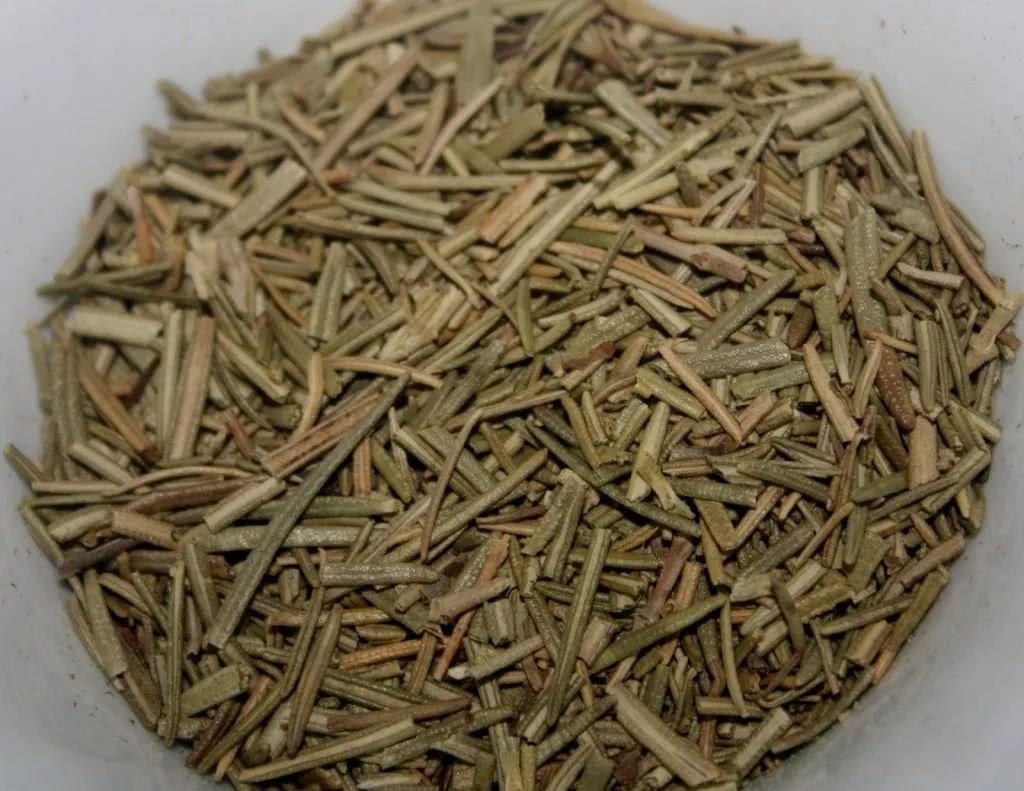
At the beginning of the year, a friend gave me a bag of dried herbs, and solemnly introduced it: "This is the legendary rosemary." The matchstick-like stems were packed in a black mesh bag. I hurriedly took a sniff, and so this was it, the very thing Jay Chou sang about: "Your smile fluttering in the wind, carries the scent of rosemary." My first encounter with the word "rosemary" came precisely from this song. My friend added that the rosemary in "Scarborough Fair", the song featured in the film The Graduate, is this very rosemary:
Are you going to Scarborough Fair
Are you going to Scarborough Fair?
Parsley, sage, rosemary, and thyme
Parsley, sage, rosemary and thyme
Though dried, the fragrance is still distinct when you bring it close, cool with a slight spiciness. This scent should be the same as it was at Scarborough Fair several hundred years ago.
[9] Dried rosemary By Atudu, via Wikimedia Commons
1The Dimensions of Herbs
Rosemary is a famous aromatic plant in the Lamiaceae family. The Lamiaceae could be called a major household of spices; apart from parsley, the other three herbs in this lyric all belong to the Lamiaceae family. Rosemary is a shrub that can grow up to 2 m tall, and its English name rosemary derives from its Latin scientific name Rosmarinus officinalis Linn. In Latin, ros means dew, and marinus means sea, so the original meaning of rosemary is "Dew of the Sea”。
Rosemary is native to Europe and the Mediterranean coast of North Africa, hence the sea in its name. Another explanation relates to the Virgin Mary, and rosemary is also interpreted as Rose of Mary. The sea breeze brought seagulls, and also brought sailboats and the rosemary aboard them; they were moistened with dew, and after docking they would appear at the market, and then on people's dining tables.
The stems, leaves and flowers of rosemary are all rich in intense fragrance, and can be used to extract aromatic oil and to blend perfumes. In the Mediterranean region, fresh or sun-dried rosemary is a common seasoning and natural preservative in the kitchen; its fresh and distinctive flavour can pair with many ingredients, especially roast meat.
[10] Rosemary with roast rabbit By cyclonebill, via Wikimedia Commons
As a commonly used herb, rosemary has a long and rich significance in Western culture. In ancient Egypt, rosemary was already regarded as a sacred substance capable of preserving things from decay. At Christmas in the West, people often decorate the pillars or doors of churches and homes with rosemary. In the Middle Ages, rosemary often appeared at weddings; the bride would wear a headdress woven from rosemary, and the groom and guests would also pin a sprig on themselves, so rosemary also symbolises faithful and unchanging love. In addition, it also represents "memory and remembrance"; in Europe and Australia, this plant is used for war memorial days and funerals, and mourners throw rosemary into the grave to express their grief.[1] This ritual may be related to rosemary's preservative properties. In Act 4, Scene 5 of Hamlet, the mad Ophelia says a passage mentioning many plants, and the first one she names is rosemary:
There"s rosemary, that"s for remembrance;
pray, love, remember.
Translated, it reads:
There's rosemary, that's for remembrance;
Pray you, love, remember.[2]
The first time I heard the name rosemary, I felt it sounded very exotic. As it turns out, as early as the Wei and Jin period, rosemary was introduced into China via the Silk Road. The Wei state's history book Weilüe records that "Daqin produces rosemary", Daqin being the Roman Empire and the Near East region. The Jin-era natural history work Guangzhi by Guo Yigong says "mídié comes from the Western Sea", and the "Western Sea" may refer to the Mediterranean.[3] After rosemary was introduced into the Central Plains, Emperor Wen of Wei was especially fond of this plant that "raises its branches and exhales fragrance, rich with noble aroma", and he, along with Cao Zhi and among the Seven Masters of Jian'an Wang Can, Chen Lin, Ying Yang [yáng] and others, each composed a "Rhapsody on Rosemary", with gorgeous wording and unstinting praise. In his preface, Cao Zhi explained the origin of the Chinese name "mídiéxiāng" (rosemary):
Rosemary comes from Western Shu[4], and where it grows the soil is like thick red cinnabar. Through the harsh winter, the flowers only then bloom fully; once open they soon fade, and falling into the earth they form beads, each one like fire-chief gemstone.[5] Worn on the body, its fragrance seeps into the skin and flesh, and those who smell it become infatuated and cannot leave, hence it is called rosemary. (Collected Works of Cao Zijian, Volume 3)
Just as Cao Zhi described, rosemary's "fragrance seeps into the skin and flesh when worn"; after being introduced into China, this herb did not enter the kitchen, but was used for incense, repelling mosquitoes and warding off evil. The ancients' use of foreign spices was indeed quite subtle; perhaps because rosemary is simply rather unique, it seems not quite suited to appearing on the dining table. In the Tang dynasty, Chen Zangqi's Bencao Shiyi states rosemary's main therapeutic effects as: "Evil qi, makes one's clothes fragrant, burned it drives away ghosts." By the Ming dynasty, Li Shizhen had only added one entry: "Combine with qiāng huó (a traditional Chinese medicine of the Apiaceae family) into pills, burn them, and they repel mosquitoes and gnats."[6]
[11] Rosemary seeds By Roger Culos, via Wikimedia Commons
2Scarborough Fair
Rosemary symbolises love and carries the meaning of remembrance and remembering. Knowing this is a great help in understanding "Scarborough Fair". This film interlude that swept the world was created by the American singer Paul Simon, and its predecessor was an old English folk ballad, a love song:
Are you going to Scarborough Fair?
Are you going to Scarborough Fair?
Parsley, sage, rosemary, and thyme;
Parsley, sage, rosemary and thyme;
Remember me to the one who lives there,
Remember me to one who lives there,
For once she was a true love of mine.
She once was a true love of mine.
Scarborough is a seaside town in England, located on the northeast coast of Yorkshire. On 22 January 1253, King Henry III of England signed a royal charter allowing the town of Scarborough to hold a fair each year from 15 August to 29 September. For a time, the town became an international trading port, attracting merchants from all over England, the European continent, Norway, Denmark, the Baltic countries and the Ottoman Empire. Later, due to competition from other trading ports and the requests of local townspeople, Scarborough Fair stalled in 1256, then gradually declined, and finally closed in 1788.[7]
Scarborough town bay in the 19th century[7]
Judging from the lyrics, "parsley, sage, rosemary and thyme" should all have been common goods at Scarborough Fair at that time. The origin of this ballad can no longer be traced; by the end of the 18th century, it had been adapted into more than 20 versions. Although there are many versions, the general meaning remains basically unchanged: let these four herbs carry a message to the lover, and let the lover do certain things for the other:
Tell her to make me a cambric shirt,
Tell her to make me a cambric shirt
Without any seam or needlework,
Without no seams nor needlework
In the duet, the woman also makes demands of the man:
Tell him to buy me an acre of land,
Tell him to find me an acre of land
Between the salt water and the sea sand,
Between the salt water and the sea strands
Only after this can they become each other's lovers. Obviously, these tasks cannot be completed, so this is again a love song of despair. From the lyrics and the time of their circulation, some speculate that this song is related to the Black Death that was prevalent in Europe at the time.
The Black Death, also called the plague, ravaged Europe many times, taking countless lives, and is one of the most destructive plagues in human history. The death toll caused by this plague peaked between 1347 and 1351, and trade at Scarborough Fair at that time must have been affected. Imagine that the protagonist of this ballad was very likely a merchant at Scarborough Fair; because he unfortunately died of the plague, he could never again see his beloved girl. So he had no choice but to ask parsley, sage, rosemary and thyme to carry his message for him. This beloved girl of his had once bought parsley, sage, rosemary and thyme from him.
Rosemary played a role during the ravages of the plague. At that time, hospitals and churches burned large quantities of aromatic plants, including rosemary, to ward off disease, and later English thieves even invented an anti-plague potion called "Vinegar of Four Thieves", one of whose ingredients was rosemary. So the "rosemary" in the lyrics, on the one hand conveys love, and on the other saves lives, and seems also to imply "antidote". Whether rosemary's symbolising love is related to this love song, I do not know. The above is only conjecture.
This ballad has a beautiful melody and a moving story, and has been sung over and over. It was not until 1965, when Paul Simon was travelling in Britain, that perhaps at the very moment he heard this ballad he was likewise moved. And in that same year, US President Johnson approved Operation Rolling Thunder to carry out large-scale bombing of North Vietnam, 3,500 US Marines landed at Da Nang in Vietnam, and the Vietnam War formally broke out. At the same time, anti-war voices in the United States grew louder. It was against this background that Paul Simon decided to adapt it; he collaborated with Art Garfunkel and added to the ballad his own composition from 1963, The Side of a Hill:
on the side of a hill a sprinkling of leaves
A scattering of red leaves beside the hill
washes the grave with silvery tears
Silver tears wash over the graves
a soldier cleans and polishes a gun
A soldier is polishing his gun
war bellows blazing in scarlet battalions
The sound of war burns in the blood-coloured camp
generals order their soldiers to kill
The general gives the soldiers the order to fight
and to fight for a cause they"ve long ago forgotten
For a reason long forgotten
The ballad became an anti-war song; this time what separated lovers in life and death was not plague, but war, crueller than plague. The Vietnam War lasted from 1955 to 1975, and both sides suffered heavy casualties. "On a battlefield without justice, young men go to their deaths, and can never return to the side of their beloved."[8]
Rosemary planted outdoors in East China
As mentioned earlier, rosemary often appears in Western funeral ceremonies, where people throw rosemary into the grave of the deceased to express remembrance; later rosemary also appeared on war memorial days. Therefore, Paul Simon's addition of the ballad "Scarborough Fair" to an anti-war song is very ingenious, and the "rosemary" in it here corresponds precisely to "war" and "death". Interestingly, the name of this album is exactly the four herbs in the lyrics: Parsley, Sage, Rosemary and Thyme.
This naturally brings to mind "Birch Forest", a song originating from Ukraine that tells the story of a young Soviet soldier during World War II: the war was won, but the girl under the birch trees could never wait for her lover to return. "Who will bear witness to those loves and lives without gravestones?" Like birch trees and rosemary, plants carry humanity's profound emotions.
[1] https://en.wikipedia.org/wiki/Rosemary
[2] Shakespeare, translated by Liang Shiqiu: Hamlet, China Radio and Television Publishing House, 2001, p. 226.
[3] Weilüe and Guangzhi are lost; see Taiping Yulan.
[4] Cao Zhi said rosemary comes from Western Shu, and Cao Pi in his "Rhapsody on Rosemary" also mentions "despising the filthy customs of the Western Yi, crossing ten thousand li to come on campaign"; Western Shu and Western Yi should both refer to western Sichuan, which seems inconsistent with the record in Weilüe.
[5] "Fire-chief" is a kind of jade "shaped like mica, coloured like purple gold". See Book of Liang? Biographies of Various Yi? Central Tianzhu Kingdom. Here Cao Zhi is comparing rosemary's fruit to jade.
[6] Bencao Shiyi is lost; see Bencao Gangmu? Herbs Section, Volume 14.
[8] Winter Solitude: "Weekend Nostalgia | Scarborough Fair" https://baijiahao.baidu.com/s?id=1567488164643372&wfr=spider&for=pc
[9]By Roger Culos ,via Wikimedia Commons,CC BY-SA 3.0 https://commons.wikimedia.org/w/index.php?curid=31984559
[10]By cyclonebill , via Wikimedia Commons,CC BY-SA 2.0 https://creativecommons.org/licenses/by-sa/2.0
[11]By Roger Culos ,via Wikimedia Commons,CC BY-SA 3.0 https://commons.wikimedia.org/w/index.php?curid=31984559
About the author: Jianghan Tangtang, company employee / art museum public education volunteer / freelance writer, currently living in Beijing.
Text and image editing: Jiang Moulen
This work is licensed under the (CC BY-NC-ND 4.0) license agreement
Please retain the above statement when reprinting
iPhone users can tip the author via the QR code below