Grow a Radermachera sinica like this for thick stems and constant green leaves
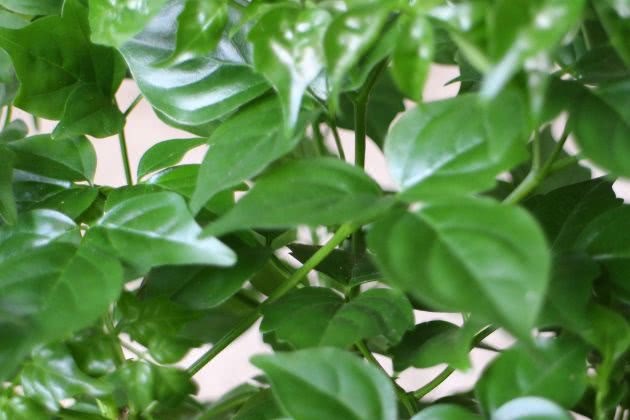
For people with a fair amount of plant-growing experience, the Radermachera sinica is very easy to grow. Whether it is day-to-day care, watering, fertilizing, pruning, overwintering or getting through summer, none of it is difficult. But for many beginner growers, or people who are not good at summarizing their own experience and spotting problems, growing it is rather hard.
Recently, when we were talking about how to water a Radermachera sinica, a gardening friend left a comment: "My two pots were growing just fine at first, and I don't know what happened, but now the leaves turned yellow and black, then dried up and dropped, and one main trunk went black too and then the whole plant was done for!" Another gardening friend said: "I've grown three pots and pamper them like princesses every day. One pot feels great, but the other two look like they won't survive!" "Mine has turned into a little umbrella - growing on top and dropping off the bottom, growing slower than it drops!" ... It seems the Radermachera sinica is still rather hard for many gardening friends to grow well. So why does the phenomenon of Radermachera sinica leaves turning yellow, turning black, drying up and dropping occur? Today Hua'er Gu will briefly introduce it to everyone!
The Radermachera sinica can show all kinds of poor growth conditions. If we trace the causes, they can be summed up as follows: 1. improper watering; 2. improper fertilizing; 3. poor ventilation; 4. unsuitable light; 5. pests and diseases.
1. Improper watering
Improper watering is a common cause of yellowing leaves in the Radermachera sinica. When the Radermachera sinica is overwatered, water accumulates and soaks the roots, causing the root hairs to lack oxygen, and in severe cases causing the roots to rot. At this point the leaves go from yellow to black and soft, then dry up and drop. It is clear that long-term overwatering is the number one killer causing poor growth in the Radermachera sinica! Conversely, if the Radermachera sinica grows in a water-deficient environment, the leaves will also turn yellow, mainly showing as going from soft at first to yellow and then to dry, with no blackening in between. Therefore, if our Radermachera sinica shows poor growth in the order of yellowing, softening, blackening, drying and dropping, it indicates that it may have been overwatered.
2. Improper fertilizing
The fertilizing problem that can cause Radermachera sinica leaves to go from yellow to black and finally dry up and drop is mainly caused by over-fertilizing. Over-fertilizing commonly occurs from a single too-strong application, or from applying a suitable amount of fertilizer over too short a cycle, thus causing fertilizer burn. Common signs of over-fertilizing: a single excessive application will show as leaves suddenly turning yellow, softening, blackening, drying, dropping, or softening and then dropping directly. Repeated over-fertilizing often shows as leaves in the order of dark green, softening, yellowing, blackening, dropping. So to judge whether the Radermachera sinica has been over-fertilized, we need to observe it more often in normal times. If right after a fertilizing we suddenly see the Radermachera sinica showing such conditions, it is most likely caused by fertilizing. We can flush with a large amount of water to dilute it or replace the soil and replant, both are fine. As for whether it can be saved, that depends on the degree of fertilizer damage to the roots.
3. Poor ventilation
Poor ventilation can cause the Radermachera sinica to show yellowing leaves. Growing the Radermachera sinica in some rather enclosed space, where air circulation is poor, will cause the Radermachera sinica to show yellowing, blackening, drying and other phenomena. This is because the poor air quality, insufficient oxygen, plus the stuffiness when the temperature is rather high, will cause poor growth of the plant, and will also cause some damage in terms of breeding bacteria. At this point, if we promptly move it to a well-ventilated environment to grow it, we can help it recover.
4. Unsuitable light
Unsuitable light often shows as insufficient light. For example, growing the Radermachera sinica in a shaded environment for a long time - such an environment easily breeds bacteria and will cause the Radermachera sinica to develop black rot and various other conditions. When we grow the Radermachera sinica, we need to maintain sufficient scattered light, to prevent long-term shade from bringing about a series of problems in the Radermachera sinica's growth caused by insufficient photosynthesis.
5. Pests and diseases
Sooty mold on the Radermachera sinica will also cause its leaves to turn yellow, turn black, dry up and drop. Especially in summer and autumn, sooty mold occurs frequently and often harms the branches, leaves and stems of the Radermachera sinica. If our Radermachera sinica shows dark brown mold spots, it means it is infected with sooty mold. To prevent and control sooty mold, we need to ventilate, supplement light, and then use agents such as lime sulfur mixture and other fungus-killing agents for prevention and control.
Radermachera sinica problems caused by pests and diseases generally cannot be handled by many beginners, and most growers will choose to give up. After all, this tree is grown indoors in the home, and using agents requires placing it outdoors for spray treatment, which is relatively troublesome. But if conditions allow, we can try to prevent and control it!
The above is what Hua'er Gu introduces to you about the common causes and prevention techniques for the Radermachera sinica going from yellow leaves to black to dry to dropping. Generally, only when sooty mold and other pests and diseases occur will its stems, branches and leaves show some surface film; other improper care will not produce these phenomena. Everyone can pay attention to judging this when encountering such problems.