For peanut growth control, you must pick the right time; too early or too late is no good, and doing it in two applications works better.
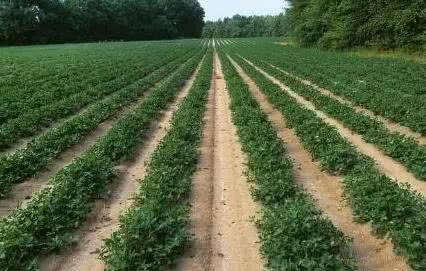
In recent years, the topic of growth control has become quite popular. Corn, peanuts, soybeans, sweet potatoes and many other crops all depend on growth control, and there is a dazzling array of growth control agents that leave farmers spoiled for choice. However, the use of growth control agents also has its finer points. Here, Xiaonong will talk with everyone about the timing of growth control agent use.
The best time for peanut growth control
The first growth control is generally done at the peanut seedling stage, but few farmers carry out this round of growth control, because growth control at the seedling stage easily leads to the problem of controlling growth too early when the timing is not judged well. Growth control at the seedling stage generally refers to the time when flowering begins, that is, when the peanut seedlings have grown for about fifteen days. Applying the agent at this time helps increase the number of peanut flowers, prevent disease, and raise yield.
The best time for peanut growth control is generally when the first batch of pegs has already entered the soil in large numbers and has grown to the size of a little finger, while the second batch of pegs is in the shape of a chicken's beak. At this time the peanut flowering period is basically nearing its end, and the peanut plants are about 30 to 35 cm tall.
In an ordinary year, two rounds of growth control can achieve a very good effect. The second growth control is generally carried out about 20 days after the first application of the growth control agent. At this time, because of high temperatures, greater moisture and other reasons, the peanut plants generally show excessive vegetative growth. At this point the peanut plants are generally about 45 cm tall, and carrying out a second growth control at this time helps increase the yield of the peanut plants.
Next, let us look at the benefits of peanut growth control.
Peanut growth control means avoiding excessive vegetative growth in peanuts. If peanuts are not controlled, it easily leads to few pods forming while the branches and leaves grow wildly. Peanut plants with excessive vegetative growth not only cause loss of soil nutrients and are prone to lodging, but also produce very few pods, and the peanut kernels are not plump enough, so quality is affected.
Peanut growers should all have deep personal experience with these problems, so growth control can be said to be indispensable.
Problems that easily arise with growth control
The problem most likely to arise during growth control should be the problems caused by poor timing of growth control. Controlling growth too early easily causes reduced peanut yield. This situation generally occurs during the peanut flowering period, because during the peanut flowering period not only are large numbers of flowers blooming, but the pegs underground are also growing rapidly. Using a growth control agent at this time will not only reduce the number of peanut flowers but also inhibit peanut growth, thereby leading to reduced peanut yield. So peanut growth control must be carried out according to a reasonable timing.
Another situation is using an excessive amount of peanut growth control agent, which causes premature senescence in peanuts. Some peanut growers do not follow the instructions for use when applying growth control agents and change the concentration on their own. This is very unscientific and very likely leads to premature senescence in peanuts because the concentration used is too high, which in turn leads to reduced peanut yield. So as for the concentration used, farmers must follow the instructions when applying it and must not change the concentration on their own.
The above comes from Kexue Xingnong.