For chives to grow well, fertilizing after every harvest is crucial, and it is just as important during the summer resting period.
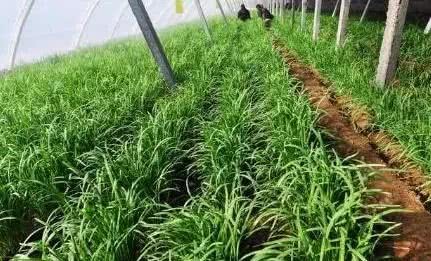
Chives have always been a vegetable I really like, and my favorite food is dumplings stuffed with chives and egg. Besides liking to eat chives, you may not know that chives have another use, which is growing them as a potted plant for ornamental viewing. An ancient poem says, "Gradually I feel the cold of the east wind, green mugwort and yellow chives to try the spring plate." Today I will talk with everyone about how to fertilize chives.
The growth habits of chives
To fertilize chives well, the first step is naturally to understand their growth habits clearly. Although this is a familiar topic, many friends still overlook it. Chives are a perennial root plant and can be grown in most parts of our country. They are not only cold-tolerant but also heat-tolerant. If grown in the south, they can be harvested all year round, while in the north they stay green for three seasons. The most suitable growing temperature is around 25 degrees. They are shade-tolerant, and moderate light is enough. For soil, they prefer fertile, slightly acidic soil.
Fertilizing chives
There are many fertilization methods, but fertilization should be targeted. You need to consider your planting method and the characteristics of the growing environment when fertilizing, so that chives can grow well enough. Here I will introduce the key points of fertilizing chives from several aspects.
First, let me introduce how to fertilize chives grown at home.
Now many households choose to grow some vegetables at home, and chives are a very good choice. They can be eaten in all four seasons and can be eaten for many years. Chives grown at home do not have as much growing space as chives grown in the ground. Home-grown chives are generally grown in flower pots, so more attention should be paid to fertilization.
First, before planting, enough base fertilizer should be put into the flower pot. The base fertilizer can be decomposed chicken manure, or decomposed soybean meal, eggshells, bone meal, and the like. Note that the base fertilizer should be placed at the bottom of the flower pot to prevent root burn.
After the chives survive, topdressing is needed. Because chives like fertilizer, pay attention to timely topdressing. Generally, fertilizer can be applied once every week. You can apply some decomposed, diluted cake fertilizer, and be sure to dilute it. After the chives enter the normal growth period, after each harvest of a crop of chives, topdressing should be carried out in time, especially in spring and autumn.
Actually, human urine and feces are the most suitable for chives, but the smell is not good. So usually you can collect kitchen waste, decompose it, and use it as fertilizer. If that is really not possible, you can also buy some special fertilizer at the flower market, which is also fine.
Fertilizing chives grown in the field
Base fertilizer
For chives grown in the field, fertilization is much more troublesome to manage than home growing. For field chives to achieve high yield, fertilization is very important. Below I will share the fertilization techniques with everyone.
First is still base fertilizer. The base fertilizer must be sufficient. Generally, before planting, 5000 kg of organic fertilizer per mu is used to prepare the land. After preparing the land, about 2000 kg of organic fertilizer needs to be mixed with soil and applied into the furrow. After the chives are planted and the seedling recovery period ends, topdressing should be carried out in time. Topdressing generally uses urea or diammonium phosphate, with an amount of about 20 kg per mu. Chives are not harvested in the year they are planted; they can only be harvested the next year.
Topdressing
Because chives are often harvested, nutrient consumption is enormous, so after each harvest, topdressing is needed in time to prevent root damage and premature aging. Generally, topdressing is carried out about three days after harvest. Be careful not to rush to water, as root rot is likely to occur. Mainly apply some phosphorus and potassium fertilizer and nitrogen fertilizer that promote root growth. Generally, about 20 kg of ammonium sulfate compound fertilizer is used per mu. You can also use decomposed and diluted human urine and feces (about 400 kg per mu) mixed with compound fertilizer (about 30 kg) and apply it into the chive field.
In addition, in summer, note that chives need to rest, and topdressing can be appropriately reduced. Generally, ammonium sulfate can be applied on rainy days.
The above comes from Science Xingnong.